ED seeks Bengal organised crime case details for PMLA probe
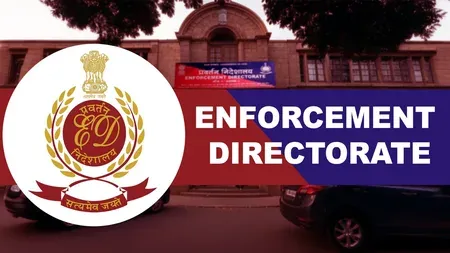
Synopsis
After years of reported stonewalling under the Trinamool Congress government, West Bengal's new administration is opening its organised crime case files to the Enforcement Directorate — a move that could trigger fresh PMLA action on arms smuggling, human trafficking, narcotics, and cybercrime cases that have long stalled at the police station level.
Key Takeaways
The Enforcement Directorate (ED) has begun seeking details from West Bengal Police on organised crime cases for potential PMLA proceedings.
Priority categories include arms smuggling , human trafficking , narcotics trafficking , and cybercrime — all 'scheduled offences' under PMLA.
State officials say the previous Trinamool Congress government under Mamata Banerjee repeatedly withheld case details from the ED.
The ED is already probing the recruitment scam , coal smuggling , and cow smuggling cases in the state.
State and Central agencies will run parallel investigations, with hawala networks flagged as a key financial channel in these cases.
The Enforcement Directorate (ED) has begun collecting details from the West Bengal Police on cases involving organised crime that may qualify for investigation under the Prevention of Money Laundering Act (PMLA), according to state government sources. The move, reported on 11 August, marks a significant shift in Centre-state coordination on financial crimes in West Bengal following a change in the state government.
What Triggered the ED's Move
Sources familiar with the development said that numerous cases of organised crime were registered at police stations across the state during the previous Trinamool Congress (TMC) government led by Mamata Banerjee, but saw little to no follow-up. As a result, the financial dimensions of these crimes — including potential money laundering trails — could not be established.
'Often, due to the reluctance of the previous administration, the ED officials also did not receive detailed information on such cases even after being sought,' a state government official said. The new administration, the official added, has decided to share all relevant case information with the ED so that the Central agency can initiate PMLA proceedings wherever warranted.
Priority Areas Under the Scanner
The ED has reportedly identified four broad categories of organised crime as priority areas for potential PMLA action: arms smuggling, human trafficking, narcotics trafficking, and cybercrime. All four fall under the 'scheduled offence' category under PMLA, making them eligible for the ED's jurisdiction.
'These are cases where FIRs were registered at the police station level but without much progress or follow-up at a later stage,' the state government official explained. Such offences, he noted, typically involve large monetary transactions routed through illegal channels, including hawala networks.
The Coordination Gap Under the Previous Government
State officials indicated that meaningful coordination between state and Central investigative agencies was effectively absent during the TMC regime. The ED had previously flagged difficulty in accessing case details even when formally requested, hampering its ability to trace money laundering links.
The agency is already investigating several high-profile scams in West Bengal, including the recruitment scam, coal smuggling, and cow smuggling cases. The fresh data-sharing initiative is expected to widen the scope of those probes and potentially open new ones.
What the New Government Says
Officials from the current state government framed the initiative as a law enforcement imperative rather than a political exercise. 'The main objective is to build better coordination between the state and the Central investigating agencies for better operations against organised crimes,' the official said.
They also expressed confidence that joint operations would help recover black money and reintegrate it into the formal financial system. State investigative agencies will continue their own parallel probes, even as case details are shared with the ED for independent action.
What Comes Next
The ED is expected to prioritise cases from the four scheduled-offence categories before deciding which ones to formally take up under PMLA. Any PMLA probe would enable the agency to attach assets and pursue money laundering charges independently of state-level criminal proceedings. The pace and scope of these probes will likely depend on the quality and completeness of records shared by the West Bengal Police.
Point of View
Where ED access was reportedly obstructed. But the real test is evidentiary — years of stalled investigations mean case records may be incomplete or compromised, limiting what the ED can actually prosecute under PMLA. The agency's existing Bengal probes, from the recruitment scam to coal smuggling, have moved slowly despite years of effort. Adding a fresh batch of organised crime cases to that pipeline raises genuine questions about capacity. The political optics of Centre-state alignment, while useful for the incumbent government, should not be mistaken for guaranteed legal outcomes.
NationPress
25 Sept 2026
Frequently Asked Questions
Why is the ED collecting case details from West Bengal Police?
The ED is gathering details on organised crime cases registered in West Bengal to assess whether they qualify for investigation under the Prevention of Money Laundering Act (PMLA). Many of these cases reportedly saw little follow-up under the previous Trinamool Congress government, leaving their financial dimensions unexamined.
Which types of crimes is the ED focusing on in West Bengal?
The ED has identified arms smuggling, human trafficking, narcotics trafficking, and cybercrime as priority areas. These fall under the 'scheduled offence' category under PMLA, giving the agency jurisdiction to investigate money laundering links and attach assets.
What role did the previous Trinamool Congress government play in stalling these probes?
According to state government officials, the previous TMC administration under Mamata Banerjee was reluctant to share case details with the ED even when formally requested. This reportedly prevented the Central agency from establishing financial trails in organised crime cases.
Is the ED already investigating cases in West Bengal?
Yes. The ED is currently probing several major scams in the state, including the teacher recruitment scam, coal smuggling, and cow smuggling. The new data-sharing arrangement is expected to potentially widen those probes and open new ones.
What happens if the ED decides to take up a case under PMLA?
A formal PMLA probe allows the ED to independently investigate money laundering, attach properties and assets linked to the offence, and file charges separately from any state-level criminal case. This can proceed even if the state police investigation is slow or inconclusive.