Bhupender Yadav hails Ek Ped Maa Ke Naam going global

Synopsis
Union Environment Minister Bhupender Yadav on 19 June 2026 hailed the Ek Ped Maa Ke Naam tree-plantation campaign for transcending India's borders and inspiring environmental action globally, signalling the initiative's growing role in India's international climate messaging.
Key Takeaways
Bhupender Yadav on 19 June 2026 posted on X celebrating the global spread of Ek Ped Maa Ke Naam .
The campaign, launched in June 2024 , asks citizens to plant a tree in honour of their mother as a public environmental act.
Yadav described the initiative as having 'transcended borders' and inspiring 'global action for our planet.' The campaign aligns with India's National Mission for a Green India under the National Action Plan on Climate Change (2008) .
India is increasingly using community-driven drives like Ek Ped Maa Ke Naam and Mission LiFE to project grassroots climate action at international forums including UNFCCC .
Future attention will focus on formal international partnerships and verified plantation data ahead of upcoming UNFCCC meetings.
Union Environment Minister Bhupender Yadav on Friday, 19 June 2026, celebrated the growing international reach of Ek Ped Maa Ke Naam, India's flagship tree-plantation campaign, saying the initiative had transcended borders to inspire environmental action worldwide.
Context
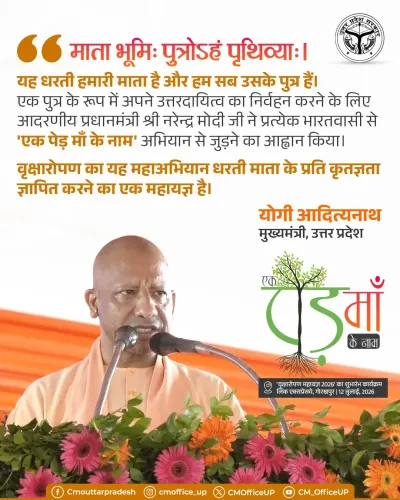
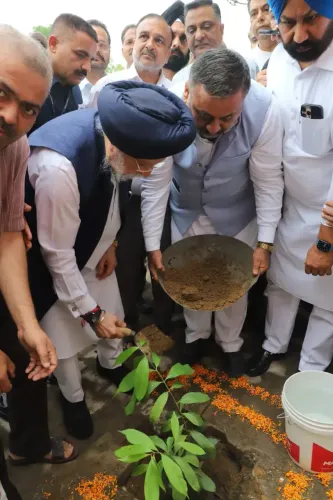
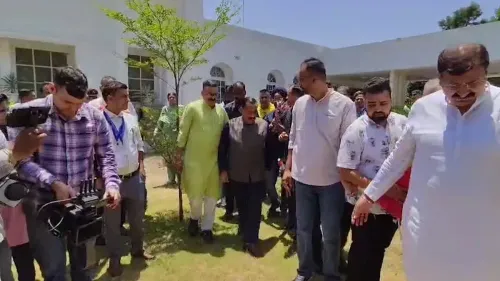
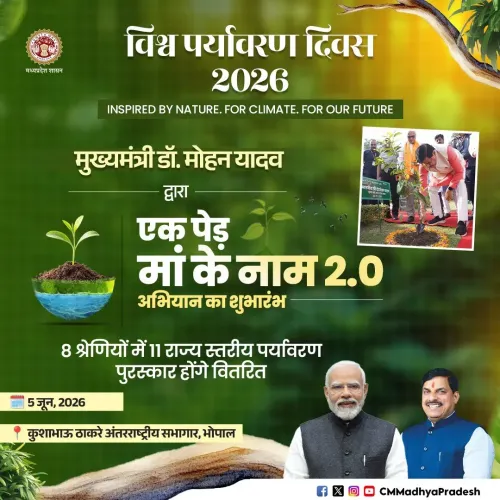
Yadav's post on X expressed enthusiasm at the campaign's global footprint, writing: 'Wonderful to see #EkPedMaaKeNaam transcend borders and inspire global action for our planet.' The remark was accompanied by four images, underscoring the visual and participatory nature of the outreach.
Ek Ped Maa Ke Naam — meaning 'One Tree in Mother's Name' — was launched nationally in June 2024 to encourage every Indian citizen to plant a tree as a tribute to their mother. The campaign quickly became one of the most visible public-participation drives under the Ministry of Environment, Forest and Climate Change.
Policy Backdrop
The campaign sits within a broader architecture of India's climate commitments. The country's National Action Plan on Climate Change (2008) includes the National Mission for a Green India, which targets a measurable increase in forest and tree cover as a tool for carbon sequestration and biodiversity protection.
India has in recent years sought to position community-driven afforestation as a complement to its formal diplomatic positions at multilateral climate forums. Programmes such as Mission LiFE (Lifestyle for Environment) similarly frame everyday citizen behaviour as part of a global sustainability response, and Ek Ped Maa Ke Naam has been woven into that messaging at international platforms.
Stakeholders and Impact
At its core, the campaign mobilises ordinary Indian citizens — cutting across age groups and geographies — by attaching an emotional and cultural resonance to tree plantation. By invoking the universal bond with one's mother, the initiative lowered the participation barrier in ways that conventional afforestation directives rarely achieve.
The minister's reference to the campaign 'inspiring global action' signals that the model is being watched — and in some form adopted — beyond India's borders, positioning the country as an exporter of grassroots climate ideas rather than only a recipient of international climate finance or technology transfers. The global environmental community, including participants at UNFCCC meetings, has increasingly cited India's public-participation model as a replicable template.
What's Next
Attention will now turn to whether India formalises any international partnerships around the plantation model, and how the campaign's progress feeds into updated forest-cover targets that New Delhi is expected to present ahead of future UNFCCC sessions. Progress reports on tree-survival rates and verified plantation numbers will be critical to substantiating the campaign's ecological claims on the world stage.
As India's climate diplomacy grows more assertive, campaigns like Ek Ped Maa Ke Naam are likely to feature more prominently in bilateral and multilateral engagements — bridging domestic environmental storytelling with India's international commitments on net-zero and forest cover expansion.
Point of View
Showcasing citizen-led afforestation as an international inspiration offers a softer but strategically valuable narrative. The framing dovetails with the BJP government's consistent effort to project India as a proactive climate actor, not merely a developing-country emitter seeking concessions. Whether the 'global inspiration' translates into verifiable international adoption will be the test that separates optics from impact.
NationPress
18 Sept 2026
Frequently Asked Questions
What is Ek Ped Maa Ke Naam?
Ek Ped Maa Ke Naam, meaning 'One Tree in Mother's Name,' is a national tree-plantation campaign launched by the Indian government in June 2024 that encourages citizens to plant a tree as a tribute to their mothers, combining environmental action with cultural sentiment.
Who launched Ek Ped Maa Ke Naam?
The campaign was launched at the national level under the Ministry of Environment, Forest and Climate Change, with Union Minister Bhupender Yadav being one of its most prominent advocates and communicators.
Has Ek Ped Maa Ke Naam spread to other countries?
Union Environment Minister Bhupender Yadav stated on 19 June 2026 that the campaign has transcended India's borders and is inspiring global environmental action, though formal details of specific international partnerships have not yet been publicly confirmed.
How does Ek Ped Maa Ke Naam relate to India's climate goals?
The campaign supports India's National Mission for a Green India under the National Action Plan on Climate Change, contributing to targets for increased forest and tree cover as part of the country's broader carbon sequestration and biodiversity commitments.
What is Mission LiFE and how is it connected to this campaign?
Mission LiFE, or Lifestyle for Environment, is a parallel Indian government initiative that promotes sustainable everyday behaviours. Like Ek Ped Maa Ke Naam, it frames individual citizen action as a contribution to global sustainability, and both are used in India's international climate messaging.