AIADMK expels 6 Coimbatore functionaries amid EPS-Velumani rift
Synopsis
Days after S.P. Velumani publicly urged AIADMK to take back expelled leaders like Sasikala, Edappadi K. Palaniswami expelled six Coimbatore functionaries reportedly loyal to him. The action lands in Velumani's own base and follows a new media gag order, sharpening the AIADMK rift ahead of the Assembly by-elections.
Key Takeaways
Palaniswami expelled six Coimbatore functionaries in a statement issued on 27 November .
The expelled members are reportedly supporters of former minister and Thondamuthur MLA S.P.
All six were stripped of party posts and primary membership , and cadres were told to avoid contact with them.
The action came two days after a directive requiring the general secretary's prior approval for media statements and social media posts.
On 21 November , Palaniswami dismissed Velumani's call to bring back leaders including V.K.
Sasikala , calling him one among two crore members.
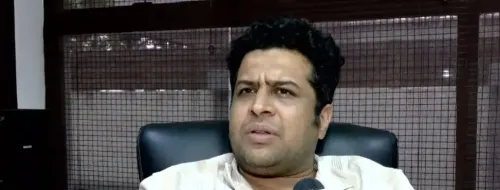
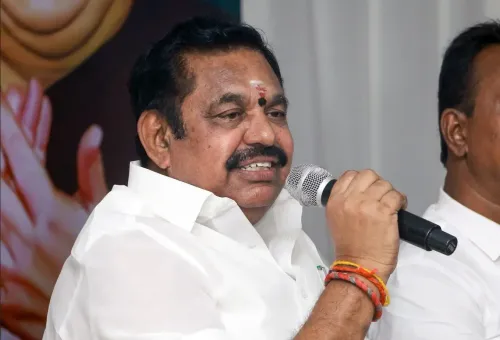
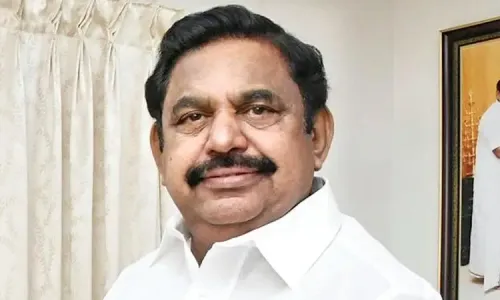
The All India Anna Dravida Munnetra Kazhagam (AIADMK) has expelled six functionaries from Coimbatore for allegedly violating party discipline. The action was taken by general secretary and former Tamil Nadu Chief Minister Edappadi K. Palaniswami as differences within the party grow over a proposed reunification. Those removed are reportedly supporters of former minister and Thondamuthur MLA S.P. Velumani, who has publicly pushed for the return of expelled leaders.
The expulsions were announced in a statement on 27 November. They came just days after a public exchange between Palaniswami and Velumani exposed a rift at the top of Tamil Nadu's principal opposition party.
Key Developments
In his statement, Palaniswami said the six functionaries had been removed from all party positions, including primary membership, with immediate effect. He said their activities ran contrary to the party's policies, principles and bylaws, undermined organisational discipline and brought disrepute to the AIADMK.
Those expelled are:
- M.R. Sabari Vikram, Coimbatore Suburban Central district IT wing joint secretary
- R. Sureshkumar Das, Kurichi area IT wing secretary
- P. Venugopal and J. Bharathkumar of Podanur
- A. Sekar, former Sundarapuram 98th ward secretary
- G. Prabhakaran of Kuniyamuthur
Palaniswami also told party cadres not to maintain any contact with the expelled members. The six had reportedly posted views critical of Palaniswami on social media after his public exchange with Velumani over reunification.
Gag Order Preceded Expulsions
The disciplinary action came two days after the party leadership issued a directive on public communication. Under the directive, members must get the general secretary's prior approval before speaking to the media or posting their views on social media.
Taken together, the two steps point to a tightening of internal control. The leadership appears intent on keeping dissent off public platforms as the reunification debate gathers momentum.
The Palaniswami-Velumani Exchange
The friction surfaced on 21 November. Speaking to reporters at Coimbatore airport, Palaniswami dismissed Velumani's suggestion to bring back expelled leaders, including V.K. Sasikala. He described the former minister as merely one among the party's two crore members.
Velumani responded a day later. He thanked Palaniswami for recognising him as one of the party's workers. He also reminded him that grassroots cadres had elevated him to the post of general secretary.
Velumani maintained that his appeal for unity reflected the aspirations of ordinary party workers. He recalled that several former AIADMK leaders had earlier expressed willingness to remain in or return to the organisation. These include Sasikala, T.T.V. Dhinakaran, O. Panneerselvam, R. Vaithilingam, K. Sengottaiyan and J.C.D. Prabhakar.
Why the Coimbatore Action Matters
Coimbatore is Velumani's political base, which gives the expulsions significance beyond their local scale. Removing functionaries reportedly aligned with him in his own region can be read as a signal about where the leadership stands on reconciliation.
Notably, Velumani made his case for unity on the grounds that it would strengthen the organisation ahead of the upcoming Assembly by-elections. The latest action has instead put internal differences into sharper focus. It raises questions about organisational unity and the leadership's approach to reconciliation.
What Happens Next
The leadership has made its position on reunification clear for now. With the by-elections approaching, attention will turn to whether Velumani escalates his push or steps back, and whether more disciplinary action follows.
Point of View
And the timing is telling. He issued a media gag, then expelled IT-wing functionaries over social media criticism, both in Velumani's backyard. That reads less as routine discipline and more as a message to a senior colleague who cannot easily be expelled himself. The contradiction is obvious: a party heading into by-elections is shrinking its own ranks while its rivals benefit from the visible split. If the long list of leaders Velumani named remains outside, the AIADMK's claim to be the main opposition force rests on an increasingly narrow base.
NationPress
28 Nov 2026
Frequently Asked Questions
Why did AIADMK expel six functionaries from Coimbatore?
AIADMK general secretary Edappadi K. Palaniswami expelled them for allegedly violating party discipline, saying their activities were against party policies and bylaws. They had reportedly criticised him on social media after his exchange with S.P. Velumani over reunification.
Who are the AIADMK functionaries expelled by Palaniswami?
They are M.R. Sabari Vikram, R. Sureshkumar Das, P. Venugopal, J. Bharathkumar, A. Sekar and G. Prabhakaran, all from Coimbatore. They have been removed from all party posts, including primary membership.
What is the dispute between Edappadi Palaniswami and S.P. Velumani?
Velumani has advocated bringing back expelled leaders, including V.K. Sasikala, to strengthen the AIADMK ahead of the Assembly by-elections. On 21 November, Palaniswami dismissed the idea and called Velumani one among the party's two crore members.
Which former leaders did Velumani say were willing to return to AIADMK?
Velumani named V.K. Sasikala, T.T.V. Dhinakaran, O. Panneerselvam, R. Vaithilingam, K. Sengottaiyan and J.C.D. Prabhakar. He said these leaders had previously expressed willingness to remain in or return to the party.
What new media rule has the AIADMK introduced?
Members must now obtain the general secretary's prior approval before speaking to the media or posting views on social media. The directive was issued two days before the six expulsions.