Is the EU-India FTA the Ultimate Trade Agreement?
Synopsis
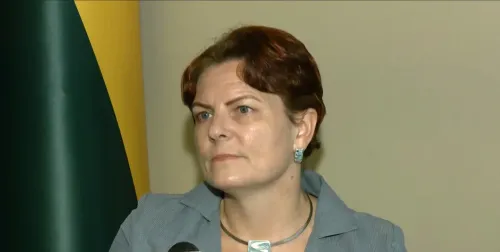
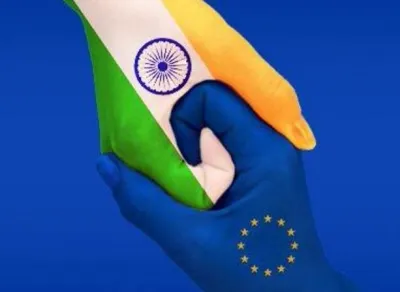
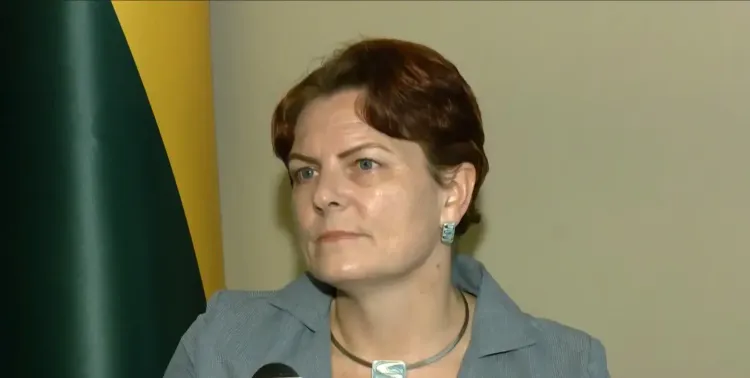
Lithuania's Ambassador to India, Diana Mickeviciene, has heralded the proposed EU-India Free Trade Agreement as a pivotal moment in global trade, calling it the 'mother of all deals.' This transformative pact promises to reshape economic relations between two democratic giants and unlock vast opportunities for businesses on both sides.
Key Takeaways
The EU-India FTA is a transformative agreement with significant geopolitical implications.
It aims to enhance trade relations between two of the world's largest democracies.
Anticipated benefits include increased trade volumes and simplified market access.
Political commitment from both sides is expected to facilitate smooth implementation.
Consumers in Lithuania will have access to a broader range of Indian products.
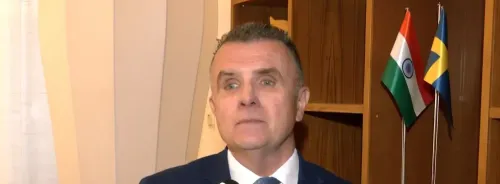
New Delhi, Jan 28 (NationPress) The Ambassador of Lithuania to India, Diana Mickeviciene, has referred to the anticipated European Union–India Free Trade Agreement (FTA) as a monumental and transformative accord, dubbing it the “mother of all deals” due to its extensive scale, scope, and geopolitical importance.
In an exclusive conversation with IANS, Mickeviciene conveyed robust enthusiasm on behalf of Lithuania and the broader European Union. She emphasized that this agreement transcends a typical trade framework.
“This is a pact between the two largest trading blocs globally and between two democratic nations,” she pointed out, adding that it serves as a model for how democratic countries can navigate trade relationships amidst an increasingly unpredictable global landscape.
As per Diana Mickeviciene, the most exciting aspect of the FTA is the extensive opportunities it will create for businesses on both ends. She highlighted that India is already making significant strides in global supply chain diversification, and this agreement could greatly enhance that role.
With the EU being a pivotal element of global supply chains, closer economic collaboration with India is crucial, especially as India works to expand its network of FTAs.
Describing the EU–India FTA as unparalleled in terms of both size and accessibility, Mickeviciene stated that India has “made significant progress” in its trade initiatives, and the future of EU–India economic relations appears very bright.
Pointing out the potential benefits for Lithuania, she mentioned that despite being a smaller economy, Lithuania has experienced robust growth over the last two decades by being part of the EU’s common economic area and free trade system. Collaborating with a major economy like India, she asserted, would only enhance these benefits.
Currently, the bilateral trade between Lithuania and India is approximately €400 million annually when combining goods and services, a figure Mickeviciene believes is far from its true potential. These sectors align perfectly with the proposed FTA. Lithuanian officials intend to proactively inform businesses about reduced tariffs, streamlined processes, and improved market access once the agreement is finalized.
She also pointed out Lithuania’s considerable purchasing power, with per capita income between €29,000 and €30,000, noting that Lithuanian consumers are eager to access a broader selection of high-quality Indian products.
Diana Mickeviciene stressed that one of the most groundbreaking facets of this agreement is the exceptional level of mutual market access it provides. “This level of openness is extraordinary for both the EU and India,” she remarked.
In light of increasing global trade tensions and tariff actions by the United States, the Ambassador characterized the EU–India FTA as a robust and credible alternative. Despite making up nearly one-third of global trade, current trade volumes between the EU and India are still underdeveloped.
She stated that the agreement could significantly alter this landscape, with EU forecasts indicating that trade in goods and services could double within six years. Similar expectations are echoed on the Indian side. This represents an extremely optimistic signal for global trade.
When discussing the FTA's implementation, Diana Mickeviciene expressed confidence that significant challenges are unlikely, citing an unprecedented political commitment from both parties. While procedural steps are still necessary, she described these as routine. She also highlighted extensive technical cooperation, including customs alignment and institutional collaboration, as an opportunity to strengthen interoperability between EU and Indian institutions.
Reiterating the growth potential for Lithuania–India trade, the Ambassador stated both nations are already exchanging goods and services within the FTA framework. Enhanced market access is expected to bolster Lithuanian exports, while Indian goods and services—especially those in high demand in Lithuania—are likely to find new opportunities, provided they meet quality and competitiveness standards.
Point of View
The EU-India FTA represents a significant opportunity for both parties. It has the potential to enhance economic engagement and create a more interconnected global market. The emphasis on democratic collaboration is particularly noteworthy, as it sets a precedent for how nations can navigate trade while upholding shared values.
NationPress
25 Sept 2026
Frequently Asked Questions
What is the EU-India FTA?
The EU-India Free Trade Agreement is a proposed pact aimed at enhancing trade relations between the European Union and India, creating new opportunities for businesses in both regions.
What are the expected benefits of the FTA?
The FTA is expected to boost bilateral trade, simplify market access, and reduce tariffs, allowing for greater economic integration between the EU and India.
How much does bilateral trade currently stand at?
Currently, bilateral trade between Lithuania and India is approximately €400 million annually.
What challenges might arise during the FTA implementation?
While procedural steps remain, the Ambassador believes that there will be no major challenges due to strong political will from both sides.
How will the FTA impact Lithuanian consumers?
Lithuanian consumers are expected to gain access to a wider range of high-quality Indian goods, benefiting from enhanced market access.