Kirana Hills strike during Op Sindoor: Experts decode ex-CDS Chauhan's remarks

Synopsis
A loitering munition that may have wandered off-course near Sargodha could have triggered one of Operation Sindoor's most consequential moments — a strike near Pakistan's nuclear-linked Kirana Hills that, according to analysts, alarmed the US into action and may have accelerated Pakistan's ceasefire request. The gap between intent and impact has rarely carried such strategic weight.
Key Takeaways
Former CDS General Anil Chauhan stated India did not deliberately target Kirana Hills ; a loitering munition near Sargodha may have struck it inadvertently after running out of operational time.
Retired Major General Dhruv C Katoch confirmed the strike's high precision, noting the impact was 'very, very accurate' regardless of intent.
Katoch said the United States became 'very concerned and active' only after the incident near the nuclear-associated site.
Former diplomat KP Fabian suggested Pakistan may have interpreted the drone's movement as a deliberate attack and subsequently 'got scared,' potentially hastening its ceasefire request.
Foreign affairs expert Waiel Awwad linked the episode to India's firm stance against Pakistan-based terrorist groups targeting India.
Three senior defence and foreign affairs analysts have offered sharply detailed readings of former Chief of Defence Staff (CDS) General Anil Chauhan's recent clarification on whether India's forces deliberately struck Pakistan's Kirana Hills — a site associated with nuclear facilities — during Operation Sindoor. The remarks, made on 26 August, have reignited debate over intent, precision, and the diplomatic ripple effects of one of the operation's most sensitive episodes.
What Former CDS General Chauhan Said
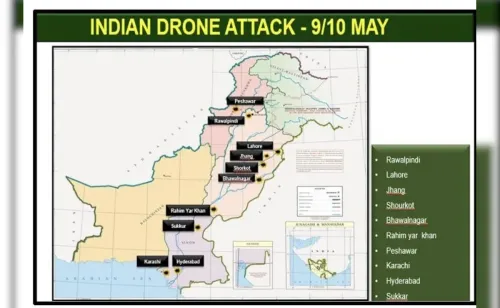
General Anil Chauhan stated that India did not deliberately target Kirana Hills. According to his account, a loitering munition tasked with hunting radars near Sargodha may have inadvertently struck one of the hills after exhausting its operational endurance. The clarification was notable for its specificity — acknowledging an impact while firmly disputing intent.
Major General Katoch: 'Hit Very, Very Accurately'
Retired Major General Dhruv C Katoch described General Chauhan's remarks as 'highly revealing.' He pointed out that the former CDS's account aligned with what Air Marshal Bharti had stated at the post-strike press conference following the 10 May developments — that hitting Kirana Hills was never the objective.
'It gives out the fact that India did not have an intent to hit at the Kirana Hills,' Katoch said. He was careful, however, to note the outcome: 'Regardless of the fact whether India intended to or did not intend to hit at the Kirana Hills, Kirana Hills was hit. And it was hit very, very accurately.'
Katoch also flagged a consequential shift in external involvement. 'Prior to that, the United States was not really interested in the war which was going on between India and Pakistan,' he said, suggesting the proximity of the strike to a nuclear-linked site was what prompted Washington to become 'very concerned and active.'
Former Diplomat Fabian: Pakistan 'Got Scared'
Former diplomat KP Fabian argued that the statements by General Chauhan and Air Marshal Bharti must be read together. His interpretation: a loitering drone dispatched to Sargodha failed to identify a target, ran low on energy, and drifted toward Kirana Hills — where nuclear weapons are believed to be stored, either entirely or in part.
'What our military is saying is that there was a loitering drone which went to Sargodha, but it could not locate any target and it had limited energy, so it started wandering and wandered towards the Kirana Hills,' Fabian noted. He added that Pakistan may have read the movement as a deliberate strike plan. 'So what the Indian military spokespersons are suggesting is that Pakistan got scared... and after that Pakistan asked for a ceasefire,' Fabian said.
Notably, Fabian observed that the Indian side has stopped short of stating this conclusion explicitly, preserving deliberate ambiguity around the psychological impact on Pakistan's decision-making.
Foreign Affairs Expert Awwad: India's Deterrence Posture Held Firm
Foreign affairs expert Waiel Awwad contextualised the episode within the broader arc of Operation Sindoor, noting that Pakistan had been attempting to stabilise relations with India through back-channel communications even as the operation was under way. He underscored India's readiness for any contingency while maintaining its core deterrence posture.
'India is determined that there be no question of Pakistan using its territory for any terrorist group to act against India,' Awwad said, linking the Kirana Hills episode directly to India's long-standing position on cross-border terrorism.
Strategic Implications
The combined analysis from Katoch, Fabian, and Awwad surfaces a layered picture: a munition that may have gone off-course inadvertently produced one of Operation Sindoor's most consequential strategic moments — altering US engagement, reportedly accelerating Pakistan's ceasefire request, and forcing both sides to navigate the gap between intent and impact near a nuclear-sensitive zone. This is a pattern familiar from past South Asian crises, where ambiguity at the operational level carries outsized strategic weight. How both governments officially characterise the incident in the months ahead will shape the longer-term deterrence calculus in the region.
Point of View
But what it set in motion. If Katoch's reading is accurate — that US disengagement flipped to active concern only after a munition wandered near a nuclear site — then India may have stumbled into a leverage point it did not plan for. Fabian's framing of Pakistan 'getting scared' into a ceasefire request, if borne out, would represent a significant strategic outcome from an operationally accidental event. The Indian government's studied silence on this conclusion is itself a signal: claiming the outcome explicitly would undermine the 'no intent' position; denying it would surrender a deterrence dividend. The ambiguity is almost certainly deliberate.
NationPress
27 Aug 2026
Frequently Asked Questions
What did former CDS General Anil Chauhan say about the Kirana Hills incident?
General Anil Chauhan stated that India did not deliberately target Kirana Hills during Operation Sindoor. He said a loitering munition searching for radars near Sargodha may have inadvertently struck one of the hills after exhausting its operational endurance.
What is the significance of Kirana Hills in the context of Operation Sindoor?
Kirana Hills is a site in Pakistan associated with nuclear facilities. A strike in its vicinity — even if unintentional — carried major strategic implications, reportedly prompting heightened US concern and, according to analysts, potentially influencing Pakistan's decision to seek a ceasefire.
How did Major General Dhruv C Katoch interpret the incident?
Katoch described the former CDS's remarks as 'highly revealing,' confirming India's stated position that Kirana Hills was not a deliberate target. He nonetheless noted the strike was 'very, very accurate' and said the US became 'very concerned and active' only after the incident near the nuclear-linked site.
What was former diplomat KP Fabian's reading of the episode?
Fabian argued that Pakistan likely interpreted the drone's movement toward Kirana Hills as a deliberate strike plan, causing it to 'get scared' and subsequently request a ceasefire. He noted the Indian military has stopped short of stating this conclusion explicitly, preserving strategic ambiguity.
What is India's broader position on Pakistan as reflected in expert commentary?
Foreign affairs expert Waiel Awwad said India remains determined to ensure Pakistan's territory is not used by terrorist groups to act against India. He noted Pakistan had been sending back-channel messages to stabilise relations even during Operation Sindoor.