Expired bread on Delhi-Bhopal Shatabdi: IRCTC penalises caterer, orders inquiry

Synopsis
Seventy-four passengers on the Delhi-Bhopal Shatabdi Express were served bread that had expired two days earlier — and some consumed it before spotting the date. IRCTC has penalised the caterer, de-rostered responsible staff, and ordered an inquiry, but the incident exposes a gap in real-time expiry checks that vendor audits alone have not closed.
Key Takeaways
74 passengers on Train No.
12002 (Delhi-Bhopal Shatabdi Express) were served packaged bread with a 'use by' date of 10 July 2026 — two days before it was served on 12 July 2026 .
IRCTC imposed a 'hefty penalty' on the catering service provider responsible for the breakfast supply.
Staff found responsible were immediately de-rostered by IRCTC.
The catering agency has been directed to ensure all service personnel verify expiry dates of every packaged item before serving.
A formal inquiry has been ordered to establish how expired food passed existing quality checks.
No adverse health effects among affected passengers had been officially reported as of the latest available information.
The Indian Railway Catering and Tourism Corporation (IRCTC) has imposed a financial penalty on a catering service provider after 74 passengers aboard the New Delhi–Rani Kamalapati Shatabdi Express were served expired packaged bread during breakfast on Saturday, 12 July 2026. The bread carried a 'use by' date of 10 July 2026 — two days before it was served.
How the Incident Came to Light
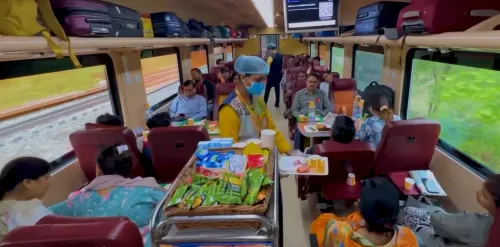
The lapse was discovered when a passenger on Train No. 12002, popularly known as the Delhi-Bhopal Shatabdi Express, noticed the printed expiry date on the bread packet during breakfast. The alert prompted fellow passengers to inspect their own food packets, leading to multiple complaints being raised on board.
Videos of the expired bread packets were shared on social media, with passengers tagging the Railways and demanding accountability. Several passengers reportedly consumed the bread before realising it had already passed its use-by date.
IRCTC's Immediate Response
IRCTC said it had treated the matter with 'utmost seriousness.' In a post on social media platform X, the railway catering body confirmed that a 'hefty penalty' had been imposed on the responsible service provider and that the staff found culpable had been 'immediately de-rostered.'
'The service provider has also been strictly instructed to ensure all service staff check the expiry dates of all products before serving passengers, without exception,' IRCTC stated.
The corporation has additionally ordered a formal inquiry to determine how expired food items cleared existing quality-check protocols before reaching passengers.
Health Impact and Official Status
As of the latest available information, no illnesses or adverse health effects among the 74 affected passengers had been officially reported. IRCTC said it would take further action based on the inquiry's findings, reiterating its commitment to food safety and passenger welfare on trains.
A Recurring Concern on Indian Railways
This is not an isolated episode. Food quality complaints on Indian Railways — ranging from substandard meals to unhygienic preparation — have been a persistent grievance, prompting IRCTC to periodically tighten its vendor audit framework. This incident, however, points to a gap in real-time expiry verification at the point of service, rather than at the procurement stage. The inquiry's findings are expected to determine whether systemic changes to pre-service checks are warranted.
Point of View
But the more uncomfortable question is systemic: how does bread expired by two days clear a catering chain that is supposed to have multi-point quality checks? The inquiry must go beyond punishing the on-board staff and examine whether vendor contracts include enforceable pre-service verification obligations — and whether IRCTC's own supervisory layer is adequately staffed on intercity trains. Reactive penalties after passenger complaints are not a food safety framework; they are damage control.
NationPress
11 Oct 2026
Frequently Asked Questions
What happened on the Delhi-Bhopal Shatabdi Express on 12 July 2026?
74 passengers aboard Train No. 12002, the New Delhi–Rani Kamalapati Shatabdi Express, were served packaged bread during breakfast that had expired on 10 July 2026 — two days before it was served. Several passengers reportedly consumed the bread before noticing the printed expiry date.
What action has IRCTC taken against the caterer?
IRCTC has imposed a financial penalty on the catering service provider and immediately de-rostered the staff found responsible. The agency has also been directed to ensure all service personnel check expiry dates on every packaged food item before serving passengers.
Has anyone fallen ill after eating the expired bread?
As of the latest available information, no illnesses or adverse health effects among the 74 affected passengers had been officially reported. IRCTC said it would take further action based on the findings of the ongoing inquiry.
How was the expired bread discovered?
A passenger noticed the printed 'use by' date on the bread packet during breakfast, prompting others to check their own packets. Multiple complaints were raised on board, and videos of the expired packets were shared on social media, tagging the Railways.
What is IRCTC investigating?
IRCTC has ordered a formal inquiry to determine how expired food items were served despite existing quality-check protocols. The findings are expected to guide whether systemic changes to pre-service verification procedures are required.