Is There A Threat To The Aravalli Ecosystem?
Click to start listening
Synopsis
The Ministry of Environment reassures that the Aravalli ecosystem is safe from imminent threats. While the Supreme Court's recent developments stirred concerns, measures are in place to balance preservation with responsible development. Learn about the new guidelines and projects aimed at safeguarding this vital ecological region.
Key Takeaways
- No imminent threat to the Aravalli ecology.
- Uniform definition adopted for regulating mining activities.
- Ongoing afforestation efforts are crucial for ecological balance.
- Collaboration with state governments for effective policy implementation.
- Aravalli Green Wall project aims to rejuvenate the region.
New Delhi, Dec 21 (NationPress) Refuting exaggerated claims, the Ministry of Environment, Forest and Climate Change asserted on Sunday that there is no immediate danger to the ecology of the Aravallis. India's commitment remains steadfast: the Aravallis will be protected for both current and future generations, balancing conservation with responsible development, the Ministry stated.
No new definition
The Ministry emphasized that no new definition has been established for the Aravalli. The ongoing discourse is tied to a Supreme Court development, which endorsed the recommendations of a Committee set up by the Ministry aimed at preserving the hills and regulating mining activities.
This Committee was created on May 9, 2024, to formulate a uniform policy-level definition of the Aravalli Hills and Ranges, particularly concerning mining regulations while considering the perspectives of four state governments.
Per the policy-level definition, an “Aravalli Hill” is defined as any landform located in designated Aravalli districts that is at least 100 metres above its local relief, while an “Aravalli Range” consists of two or more such hills within 500 metres of each other.
The Ministry clarified that it is incorrect to assume that mining is allowed in all landforms below the 100-metre height.
The Committee was established in response to a hearing regarding alleged illegal mining within the Aravalli Hills and Mountain Ranges in the case of M.C. Mehta versus Union of India and others.
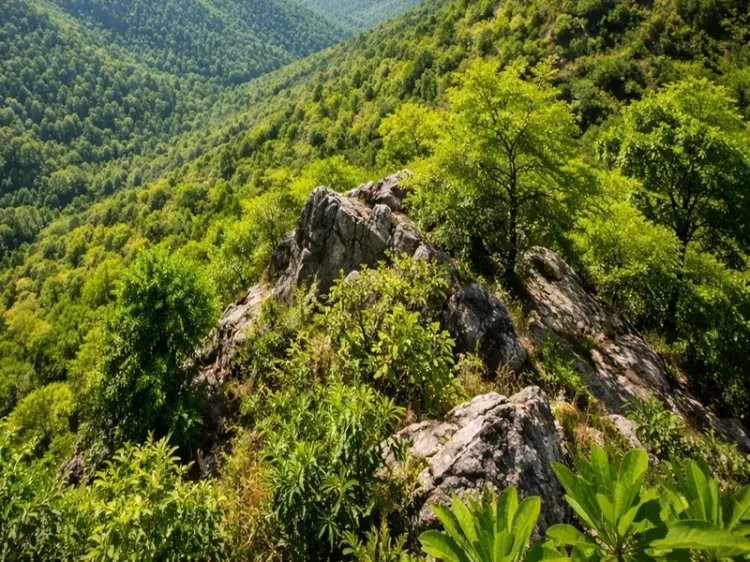
The Aravalli Hills and Ranges are among India's oldest geological formations, extending from Delhi through Haryana and Rajasthan to Gujarat. Historically, they have been acknowledged across 37 districts by state governments for their ecological significance, serving as a natural barrier against desertification in the north and a protector of biodiversity and water recharge.
Anxious activists
Despite alarmist assertions suggesting that the recent development would promote commercial activities in the range, the Ministry stated that there is no immediate threat to the ecology of the Aravallis.
Continued afforestation, notifications for eco-sensitive zones, and rigorous monitoring of mining and urban activities ensure that the Aravallis remain a natural heritage and ecological safeguard for the country, according to the Ministry.
The Committee, formed by the Ministry of Environment, Forest and Climate Change following Supreme Court directives, engaged in extensive discussions with state governments. During these discussions, it was revealed that only Rajasthan has a formally recognized definition for regulating mining in the Aravalli, based on the 2002 Committee report from the state government. This report utilized the Richard Murphy landform classification, categorizing all landforms that rise 100 metres above local relief as hills and subsequently prohibiting mining on both the hills and their supportive slopes.
Unanimous decision
The Ministry noted that during the Committee's discussions, all states concurred on adopting the uniform criterion of “100 metres above local relief” for regulating mining in the Aravalli region, which has been in effect in Rajasthan since January 9, 2006. They also unanimously agreed to make this more objective and transparent.
All landforms encircled by the lowest binding contour surrounding hills of 100 metres or greater, regardless of their height and slopes, are excluded from mining lease grants, the Ministry stated.
Similarly, the Aravalli range is defined as all landforms situated within 500 metres of two adjacent hills of a height of 100 metres or more. All landforms within this 500-metre zone, irrespective of height and slopes, are also excluded for the purpose of mining lease grants. Thus, it is inaccurate to conclude that mining is allowed in all landforms below the 100-metre threshold.
Maps to curb illegal mining
The Committee also proposed measures to provide a clear, map-verifiable operational definition of “Aravalli Hills” and “Aravalli Range”, along with a regulatory framework that safeguards core and inviolate areas, limits new mining, and enhances safeguards against illegal mining.
The Ministry indicated that in its final ruling on November 20, 2025, the Supreme Court praised the Committee's efforts, including the support from the Technical Committee, and commended its recommendations for preventing illegal mining and permitting only sustainable mining in the Aravalli Hills and Ranges.
PM Modi’s project
In June, Prime Minister Narendra Modi inaugurated the ‘Aravalli Green Wall’ initiative, a special campaign focused on reforesting the Aravalli range, one of the largest forest covers, spanning four states — Gujarat, Rajasthan, Haryana, and Delhi.
This major initiative will establish 1,000 permanent nurseries to rejuvenate the nation’s oldest mountain range. Technologies such as satellite mapping will also be utilized to ensure efficiency and transparency in the project.
Notably, the Aravalli range hosts 22 wildlife sanctuaries and four tiger reserves — Ranthambore, Sariska, Ramgarh-Vishdhari, and Mukunda Hills.
Point of View
It’s imperative to highlight the balance between development and conservation. The Ministry’s commitment to safeguarding the Aravalli ecosystem reflects a responsible approach. While concerns about potential threats persist, the efforts to regulate mining and promote afforestation are commendable. The Aravalli range is crucial to India's biodiversity, and its protection should remain a national priority.
NationPress
21/12/2025
Frequently Asked Questions
Is there a new definition for the Aravalli?
No, the Ministry confirmed that no new definition has been established for the Aravalli.
What is the significance of the Aravalli Hills?
The Aravalli Hills are one of India's oldest geological formations, playing a vital role in biodiversity and water recharge.
What actions are being taken to protect the Aravalli?
The Ministry is implementing afforestation, eco-sensitive zone notifications, and strict monitoring of mining activities.
Who is responsible for regulating mining in the Aravalli?
The Committee formed by the Ministry of Environment is responsible for establishing guidelines for mining regulation.
What is the Aravalli Green Wall project?
Launched by PM Modi, the project aims to reforest the Aravalli range and establish permanent nurseries.