CM Fadnavis Amplifies Modi's Youth-as-Viksit-Bharat Vision
Synopsis
On Independence Day 2026, PM Modi declared youth the biggest drivers and beneficiaries of the Viksit Bharat @2047 mission. Maharashtra CM Devendra Fadnavis amplified the message in Marathi and Hindi on X, reinforcing the centre-state alignment behind India's long-term development roadmap.
Key Takeaways
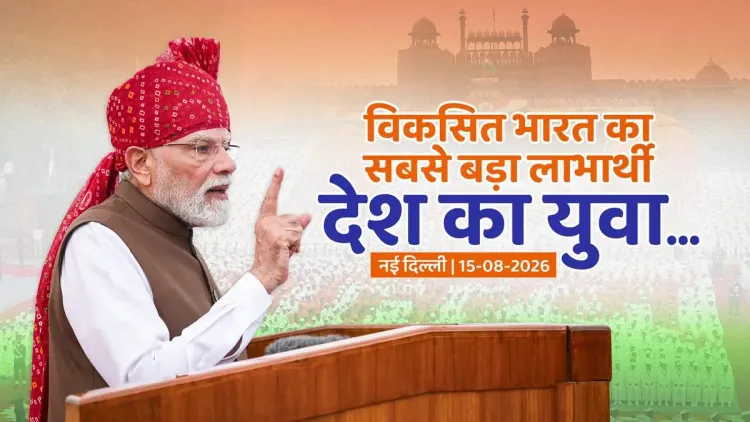
PM Narendra Modi addressed the nation on 15 August 2026 from New Delhi , centering youth as the primary agents and beneficiaries of Viksit Bharat .
Maharashtra CM Devendra Fadnavis shared the PM's quoted message on X in both Marathi and Hindi , extending its reach across linguistic audiences.
The Viksit Bharat @2047 vision was first prominently articulated by PM Modi during his 2023 Independence Day address at the Red Fort.
State leaders amplifying central Independence Day messaging reflects an ongoing pattern of centre-state coordination on the 2047 development narrative.
Youth-focused skill and employment schemes announced in subsequent budgets will be the concrete test of these commitments.
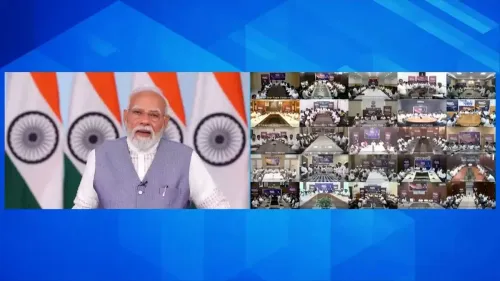
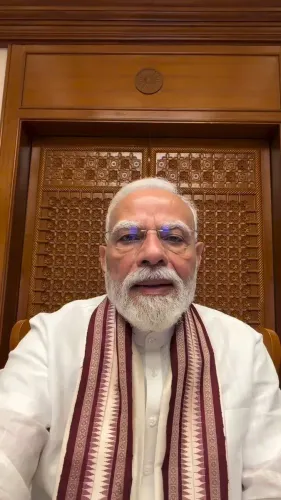
On Independence Day, 15 August 2026, Prime Minister Narendra Modi placed India's youth at the centre of the nation's development ambition — and Maharashtra Chief Minister Devendra Fadnavis made sure the message reached every corner of the state, sharing the PM's words directly on X within hours of the address.
Modi's address to the nation, delivered from New Delhi, carried a pointed dual message: youth are not merely participants in the Viksit Bharat journey — they are its single largest beneficiaries. In Fadnavis's post, the PM's words appear in both Marathi and Hindi, a deliberate choice that signals the message is meant for every Indian, not just a policy audience in the capital.
What Viksit Bharat means — and why youth are its anchor
The Viksit Bharat @2047 vision — transforming India into a fully developed economy by the centenary of independence — was first prominently articulated by Prime Minister Modi during his 2023 Independence Day address at the Red Fort. Since then, it has become the organising frame for India's long-term policy agenda, from infrastructure to skill development to manufacturing.
The logic of centering youth is straightforward: India's median age sits well below that of most major economies, meaning the generation entering the workforce today will be in its prime productive years precisely when 2047 arrives. If the vision succeeds, they inherit a developed nation. If it stalls, they bear the cost. The PM's framing makes that stakes-equation explicit.
Maharashtra's CM and the pattern of centre-state amplification
Devendra Fadnavis sharing the PM's Independence Day message is not incidental — it reflects a deliberate and consistent pattern of state-level leaders reinforcing central government narratives on social media. For a state as economically significant as Maharashtra, alignment with the Viksit Bharat roadmap also signals that Mumbai's industrial and startup ecosystem, its vast youth population, and its skilling infrastructure are all meant to feed into the national 2047 goal.
The bilingual framing — Marathi first, then Hindi — is notable. It roots a pan-India vision in Maharashtra's linguistic identity before broadening it, a small but telling piece of political communication craft.
The road from Independence Day rhetoric to concrete youth outcomes runs through skill programmes, employment schemes, and budget allocations in the months that follow. Those announcements will be the real measure of whether the promise lands.
Point of View
State-level echo, regional language packaging. It reinforces Maharashtra's positioning within the Viksit Bharat framework ahead of likely youth-focused scheme announcements in coming budget cycles. The dual Marathi-Hindi framing also serves a domestic political purpose: it signals cultural sensitivity in a state where language identity carries electoral weight. Whether the rhetoric translates into measurable youth outcomes — jobs, skills, startup support — will determine how durable this messaging arc proves.
NationPress
29 Sept 2026
Frequently Asked Questions
What is Viksit Bharat and what does it mean for Indian youth?
Viksit Bharat @2047 is PM Modi's national vision to transform India into a fully developed economy by the centenary of independence. Youth are positioned as both the primary drivers of this goal and its largest beneficiaries, since today's young generation will be in peak productive years when 2047 arrives.
What did PM Modi say about youth in his Independence Day 2026 address?
PM Modi stated that youth have a very significant role in India's journey toward Viksit Bharat and that they are the single largest beneficiaries of a developed India, according to the quote shared by Maharashtra CM Devendra Fadnavis on X.
Why did CM Devendra Fadnavis share PM Modi's Independence Day speech quote?
Fadnavis shared the PM's words to align Maharashtra's state-level messaging with the national Viksit Bharat narrative — a consistent pattern among BJP-governed states of amplifying central government priorities on social media.
When did PM Modi first announce the Viksit Bharat @2047 vision?
PM Modi first prominently articulated the Viksit Bharat @2047 goal during his Independence Day address at the Red Fort in 2023, and it has since become the central frame for India's long-term development agenda.
What schemes will follow for youth under the Viksit Bharat mission?
Analysts are watching for youth-focused skill development and employment schemes to be announced in upcoming central and state budgets as concrete follow-through on the Independence Day commitments.