CM Fadnavis Prioritises River-Linking Projects in Maharashtra
Synopsis
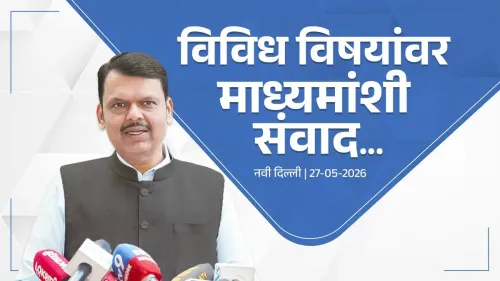
Maharashtra Chief Minister Devendra Fadnavis announced on 27 May 2026 from New Delhi that river-linking projects across the state will be prioritised, reviving a long-standing water-infrastructure agenda aimed at addressing drought and water imbalance in deficit regions.
Key Takeaways
CM Devendra Fadnavis announced on 27 May 2026 that river-linking projects in Maharashtra will be given priority.
The announcement was made from New Delhi , indicating engagement with central water-infrastructure authorities.
Maharashtra's focus is on intra-state links involving the Godavari and Krishna basins to move surplus water to deficit areas.
India's central government constituted a Task Force on Interlinking of Rivers in 2002 covering 30 major links nationally.
Primary beneficiaries are farmers in rain-shadow and irrigation-deficit districts of Maharashtra.
Next milestones include budget allocations for DPR work and proposals in the upcoming monsoon session of the Maharashtra legislature.
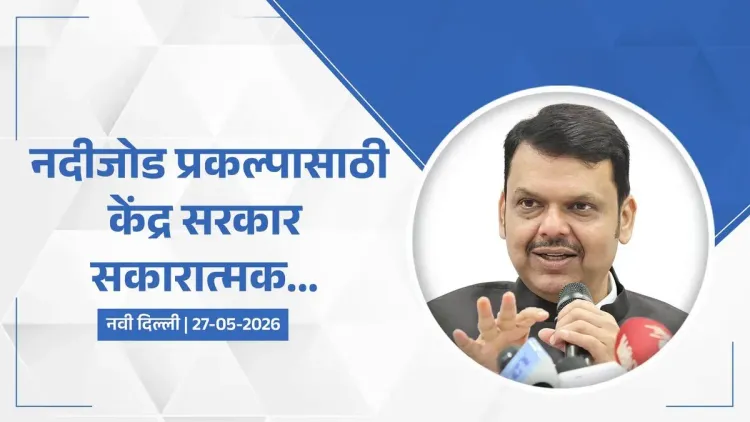
Maharashtra Chief Minister Devendra Fadnavis, speaking from New Delhi on 27 May 2026, announced that river-linking projects across the state would be accorded priority, signalling a fresh push to address chronic water imbalance in drought-prone regions.
Context
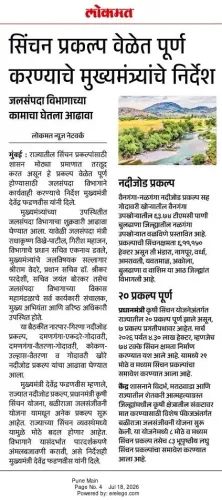
Fadnavis made the announcement in a post on X, stating in Marathi and Hindi: 'राज्यातील नदीजोड प्रकल्पांना प्राधान्य दिले जाणार' ('River-linking projects in the state will be given priority'). The declaration, made from the national capital, suggests active engagement with central authorities on the water-infrastructure agenda.
River interlinking has remained a recurring national water-policy priority since the 1980s, gaining formal momentum when the central government constituted a Task Force on Interlinking of Rivers in 2002 to examine 30 major links across India. Maharashtra's announcement fits squarely within that long-standing policy arc.
Policy Backdrop
Maharashtra's 2013–14 state water policy had already emphasised intra-basin transfers and lift irrigation schemes in drought-prone districts, particularly those in the rain-shadow belt east of the Western Ghats. The state administration has historically focused on links involving the Godavari and Krishna river basins to move surplus water toward deficit areas.
At the national level, successive governments have advanced river-linking components under the Ministry of Jal Shakti framework. Fadnavis's renewed emphasis aligns with that broader federal push, and his presence in New Delhi at the time of the announcement points to consultations with central ministries.
Stakeholders and Impact
The primary beneficiaries of intra-state river links are farmers in rain-shadow and irrigation-deficit districts of Maharashtra, where erratic monsoon cycles routinely trigger agrarian distress. Reliable water transfer infrastructure can reduce dependence on groundwater and improve crop yields across multiple seasons.
Urban and peri-urban water utilities in water-scarce regions also stand to gain, as inter-basin transfers can supplement municipal supply networks. However, such projects typically require extensive survey work, detailed project reports, and environmental clearances before construction can begin.
What's Next
Attention will now turn to state budget allocations for survey and Detailed Project Report (DPR) work on identified river links, as well as any fresh proposals that may be tabled during the upcoming monsoon session of the Maharashtra legislature. The speed of DPR preparation and land-acquisition proceedings will be a key indicator of how firmly this priority is embedded in the government's near-term capital expenditure plans.
If the state follows through with concrete allocations, the move could reshape water availability across central and eastern Maharashtra — districts that have long borne the brunt of seasonal drought and agrarian stress.
Point of View
Not merely a state-level initiative. The timing fits a broader pattern in which state governments invoke water-infrastructure ambitions ahead of legislative budget sessions to set spending priorities. For the BJP-led Maharashtra government, prioritising river links offers a tangible development narrative for agrarian constituencies that have historically swung on drought-related grievances. Whether the announcement translates into funded DPRs or remains an aspiration will be the real test of political will.
NationPress
10 Oct 2026
Frequently Asked Questions
What did CM Devendra Fadnavis announce about river-linking projects?
CM Devendra Fadnavis announced on 27 May 2026 that river-linking projects across Maharashtra will be given priority, signalling a renewed push to transfer surplus river water to drought-prone and irrigation-deficit districts.
Which rivers are involved in Maharashtra's river-linking plans?
Maharashtra's intra-state river-linking plans have historically focused on the Godavari and Krishna basins, aiming to move water from surplus zones to deficit areas in the rain-shadow belt east of the Western Ghats.
What is India's National River Linking Project?
India's National River Linking Project is a proposed inter-basin water transfer initiative formally advanced in 2002 when the central government set up a Task Force on Interlinking of Rivers to examine 30 major links across the country.
Who benefits from river-linking projects in Maharashtra?
The primary beneficiaries are farmers in rain-shadow and irrigation-deficit districts of Maharashtra, along with urban water utilities in water-scarce regions that depend on supplementary supply networks.
What are the next steps after Fadnavis's river-linking announcement?
Key next steps include state budget allocations for survey and Detailed Project Report work on identified links, and any fresh proposals tabled during the monsoon session of the Maharashtra legislature.