CM Fadnavis disburses ₹5,029 cr, frees 6.22 lakh farmers from debt
Synopsis
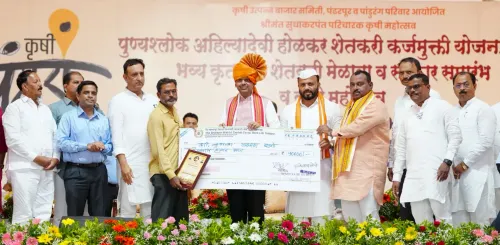
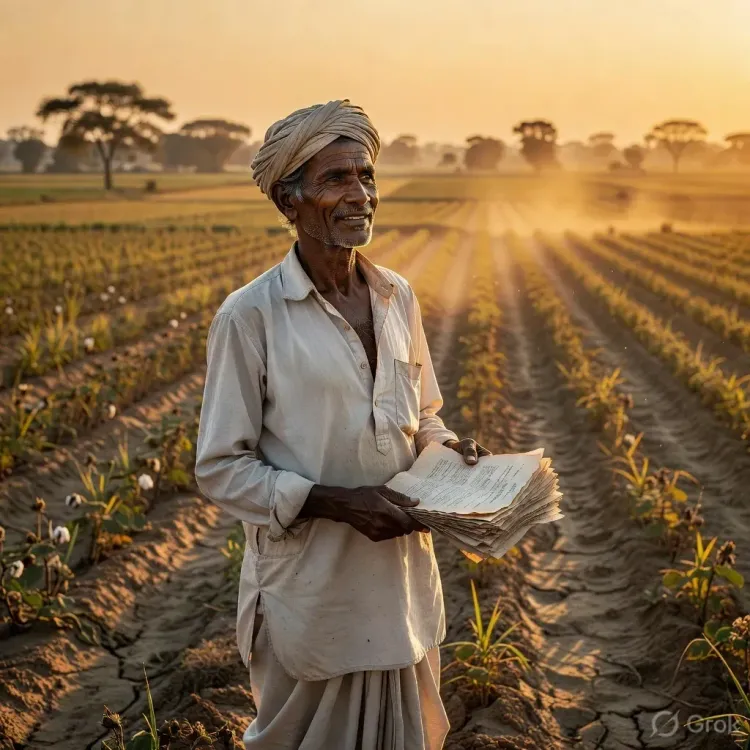
Chief Minister Devendra Fadnavis personally disbursed ₹5,029 crore to free 6,22,207 farmers from crop loans in Maharashtra on 8 August 2026, marking a major tranche of the state's ongoing agrarian debt relief programme.
Key Takeaways
6,22,207 farmers in Maharashtra have been declared debt-free under the state's loan relief programme.
Chief Minister Devendra Fadnavis personally oversaw the distribution of ₹5,029 crore in direct transfers.
The average relief works out to approximately ₹80,900 per beneficiary , restoring their eligibility for fresh institutional credit.
Maharashtra has a history of large-scale crop loan waivers dating to Fadnavis's first term (2014–2019) , particularly targeting drought-hit farmers in Vidarbha and Marathwada.
Completion reports on beneficiary verification and future phases of the programme remain to be released.
More than six lakh farmers in Maharashtra woke up debt-free on Saturday, 8 August 2026 — and it was Chief Minister Devendra Fadnavis who personally handed over the relief. The Chief Minister's Office of Maharashtra announced that 6,22,207 farmers have been freed from crop loans, with ₹5,029 crore disbursed directly into their accounts.
₹5,029 crore lands in 6.22 lakh accounts
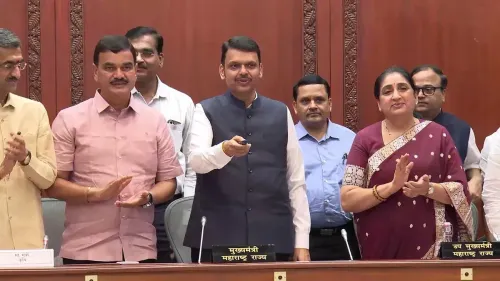
The CMO's post confirmed that Chief Minister Devendra Fadnavis personally oversaw the distribution — a deliberate political signal that the state's top office is hands-on with agrarian welfare. The beneficiary count of 6,22,207 and the disbursement of ₹5,029 crore represent what the government is presenting as a completed tranche of loan relief, not a promise.
Direct benefit transfers of this scale — bypassing cooperative bank bureaucracy and reaching individual farmers — have become the preferred delivery mechanism for Maharashtra's debt relief rounds. The model reduces leakage and creates a verifiable paper trail tied to each beneficiary's account.
Fadnavis and Maharashtra's long fight against agrarian debt
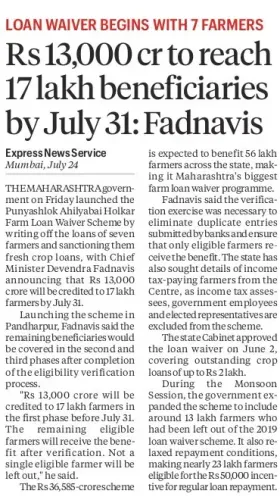
This is not Maharashtra's first encounter with farm debt relief at scale. As far back as 2017, during Fadnavis's first term as Chief Minister (2014–2019), the state launched a major crop loan waiver targeting farmers hit by drought and crop failure — a move that set the template for subsequent rounds. Maharashtra's agrarian belt, particularly in Vidarbha and Marathwada, has historically recorded some of the country's most acute farmer indebtedness, driven by monsoon variability, falling commodity prices, and reliance on cooperative and private credit.
Periodic debt relief programmes have been a recurring feature of Maharashtra politics precisely because the underlying structural pressures — rain-fed agriculture, volatile onion and soybean markets, fragmented landholdings — have not eased. Each waiver round is both a welfare measure and a political reset button.
What the numbers mean on the ground
At an average of roughly ₹80,900 per beneficiary, the per-farmer relief is meaningful for small and marginal cultivators whose entire seasonal credit cycle can be blocked by an outstanding loan. Clearing that liability restores their eligibility for fresh institutional credit — the oxygen a small farm operation needs to plant the next crop.
Completion reports on beneficiary verification and any subsequent phases of the programme will be the real test of whether the disbursement translates into renewed agricultural activity or merely clears a ledger entry.
For Maharashtra's farmers, the ledger has been cleared — the harder question is whether the next season will be kinder than the last.
Point of View
Not cyclical, and repeated relief rounds without accompanying reforms in crop insurance, irrigation, and market linkages risk becoming a fiscal treadmill. The direct-benefit-transfer model does add transparency and reduces leakage compared to earlier waiver mechanisms, but the real policy test is whether freed farmers can access fresh credit and invest productively. Watchdogs and opposition benches will scrutinise beneficiary verification data to determine whether the headline numbers hold up to ground-level audit.
NationPress
22 Sept 2026
Frequently Asked Questions
How many farmers benefited from Maharashtra's loan waiver in 2026?
According to the Chief Minister's Office of Maharashtra, 6,22,207 farmers have been freed from crop loans under the latest tranche of the state's debt relief programme.
How much money did CM Devendra Fadnavis disburse to farmers?
Chief Minister Devendra Fadnavis disbursed ₹5,029 crore directly to beneficiary farmers, as announced by the CMO on 8 August 2026 .
What is Maharashtra's history with farm loan waivers?
Maharashtra has periodically launched crop loan waivers to address agrarian distress. A major waiver was announced during Fadnavis's first term in 2017 , targeting drought-affected farmers, and the state has continued such programmes given persistent indebtedness in regions like Vidarbha and Marathwada .
How does the direct benefit transfer model work for farm loan relief?
Under the direct benefit transfer model, the state government clears outstanding crop loans by transferring funds directly into individual farmers' bank accounts, bypassing intermediaries and reducing leakage while creating a verifiable record for each beneficiary.
What happens after a farmer's crop loan is waived in Maharashtra?
Once an outstanding crop loan is cleared, the farmer regains eligibility for fresh institutional credit, allowing them to borrow for the next planting season without the burden of prior defaults blocking their access.