CM Fadnavis Waives 2026-27 Crop Loan Repayment Condition, Benefit Up to Rs 2 Lakh
Synopsis
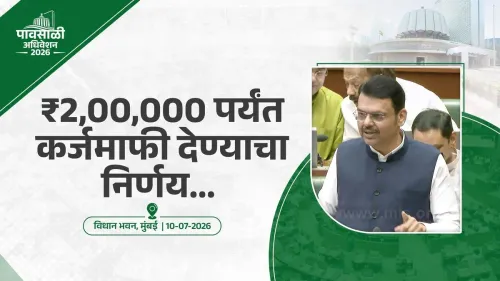
Chief Minister Devendra Fadnavis has announced cancellation of the mandatory repayment condition on crop loans for 2026-27 in Maharashtra, extending a benefit of up to Rs 2 lakh to farmers. The move continues the state's pattern of periodic agricultural debt relief and aims to restore institutional credit access for small farmers.
Key Takeaways
The Chief Minister's Office of Maharashtra announced on 11 July 2026 that CM Devendra Fadnavis has cancelled the crop-loan repayment condition for 2026-27 .
Eligible farmers stand to receive a benefit of up to Rs 2 lakh under the announcement.
The move removes a structural barrier that previously prevented farmers with outstanding dues from accessing fresh institutional credit.
In 2017 , the Fadnavis government had announced a similar waiver capping relief at Rs 1.5 lakh ; the new ceiling is higher at Rs 2 lakh .
Formal eligibility criteria and disbursement timelines are awaited through official state government notifications.
Small and marginal farmers dependent on cooperative and nationalised banks for pik karj are the primary beneficiaries.
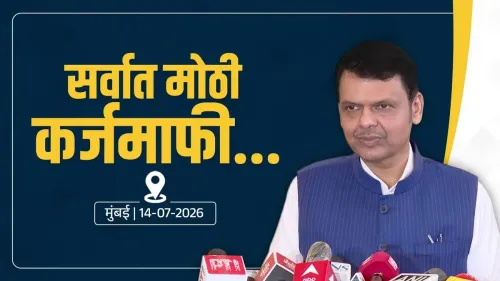
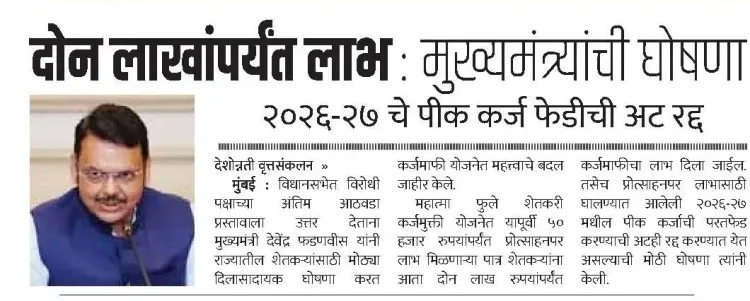
The Chief Minister's Office of Maharashtra announced on Saturday, 11 July 2026 that Chief Minister Devendra Fadnavis has scrapped the mandatory repayment condition on crop loans for 2026-27, extending a benefit of up to Rs 2 lakh to eligible farmers across the state.
The post, shared on the official CMO Maharashtra account, stated in Marathi: 'दोन लाखांपर्यंत लाभ : मुख्यमंत्री देवेंद्र फडणवीस यांची घोषणा 2026-27 चे पीक कर्ज फेडीची अट रद्द' — meaning, 'Benefit up to two lakh: Chief Minister Devendra Fadnavis's announcement — the repayment condition for 2026-27 crop loans stands cancelled.'
Context
Maharashtra has one of the largest agrarian populations in India, with millions of small and marginal farmers dependent on short-term crop loans — known as Kisan Credit or pik karj — to finance each sowing season. Repayment conditions attached to these loans have historically acted as a barrier, preventing farmers with outstanding dues from accessing fresh credit for the next cycle. By cancelling the repayment condition for 2026-27, the state government is allowing farmers to draw new crop loans irrespective of whether they have cleared prior dues.
Policy Backdrop
This announcement follows a well-established pattern of agricultural debt relief in Maharashtra. In 2017, the state government under Devendra Fadnavis — during his first term as Chief Minister — announced a crop-loan waiver covering outstanding dues up to Rs 1.5 lakh for eligible farmers. The latest measure raises the ceiling to Rs 2 lakh and specifically targets the repayment precondition, which has often been cited by farmer organisations as a structural hurdle in the credit delivery system.
Across Indian states, periodic relaxation of crop-loan repayment norms has become a recurring policy instrument, typically deployed ahead of the kharif or rabi sowing season and in response to agrarian distress triggered by erratic monsoon patterns or falling commodity prices. The 2026-27 iteration by the Fadnavis government continues this state-level tradition of combining direct debt relief with structural adjustments to credit eligibility.
Stakeholders and Impact
The primary beneficiaries of this move are small and marginal farmers in Maharashtra who had been unable to repay their 2025-26 crop loans and consequently risked being locked out of institutional credit for the new agricultural year. By removing the repayment precondition and capping the benefit at Rs 2 lakh, the announcement is designed to ensure continued access to formal banking channels for this segment. District cooperative banks and nationalised banks that disburse pik karj are expected to be the primary delivery institutions.
Farmer welfare organisations and opposition parties are likely to scrutinise the eligibility criteria, the definition of 'benefit' — whether it constitutes a full waiver or a restructuring — and the timeline for implementation. State budget documents and notifications from the revenue and cooperation departments will be critical in clarifying these details.
What's Next
The government is expected to issue formal circulars to district-level cooperative and commercial banks outlining the exact eligibility criteria, documentation requirements, and disbursement timelines for the revised crop-loan policy. Observers will watch whether the announcement is backed by a supplementary budgetary allocation or absorbed within existing agricultural credit guarantees. The move is likely to face scrutiny in the state legislature, where opposition members may seek clarity on the fiscal cost and the number of farmers covered under the Rs 2 lakh ceiling.
Point of View
At the height of the kharif sowing season — is politically deliberate, offering immediate relief to a constituency that has historically been central to electoral outcomes in rural Maharashtra. By raising the benefit ceiling from the 2017 benchmark of Rs 1.5 lakh to Rs 2 lakh, the Fadnavis administration signals both continuity and escalation in its agricultural welfare posture. However, the critical unknown remains whether this constitutes a full loan waiver or a restructuring of repayment terms, a distinction that will determine its real fiscal weight and on-ground impact. The move also sets a floor for competing political promises ahead of any future electoral cycle in the state.
NationPress
10 Oct 2026
Frequently Asked Questions
What has CM Devendra Fadnavis announced for Maharashtra farmers in July 2026?
CM Devendra Fadnavis has announced the cancellation of the mandatory crop-loan repayment condition for 2026-27, with a benefit of up to Rs 2 lakh for eligible farmers in Maharashtra.
What is the benefit ceiling under the Maharashtra crop loan announcement?
The announced benefit ceiling is Rs 2 lakh per eligible farmer under the 2026-27 crop loan relief measure.
What does cancelling the crop loan repayment condition mean for farmers?
It means farmers who have not repaid their previous crop loans will no longer be barred from accessing fresh institutional credit for the 2026-27 agricultural year.
Has Maharashtra done this before?
Yes. In 2017, the Fadnavis government announced a crop-loan waiver covering dues up to Rs 1.5 lakh. The current measure raises that ceiling and specifically removes the repayment precondition for the new season.
Who benefits from the Maharashtra pik karj repayment condition cancellation?
Small and marginal farmers in Maharashtra who had outstanding crop loans and were at risk of losing access to institutional credit for the 2026-27 sowing season are the primary beneficiaries.