CM Fadnavis wishes Maharashtra Shubh MahaAshtami
Synopsis
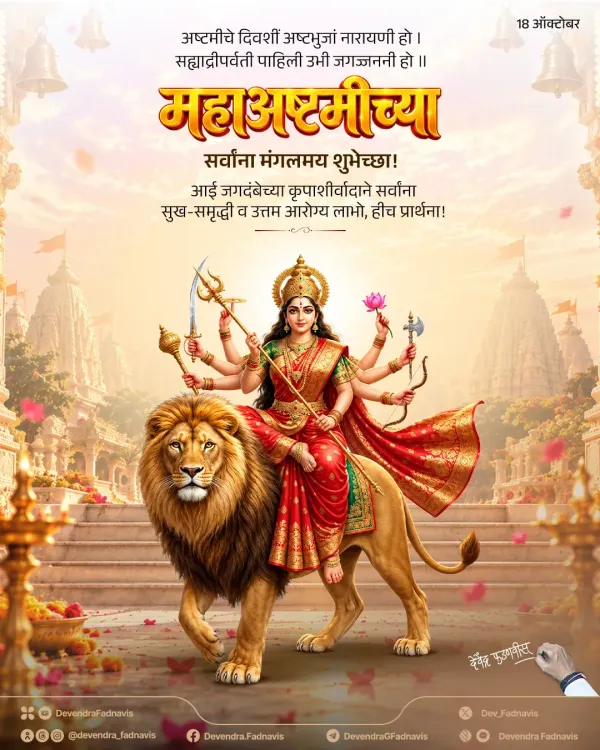
Maharashtra Chief Minister Devendra Fadnavis marked MahaAshtami on 18 October 2026 with a bilingual post invoking Maa Jagdamba's blessings for peace, prosperity, and health, sharing a Marathi devotional verse rooted in the imagery of the Sahyadri mountains.
Key Takeaways
Devendra Fadnavis , Chief Minister of Maharashtra, posted MahaAshtami greetings on 18 October 2026 .
The post was bilingual — English and Marathi — and included a traditional devotional verse referencing the Sahyadri mountains .
He prayed for happiness, prosperity, and excellent health for all through the blessings of Aai Jagdamba .
MahaAshtami is the eighth and one of the most significant nights of the nine-night Navratri festival.
The post was tagged #Navaratri2026 and #Maharashtra , underscoring its public outreach dimension.
On the auspicious occasion of MahaAshtami, Maharashtra Chief Minister Devendra Fadnavis extended warm festive greetings to the people of the state and across India, invoking the blessings of Maa Jagdamba for peace, prosperity, and good health on Sunday, 18 October 2026.
Posting in both English and Marathi, Fadnavis opened with the traditional salutation 'Jai Mata Di!' and shared a devotional Marathi verse: 'अष्टमीचे दिवशीं अष्टभुजां नारायणी हो । सह्याद्रीपर्वती पाहिली उभी जगज्जननी हो ॥' — meaning, 'On the day of Ashtami, the eight-armed Narayani stands upon the Sahyadri mountains, the mother of the universe revealed.' The imagery roots the goddess firmly in Maharashtra's own sacred landscape, the Sahyadri mountain range, making the greeting feel distinctly local even as Navratri is celebrated nationwide.
MahaAshtami and the heart of Navratri
MahaAshtami — the eighth night of the nine-night festival of Navratri — is widely considered one of its most spiritually significant days, dedicated to the fierce and protective forms of Goddess Durga. Across Maharashtra, temples see heightened footfall, and households perform special pujas and offerings. Fadnavis's Marathi prayer translates as: 'May the grace and blessings of Aai Jagdamba bring happiness, prosperity, and excellent health to all — this is our prayer.'
Festive outreach as political tradition in Maharashtra
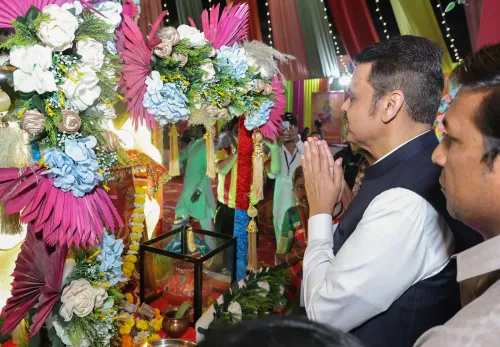
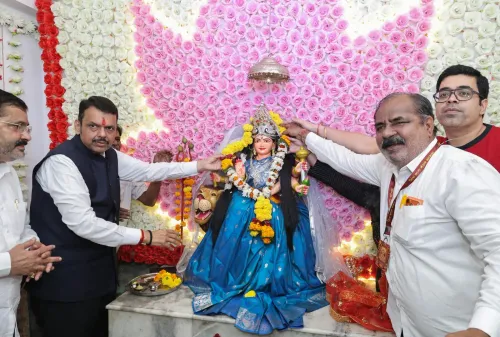
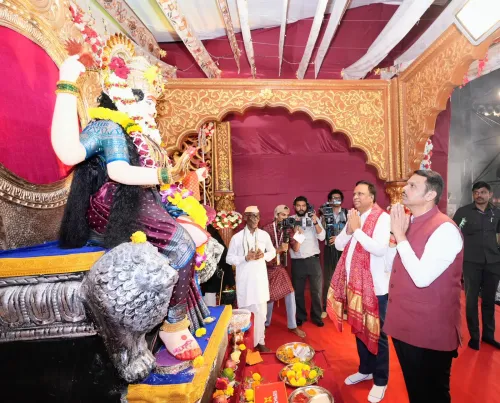
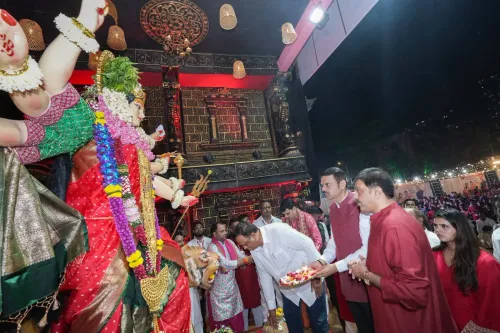
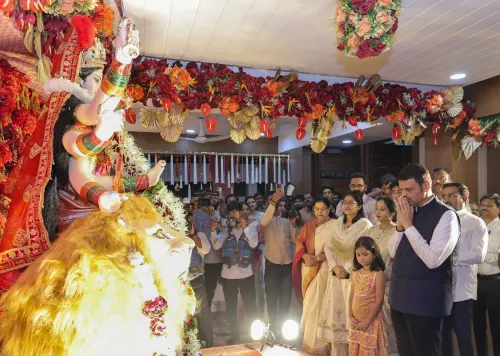
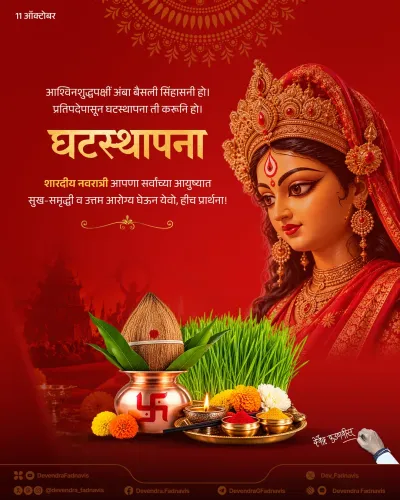
Indian chief ministers routinely use social media during major festivals to connect with citizens and affirm cultural ties — and Fadnavis is no exception. The post, accompanied by a festive image, was tagged with #Navaratri2026, #Maharashtra, and #JaiMataDi, signalling both a personal expression of faith and a deliberate public outreach. For a state as culturally and religiously diverse as Maharashtra, such gestures carry weight well beyond the digital sphere.
Point of View
Blending cultural affirmation with public engagement. Fadnavis's choice of a Marathi devotional verse rooted in the Sahyadri — Maharashtra's defining geographical feature — signals a deliberate effort to speak to a regional identity, not just a national festival. For a BJP leader in a state with a politically active Hindu voter base, visible participation in Navratri observances carries both religious and electoral resonance. The gesture is ceremonial in form but calculated in reach.
NationPress
18 Oct 2026
Frequently Asked Questions
What is MahaAshtami?
MahaAshtami is the eighth night of Navratri, the nine-night Hindu festival dedicated to Goddess Durga. It is considered one of the most spiritually significant days of the festival, marked by special prayers and temple rituals across India.
What did CM Devendra Fadnavis post for MahaAshtami 2026?
Fadnavis posted bilingual greetings in English and Marathi on X, sharing a devotional Marathi verse invoking the eight-armed goddess Narayani on the Sahyadri mountains and praying for peace, prosperity, and good health for all.
What does the Marathi verse in Fadnavis's post mean?
The verse translates as: 'On the day of Ashtami, the eight-armed Narayani stands upon the Sahyadri mountains — the mother of the universe revealed.' It roots the goddess in Maharashtra's own sacred geography.
When is Navratri 2026 celebrated in Maharashtra?
Navratri is a nine-night festival observed annually; MahaAshtami in 2026 fell on Sunday, 18 October 2026, as reflected in Fadnavis's post on that date.
Why do Indian chief ministers post Navratri greetings on social media?
It is a widely followed practice among Indian political leaders to use festive occasions like Navratri to engage with citizens, affirm cultural and religious traditions, and maintain public visibility through social-media outreach.