CM Fadnavis honours Kalam on birth anniversary, Maharashtra marks Vachan Prerna Divas
Synopsis
Maharashtra CM Devendra Fadnavis honoured Dr. APJ Abdul Kalam, the 'Missile Man of India' and 11th President, on his birth anniversary on 15 October 2026, as the state marked Vachan Prerna Divas — its annual observance promoting reading and knowledge among youth.
Key Takeaways
15 October 2026 marks the birth anniversary of Dr.
APJ Abdul Kalam, aerospace scientist and 11th President of India (2002–2007) .
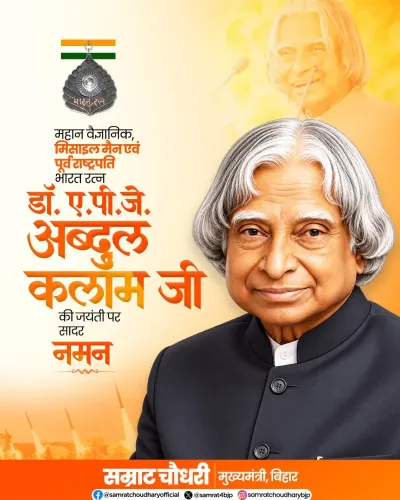
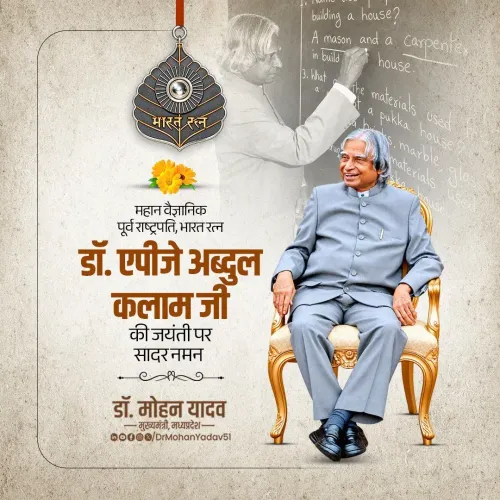
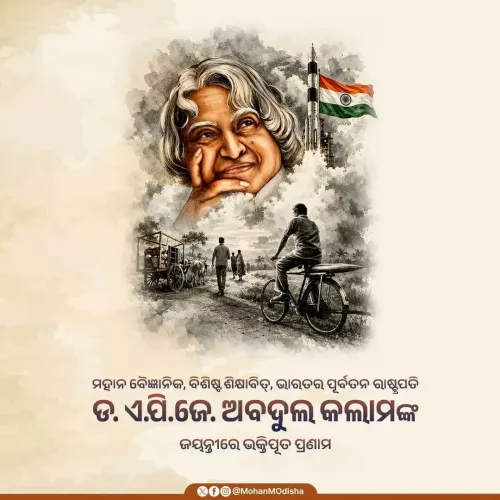
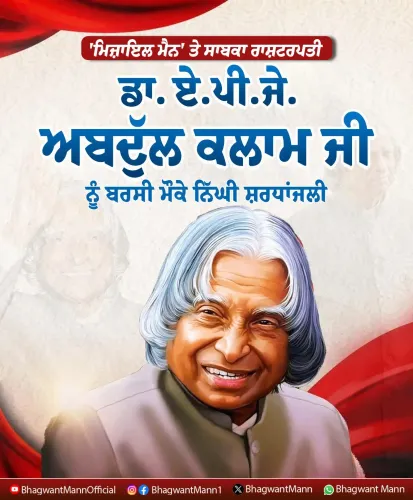
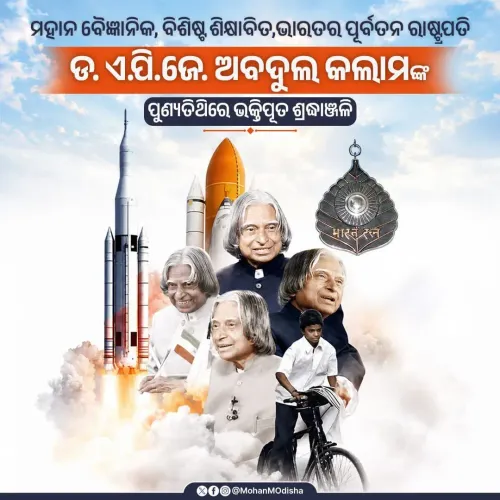
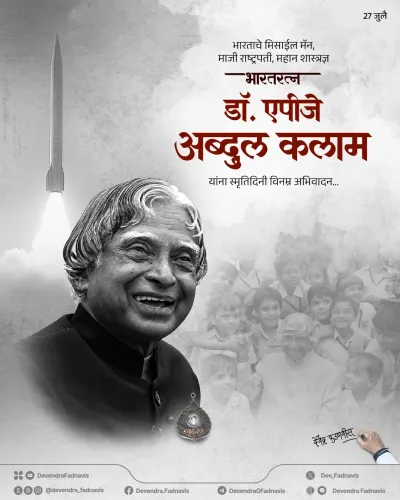
Maharashtra CM Devendra Fadnavis paid tribute, calling Kalam the 'Missile Man of India' and a source of inspiration for the youth.
Maharashtra observes Vachan Prerna Divas (Reading Inspiration Day) every year on Kalam's birth anniversary to promote the habit of reading.
The state-level observance was established after Kalam's death in 2015 , linking his legacy to educational values.
Kalam led development of the Agni and Prithvi missiles at DRDO and ISRO and received the Bharat Ratna in 1997 .
School reading campaigns, library events and youth programmes are organised by the Maharashtra education department each October.
A scientist who gave India its missile programme and later its highest constitutional office — Dr. APJ Abdul Kalam turns 95 in national memory this 15 October, and Maharashtra Chief Minister Devendra Fadnavis led the state's tribute with a post honouring the 'Missile Man of India' on his birth anniversary.
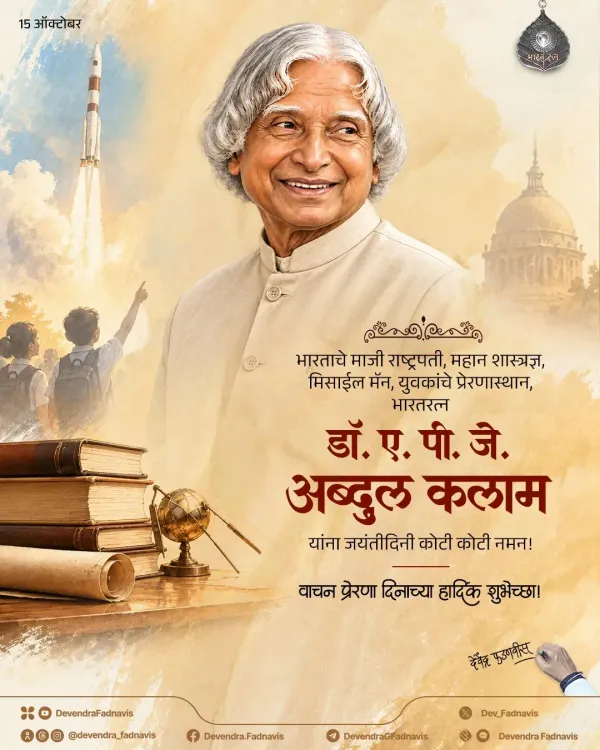
Fadnavis offered what the Marathi tradition calls koti koti naman — 'crores of salutations' — to the former President, scientist, and Bharat Ratna, calling him a source of inspiration for India's youth. He also extended warm wishes for Vachan Prerna Divas, Maharashtra's state-level reading observance held every year on this date.
From DRDO labs to Rashtrapati Bhavan
Dr. Avul Pakir Jainulabdeen Abdul Kalam spent decades as an aerospace scientist at DRDO and ISRO, leading the development of the Agni and Prithvi ballistic missiles — work that earned him the 'Missile Man' title that stuck for life. The nation recognised that contribution with the Bharat Ratna in 1997, five years before he became India's 11th President, serving from 2002 to 2007. He remained, until his death in 2015, perhaps the most beloved public figure in modern India — someone equally at home in a laboratory and a school classroom.
Why Maharashtra reads on 15 October
Following Kalam's passing, the Maharashtra government institutionalised his birth anniversary as Vachan Prerna Divas — 'Reading Inspiration Day' — anchoring the observance in his lifelong devotion to learning and his prolific writing for young readers. Each October, the state's education department channels the occasion into school-level reading campaigns, library events, and youth programmes designed to build the habit Kalam himself preached: pick up a book, expand a mind.
The pattern is part of a broader civic tradition across Indian states, where the legacies of scientists and statesmen are translated into annual educational rituals. Maharashtra's Vachan Prerna Divas is one of the more enduring examples — a state policy that links personal legend directly to classroom practice, generation after generation.
On the anniversary of a man who believed a dreaming child was India's greatest asset, the message from Mantralaya is clear: read, learn, reach.
Point of View
The CM ties a ceremonial moment to a concrete state policy, reinforcing education and youth inspiration as political currency in Maharashtra. The gesture also reflects a broader BJP pattern of reclaiming scientific nationalism — invoking figures like Kalam to project a vision of an aspirational, knowledge-driven India. For a state government, institutionalising a scientist-President's birthday as a reading day is a low-cost, high-visibility way to keep civic values anchored to an enduringly popular figure.
NationPress
15 Oct 2026
Frequently Asked Questions
Why is 15 October celebrated as Vachan Prerna Divas in Maharashtra?
15 October is the birth anniversary of Dr. APJ Abdul Kalam. Maharashtra designated this date as Vachan Prerna Divas (Reading Inspiration Day) after his death in 2015 to honour his love of learning and encourage students to develop the habit of reading.
Who was Dr. APJ Abdul Kalam?
Dr. APJ Abdul Kalam was an aerospace scientist who led India's Agni and Prithvi missile programmes at DRDO and ISRO, received the Bharat Ratna in 1997 , and served as India's 11th President from 2002 to 2007 . He is widely remembered as the 'Missile Man of India.'
What did CM Devendra Fadnavis say on APJ Abdul Kalam's birth anniversary?
CM Fadnavis posted a tribute on 15 October 2026 honouring Kalam as former President, great scientist, 'Missile Man,' and inspiration for youth, extending greetings for Vachan Prerna Divas and offering 'crores of salutations' to his memory.
What activities are held on Vachan Prerna Divas in Maharashtra?
The Maharashtra education department organises school-level reading campaigns, library events, and youth programmes each October to promote reading and knowledge in the spirit of Dr. Kalam's legacy.
What is APJ Abdul Kalam's connection to India's missile programme?
Dr. Kalam was a key scientist at DRDO and ISRO who led the development of the Agni and Prithvi ballistic missiles , earning him the enduring title 'Missile Man of India' and the Bharat Ratna in 1997.