Dharmendra Pradhan Pays Tribute to APJ Abdul Kalam on Birth Anniversary

Synopsis
Union Education Minister Dharmendra Pradhan marked Dr. APJ Abdul Kalam's 95th birth anniversary with a tribute on X, linking the scientist-president's vision for youth and science to the government's Viksit Bharat goal of a developed India by 2047.
Key Takeaways
Dharmendra Pradhan paid tribute to Dr.
APJ Abdul Kalam on his birth anniversary, 15 October , via a post on X.
Kalam was born on 15 October 1931 in Rameswaram, Tamil Nadu , and served as India's 11th President from 2002 to 2007 .
Known as the 'Missile Man of India,' Kalam championed science education and youth empowerment throughout his career and presidency.
Pradhan linked Kalam's legacy directly to Viksit Bharat , the government's vision for a developed India by 2047 .
Kalam's book Ignited Minds and his presidential outreach to students remain touchstones for India's education and science policy discourse.
On what would have been his 95th birthday, the legacy of Dr. A.P.J. Abdul Kalam — aerospace scientist, missile pioneer, and 11th President of India — drew a heartfelt tribute from Union Education Minister Dharmendra Pradhan on Thursday, 15 October 2026, connecting the People's President's enduring vision to India's ambitions for the decades ahead.
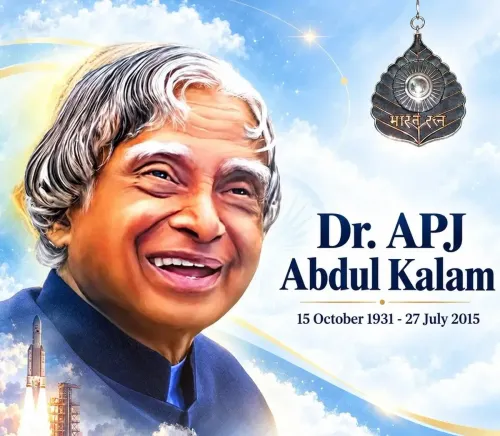
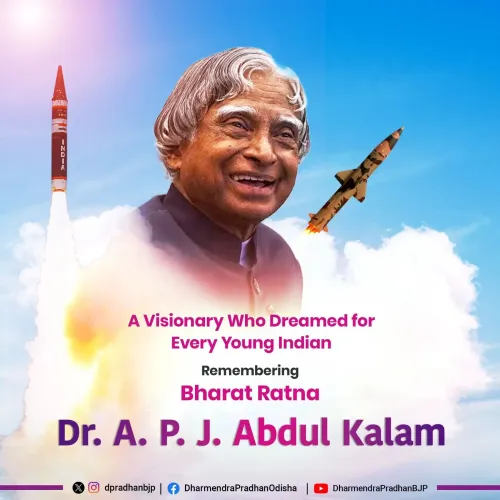
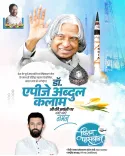
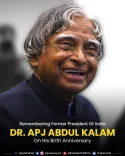
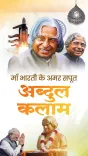
Pradhan remembered Kalam as a figure whose 'vision continues to ignite young minds and inspire a Viksit Bharat,' invoking the government's flagship national development goal of a developed India by 2047. The tribute, posted on X with an accompanying image, was brief but deliberate — the Education Minister drawing a direct line from a scientist-president who championed youth and science to the policy priorities of his own ministry today.
The Scientist Who Became the People's President
Born on 15 October 1931 in Rameswaram, Tamil Nadu, Kalam rose from modest origins to lead India's ballistic missile programme and its civilian space efforts, earning the title 'Missile Man of India.' His tenure as President from 2002 to 2007 was unlike any before it — he spent much of it in schools and universities, speaking directly to students, urging them to dream without limits.
His book Ignited Minds became shorthand for a whole philosophy: that India's greatest strategic asset was its young population, and that science and education were the engines of national transformation. It is precisely that philosophy that Pradhan, as Education Minister overseeing the National Education Policy, has repeatedly cited as a north star.
Kalam's Legacy Inside the Viksit Bharat Frame
Annual tributes to Kalam on 15 October are a fixture across India's political spectrum — his appeal has never been the property of one party. What makes Pradhan's post notable is the explicit linkage to Viksit Bharat, the BJP-led government's vision document targeting a fully developed India by the centenary of independence.
The framing is consistent with how the current government has positioned science, technology, and education investment — as a continuation of Kalam's unfulfilled ambitions rather than a departure from them. For the Education Ministry specifically, that means NEP implementation, a push toward research universities, and coding and STEM initiatives aimed squarely at the demographic Kalam spent a presidency trying to energise.
Kalam passed away on 27 July 2015 while delivering a lecture at IIM Shillong — fittingly, mid-sentence, in front of students. His birth anniversary remains one of the few occasions that draws genuine, cross-partisan remembrance. Pradhan's tribute today keeps that tradition alive — and keeps the Education Ministry's hand firmly on its symbolic inheritance.
Point of View
But the Education Minister's explicit Viksit Bharat framing signals a deliberate attempt to claim the scientist-president's legacy as intellectual scaffolding for current policy — from NEP implementation to STEM investment. It is a soft but consistent messaging strategy: positioning the BJP-led government not as a break from Kalam's India, but as its institutional heir. The real test of that claim lies in whether science education outcomes and research output under NEP begin to move in the direction Kalam spent a lifetime urging.
NationPress
15 Oct 2026
Frequently Asked Questions
When is APJ Abdul Kalam's birth anniversary?
Dr. APJ Abdul Kalam was born on 15 October 1931 in Rameswaram, Tamil Nadu. His birth anniversary is observed every year on 15 October.
Why is APJ Abdul Kalam called the People's President?
Kalam earned the title 'People's President' for his accessibility and his habit of meeting directly with students and youth during his presidential tenure from 2002 to 2007 , breaking from the ceremonial distance typical of the office.
What is Viksit Bharat and how is it linked to Kalam's vision?
Viksit Bharat is the Indian government's vision for a fully developed India by 2047 , the centenary of independence. Leaders like Dharmendra Pradhan connect it to Kalam's emphasis on science, technology, and youth empowerment as drivers of national transformation.
What did APJ Abdul Kalam write in Ignited Minds?
In Ignited Minds , Kalam argued that India's young population was its greatest strategic asset and that investing in science education and inspiring youth to dream ambitiously was the path to national greatness.
What is Dharmendra Pradhan's role in Indian education?
Dharmendra Pradhan is the Union Minister of Education of India, a senior BJP leader and former Union Petroleum Minister, currently overseeing the implementation of the National Education Policy.