Kishan Reddy Highlights 4,424 Solar Units in Hyderabad Under PM Surya Ghar
Synopsis
Union Minister G. Kishan Reddy posts district-level data showing 4,424 rooftop solar units installed in Hyderabad under PM Surya Ghar: Muft Bijli Yojana, with 19.42 MW capacity and ₹28.75 crore in Central Financial Assistance released as of September 2026.
Key Takeaways
4,424 rooftop solar units have been installed in Hyderabad district under PM Surya Ghar: Muft Bijli Yojana as of September 2026 .
Total installed capacity in the district stands at 19.42 MW , with ₹28.75 crore in Central Financial Assistance already released.
Eligible residential consumers can receive up to ₹78,000 in financial assistance for rooftop solar installation.
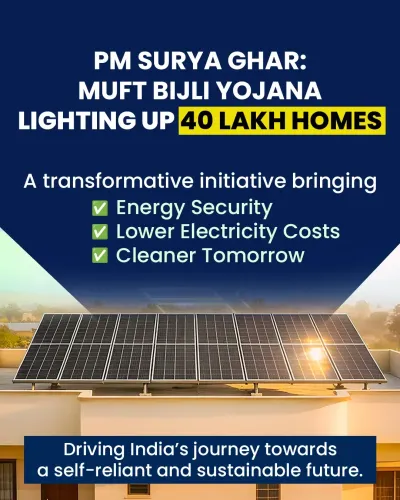
PM Surya Ghar: Muft Bijli Yojana was launched in February 2024 by the Modi government and is overseen by the Ministry of New and Renewable Energy .
The scheme is part of India's broader target to achieve 500 GW of non-fossil fuel capacity by 2030 .
Union Minister and BJP Telangana president G.
Kishan Reddy used the post to encourage Hyderabad residents to apply for the scheme.
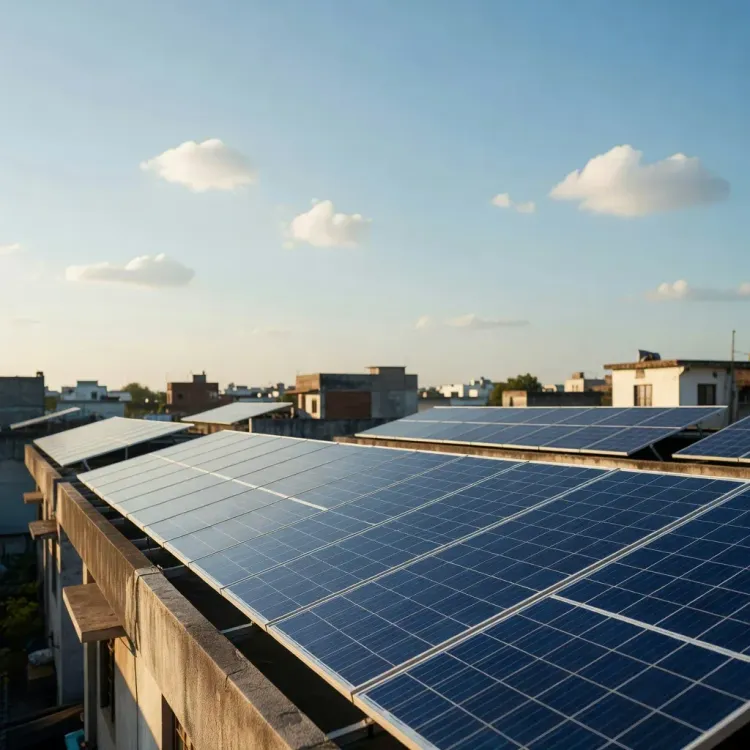
Rooftops in Hyderabad are quietly becoming power plants — and Union Coal and Mines Minister G. Kishan Reddy wants every resident in the district to know it. On Thursday, 15 October 2026, the minister posted a detailed update on X spotlighting the on-ground momentum of PM Surya Ghar: Muft Bijli Yojana, the central government's flagship rooftop solar subsidy programme, with specific district-level figures that put the scheme's scale in sharp relief.
Hyderabad's Rooftop Solar Scoreboard
The numbers Kishan Reddy cited are striking for a single district. 4,424 rooftop solar units have been installed across Hyderabad district, delivering a combined 19.42 MW of installed capacity. The central government has released ₹28.75 crore in Central Financial Assistance for the district as of September 2026. That means real rupees — and real kilowatts — have already flowed down to ordinary households, not just to a scheme document on a ministry website.
The minister also highlighted a key access feature of the scheme: eligible residential consumers can receive financial assistance of up to ₹78,000 toward the cost of a rooftop solar installation, making what was once a premium upgrade viable for middle- and lower-income families.
The Scheme Behind the Figures
PM Surya Ghar: Muft Bijli Yojana was launched in February 2024 by the Prime Minister Narendra Modi-led government. Its core logic is simple and powerful: let households generate their own electricity, cut their bills to near zero, and get paid for surplus power fed back to the grid. Implementation oversight sits with the Ministry of New and Renewable Energy (MNRE), which Kishan Reddy tagged directly in his post.
The programme fits squarely into India's larger energy ambition — reaching 500 GW of non-fossil fuel capacity by 2030 and its net-zero commitments beyond that. Rooftop solar is the decentralised piece of that puzzle: it does not wait for a new transmission corridor or a utility-scale park; it scales block by block, neighbourhood by neighbourhood.
Kishan Reddy's Strategic Messenger Role
There is a clear political geography at work here. As BJP Telangana state president, Kishan Reddy is simultaneously a national-government minister and the party's point-person in a state where the BJP is in opposition. Amplifying a tangible, street-level benefit — lower electricity bills in a major urban district — is exactly the kind of message that bridges the gap between national policy and local electoral relevance. Hyderabad is the state's most visible and populous district; 4,424 installations and ₹28.75 crore released are numbers that resonate in housing colony WhatsApp groups as much as in policy briefings.
His post also ended with a direct citizen call-to-action: 'Swipe through to see the progress and learn how you can apply' — treating the platform not just as a broadcast channel but as a registration-awareness tool.
If Hyderabad district's pace holds, and the rest of Telangana follows, the state could yet become a showcase for how a BJP-in-opposition government can still deliver central-scheme benefits to voters — rooftop by rooftop, kilowatt by kilowatt.
Point of View
Especially in a state where the BJP is in opposition and needs to demonstrate delivery. The ₹78,000 subsidy headline makes the scheme tangible for urban middle-class families who dominate Hyderabad's electorate. More broadly, the post reflects how the Modi government is increasingly using constituency-level scheme data as a political asset, turning administrative roll-out numbers into voter-facing narratives ahead of state-level cycles. The key policy question going forward is whether disbursement pace and grid-connectivity for feed-in tariffs can keep up with installation momentum.
NationPress
15 Oct 2026
Frequently Asked Questions
What is PM Surya Ghar: Muft Bijli Yojana?
PM Surya Ghar: Muft Bijli Yojana is a central government scheme launched in February 2024 to subsidise rooftop solar installations for residential households, offering financial assistance of up to ₹78,000 per eligible consumer to reduce electricity costs and promote clean energy.
How many rooftop solar units have been installed in Hyderabad under PM Surya Ghar?
As of September 2026, 4,424 rooftop solar units have been installed in Hyderabad district, with a combined installed capacity of 19.42 MW and ₹28.75 crore in Central Financial Assistance released, according to data shared by Union Minister G. Kishan Reddy.
How much subsidy can I get under PM Surya Ghar scheme?
Eligible residential consumers can receive Central Financial Assistance of up to ₹78,000 under the PM Surya Ghar: Muft Bijli Yojana for installing a rooftop solar system at their homes.
Who oversees PM Surya Ghar: Muft Bijli Yojana?
The scheme is implemented and overseen by the Ministry of New and Renewable Energy (MNRE), the central ministry responsible for India's rooftop solar programme.
How can I apply for PM Surya Ghar rooftop solar scheme in Hyderabad?
Residential consumers in Hyderabad can apply through the official MNRE portal for PM Surya Ghar: Muft Bijli Yojana. The scheme involves empanelled vendors and coordination with the local electricity distribution company for grid connectivity.