CM Fadnavis Launches Samruddha Panchayat Raj Abhiyan 2.0 in Nashik
Synopsis
Maharashtra CM Devendra Fadnavis launched Samruddha Panchayat Raj Abhiyan 2.0 in Nashik, focusing on lake desilting, check dam repair and drought relief, while distributing 2025-26 awards and pledging personal visits to the top 12 gram panchayats.
Key Takeaways
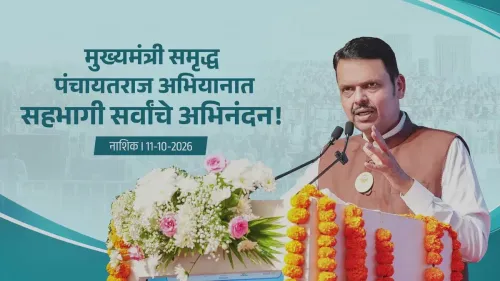
Mukhyamantri Samruddha Panchayat Raj Abhiyan 2.0 (2026-27) was formally launched at Nashik on October 11, 2026 .
The second phase will focus on desilting lakes , repairing check dams and conserving natural resources to increase rural water storage.
CM Fadnavis announced he will personally visit the top 12 Gram Panchayats to review development work on the ground.
The Maharashtra government pledged to go beyond standard criteria to provide drought relief to affected farmers.
The programme carries assured government funding and a rural employment generation component embedded in each conservation task.
Padma Shri Popatrao Pawar , widely recognised for the water-sufficient Hiware Bazar model, was present at the ceremony alongside senior cabinet ministers.
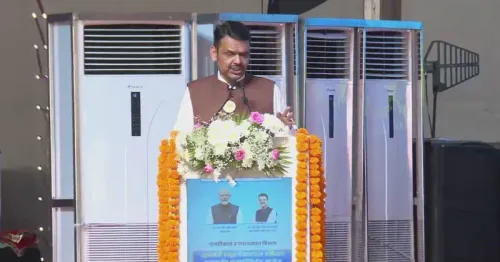
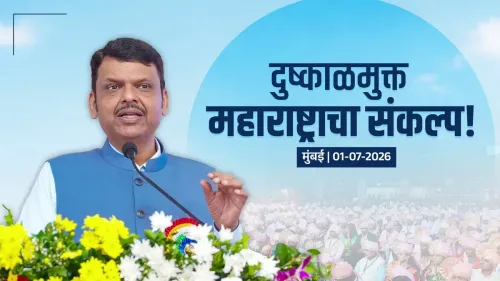
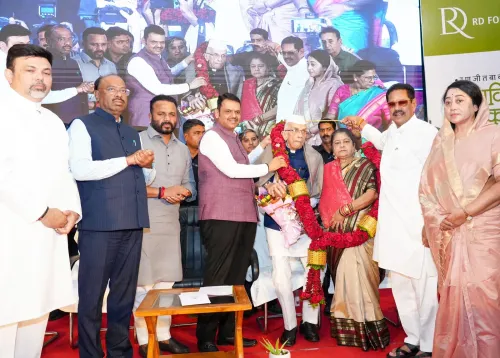
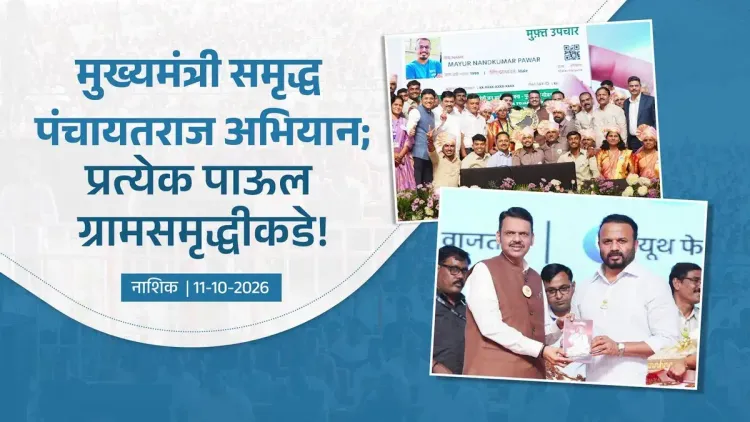
With a promise to personally walk the lanes of Maharashtra's best-performing villages, Maharashtra Chief Minister Devendra Fadnavis on Sunday, October 11, 2026, distributed the 'Mukhyamantri Samruddha Panchayat Raj Abhiyan 2025-26' awards and simultaneously launched its successor programme — Samruddha Panchayat Raj Abhiyan 2.0 (2026-27) — at a ceremony in Nashik.
What Abhiyan 2.0 Promises — and Who It Targets
The second phase sharpens its focus on tangible water conservation infrastructure: desilting of lakes, repair of check dams, and protection of natural resources to expand rural water storage. The programme carries an explicit commitment of assured government funding — a signal to gram panchayats that approved projects will not be left mid-way for want of budget releases. Critically, the campaign is also designed to generate employment for rural workers, weaving a jobs component into every conservation task.
Fadnavis announced he will make personal field visits to the top 12 Gram Panchayats to review on-ground development works — an unusual pledge for a sitting Chief Minister and one that places direct political accountability on local governance outcomes.
Drought Relief Running Parallel to the Awards Ceremony
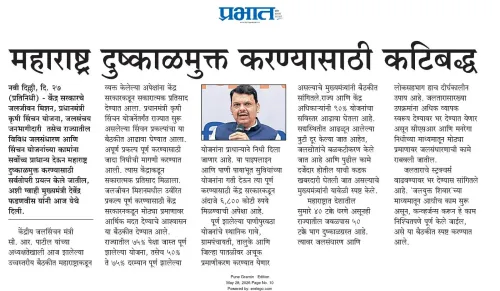
The festive backdrop of award distribution carried a sober undertone. Fadnavis directly addressed the ongoing drought situation in Maharashtra, stating that the state government stands firmly with farmers and is prepared to go 'beyond standard criteria wherever necessary' to deliver relief. The comment signals administrative flexibility — districts and talukas facing acute distress may receive assistance that exceeds routine drought-relief norms.
The Chief Minister pointed to the Jalyukt Shivar Abhiyan — Maharashtra's flagship water-conservation drive launched a decade ago — as proof that convergence between elected representatives, administration and villagers can produce lasting results. Abhiyan 2.0 is explicitly framed as an evolution of that philosophy, with water security remaining the backbone.
Who Shared the Stage at Nashik
The event brought together a significant political and administrative gathering. Legislative Council Chairman Prof Ram Shinde, Minister Girishbhau Mahajan, Minister Jaykumar Gore, Minister Dadaji Bhuse, Minister Narhari Zirwal, and Padma Shri Popatrao Pawar — the widely-recognised architect of water-sufficient Hiware Bazar village — were present alongside members of the state legislature. Pawar's presence was notably symbolic: his village model is precisely the template Abhiyan 2.0 seeks to replicate at scale.
Visible gains already recorded under the first phase — improved roads, sanitation and water supply across participating villages — were cited as evidence that the programme's incentive architecture is working. The 2.0 launch is designed to sustain that momentum with a tighter operational calendar for the 2026-27 fiscal year.
If the Chief Minister follows through on his field-visit pledge, the top twelve panchayats will soon find themselves at the centre of a very public — and very scrutinised — test of rural governance in Maharashtra.
Point of View
Then escalate targets in successive phases. Fadnavis's pledge to personally inspect the top twelve panchayats is unusual executive activism that converts a state scheme into a political deliverable with his name directly attached. The explicit mention of going 'beyond standard drought-relief criteria' is the more consequential signal — it suggests the government anticipates that existing norms will be insufficient for this season's distress, and is pre-emptively granting administrative leeway to district officials. Whether Abhiyan 2.0's water-storage targets translate into measurable groundwater recovery before the next monsoon will be the real political test.
NationPress
11 Oct 2026
Frequently Asked Questions
What is Mukhyamantri Samruddha Panchayat Raj Abhiyan 2.0?
It is the second phase of Maharashtra's gram panchayat development programme, launched for 2026-27, focusing on desilting lakes, repairing check dams, conserving natural resources and generating rural employment, with assured government funding.
Where was Samruddha Panchayat Raj Abhiyan 2.0 launched?
The programme was launched by CM Devendra Fadnavis at a ceremony in Nashik on October 11, 2026.
Which panchayats will CM Fadnavis visit personally?
Fadnavis announced he will personally visit the top 12 Gram Panchayats that performed best under the 2025-26 phase to review on-ground development works.
What drought relief did Fadnavis announce for Maharashtra farmers?
Fadnavis stated that the Maharashtra government will stand with farmers during the current drought and is willing to go beyond standard relief criteria wherever necessary to provide assistance.
What is the connection between Abhiyan 2.0 and Jalyukt Shivar?
Fadnavis cited Jalyukt Shivar Abhiyan, Maharashtra's earlier flagship water-conservation drive, as proof that collaboration between elected representatives, administration and villagers yields results — framing Abhiyan 2.0 as a continuation of that philosophy.