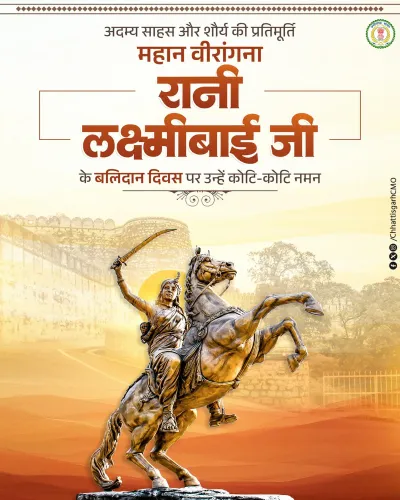
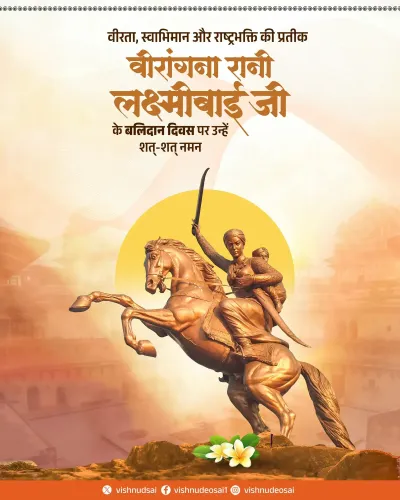
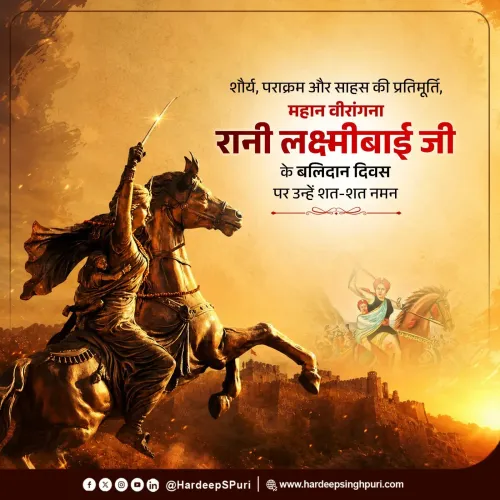
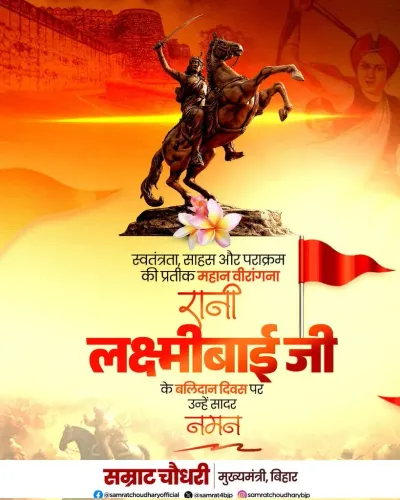
CM Fadnavis pays tribute to Rani Laxmi Bai on SmrutiDin
Synopsis
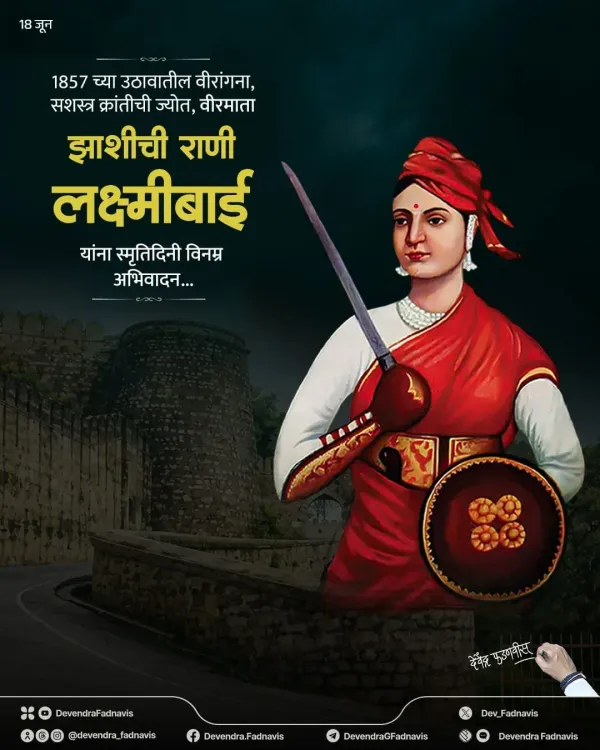
Maharashtra Chief Minister Devendra Fadnavis on 18 June 2026 paid tribute to Rani Laxmi Bai on her SmrutiDin, honouring the 1857 revolt icon as a symbol of courage in a bilingual English-Marathi post on X.
Key Takeaways
Devendra Fadnavis , Maharashtra Chief Minister, posted a tribute to Rani Laxmi Bai on 18 June 2026 , her annual death anniversary.
The post was bilingual — English and Marathi — reflecting both a national and regional audience.
Rani Laxmi Bai died in combat near Gwalior on 18 June 1858 , during the 1857 revolt against the East India Company.
Maharashtra governments have officially marked the 18 June anniversary with tributes and school programmes since at least the 1990s .
The tribute is part of a broader BJP pattern of amplifying 1857 figures on their anniversaries to highlight regional contributions to India's independence struggle.
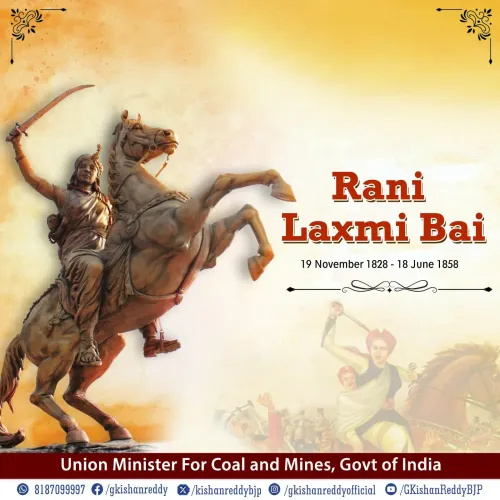
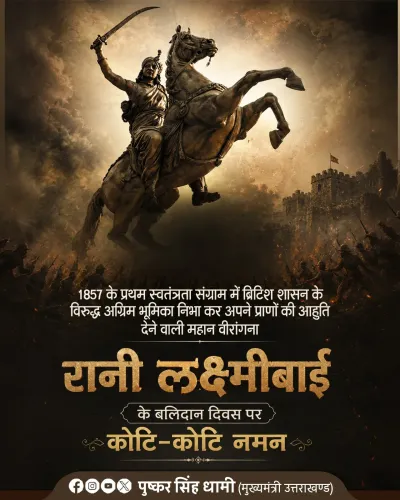
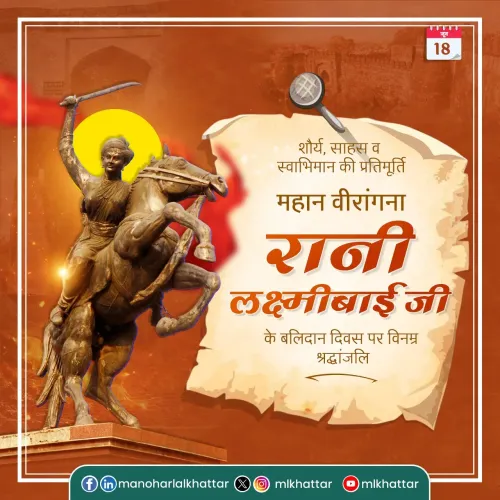
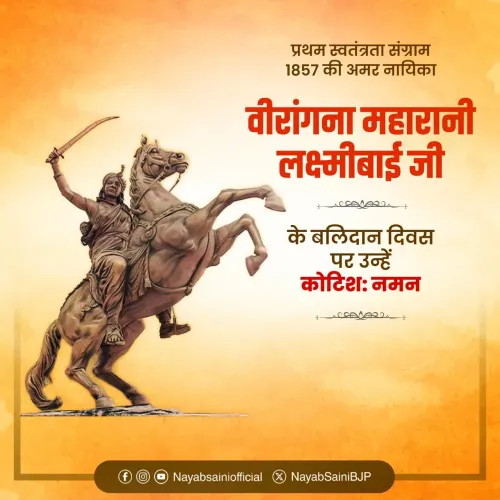
Maharashtra Chief Minister Devendra Fadnavis on Thursday, 18 June 2026, paid tribute to Rani Laxmi Bai of Jhansi on her death anniversary, honouring the 1857 uprising icon as 'the eternal Queen of Jhansi, the symbol of courage and the brave mother.'
Context
Each year on 18 June, the anniversary of Rani Laxmi Bai's death in battle in 1858, public figures across India observe her SmrutiDin (death remembrance day). Fadnavis posted both in English and Marathi, calling her '1857 च्या उठावातील वीरांगना, सशस्त्र क्रांतीची ज्योत' — 'the brave woman of the 1857 uprising, the flame of armed revolution.' The bilingual post signals the tribute's resonance with Maharashtra's Marathi-speaking population as much as with a national audience.
Rani Laxmi Bai ruled the princely state of Jhansi, located in present-day Uttar Pradesh, until the British annexed it under the Doctrine of Lapse in 1853. She took up arms and became one of the foremost military commanders of the 1857 revolt against the East India Company, dying in combat near Gwalior on 18 June 1858.
Policy Backdrop
Maharashtra governments have formally marked Rani Laxmi Bai's June anniversary with official tributes and school programmes since at least the 1990s, embedding her legacy in the state's civic calendar. BJP-ruled states have in recent years amplified such commemorations on social media, using the anniversaries of 1857 figures to underscore regional contributions to the national independence struggle.
The practice reflects a broader political-cultural effort to weave together Marathi regional pride and a pan-Indian narrative of armed resistance against colonial rule. Fadnavis, as the state's chief executive, issuing the tribute officially from his verified account reinforces the institutional character of the observance beyond a personal gesture.
Stakeholders and Impact
The tribute is directed at Maharashtrian citizens, students, and the wider public engaged with India's independence history. For history educators, the anniversary serves as a pedagogical moment: Maharashtra's school curriculum includes Rani Laxmi Bai's role in the 1857 revolt, and public statements by the Chief Minister lend official weight to classroom observances.
Hashtags including #RaniLaxmiBai, #JhansiKiRani, and #Maharashtra in the post extend its reach to audiences searching for anniversary content in both Hindi and English, reflecting the cross-linguistic cultural ownership of the Jhansi queen's legacy across India.
What's Next
State-level commemorations, wreath-laying ceremonies at memorials, and school programmes typically accompany the 18 June anniversary across Maharashtra. The Chief Minister's public post is likely to be followed by similar tributes from other state ministers and party functionaries through the day. Rani Laxmi Bai's legacy continues to be invoked in debates around women's empowerment, national identity, and the teaching of colonial-era history in Indian schools.
Point of View
The Chief Minister simultaneously addresses a pan-Indian digital audience and roots the homage in Maharashtrian cultural identity. The annual SmrutiDin observance has evolved from a state-calendar formality into a social-media moment that BJP leaders use to reinforce a narrative of indigenous armed resistance against colonial rule. Framing Rani Laxmi Bai as 'veer maata' — the brave mother — also taps into a gendered idiom of valour that resonates with women-centric electoral messaging. The consistency of such tributes across BJP-governed states signals a coordinated effort to claim the 1857 legacy as a cornerstone of the party's nationalist cultural politics.
NationPress
18 Sept 2026
Frequently Asked Questions
When is Rani Laxmi Bai's SmrutiDin observed?
Rani Laxmi Bai's SmrutiDin is observed on 18 June each year, marking the anniversary of her death in battle near Gwalior on 18 June 1858 .
Why did Devendra Fadnavis pay tribute to Rani Laxmi Bai?
As Maharashtra Chief Minister , Fadnavis paid tribute on her annual death anniversary, continuing a long-standing state tradition of officially honouring the 1857 revolt icon on 18 June .
Who was Rani Laxmi Bai and why is she important?
Rani Laxmi Bai was the Queen of Jhansi who led armed resistance against the British East India Company during the 1857 revolt and is regarded as one of India's foremost symbols of courage and anti-colonial resistance.
What does SmrutiDin mean?
SmrutiDin is a Marathi word meaning 'remembrance day' or death anniversary, used to mark the day a revered historical or public figure passed away.
How does Maharashtra commemorate Rani Laxmi Bai's anniversary?
Maharashtra governments have marked 18 June with official tributes, wreath-laying ceremonies, and school programmes since at least the 1990s , with the Chief Minister's public statement typically anchoring the day's observances.