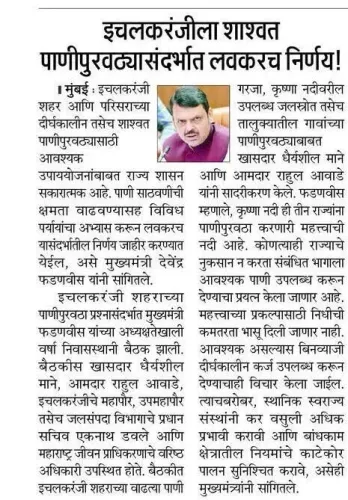
CM Fadnavis Announces ₹3200 Cr Flood Plan for Kolhapur, Sangli
Synopsis
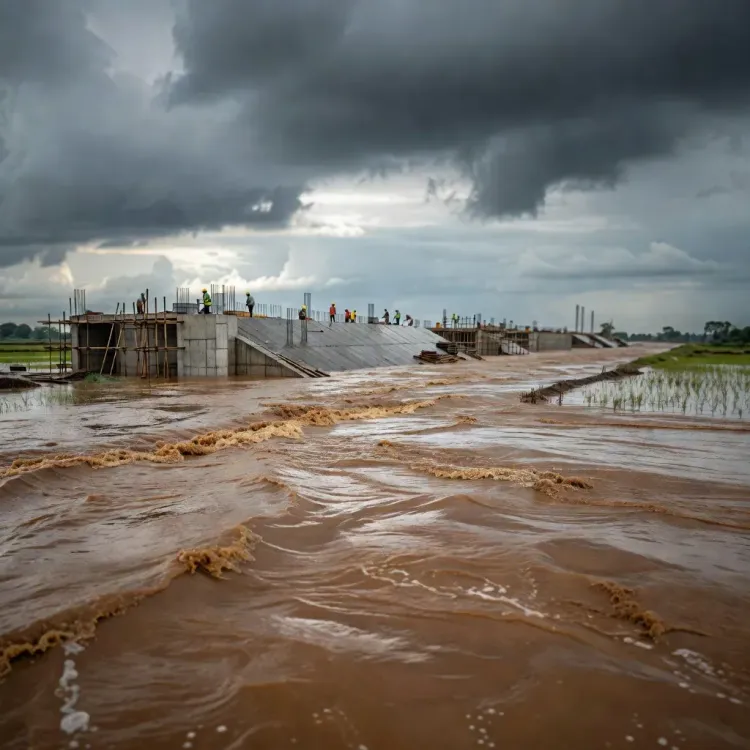
Chief Minister Devendra Fadnavis on 28 July 2026 announced a ₹3,200 crore flood management plan for Kolhapur and Sangli — two western Maharashtra districts chronically battered by Krishna and Panchganga river flooding — signalling a structural shift from seasonal relief to long-term mitigation.
Key Takeaways
Chief Minister Devendra Fadnavis announced a ₹3,200 crore flood management plan for Kolhapur and Sangli on 28 July 2026 .
Kolhapur is vulnerable to the Panchganga river system ; Sangli faces recurring Krishna river overflows.
State-level flood mitigation planning gained urgency after the devastating 2019 Krishna basin floods .
The package is expected to combine structural measures (embankments, desilting) with non-structural ones (early-warning systems).
Exact project components, timeline, and the central government funding share are yet to be publicly detailed.
The announcement directly benefits flood-affected residents and farming communities across western Maharashtra.
Every monsoon, the Krishna and Panchganga rivers extract a brutal toll from western Maharashtra — submerged homes, drowned harvests, and communities that have learned to live with loss. On Tuesday, 28 July 2026, Chief Minister Devendra Fadnavis moved to break that cycle, announcing a ₹3,200 crore flood management plan for Kolhapur and Sangli — two districts that have borne the brunt of recurring basin flooding for decades.
Two Districts, One Chronic Crisis
Kolhapur, fed by the volatile Panchganga river system, and Sangli, repeatedly overwhelmed by Krishna river overflows, sit at the epicentre of Maharashtra's monsoon vulnerability. The 2019 Krishna basin floods were a watershed moment — tens of thousands displaced, standing crops destroyed, and infrastructure buckled — accelerating state-level pressure to move beyond emergency relief toward structural solutions. For farmers and flood-affected residents in these districts, the cycle has been punishing and predictable: water rises, the state responds, the water recedes, and little changes. The ₹3,200 crore package is the Fadnavis government's signal that this time the response will be structural, not seasonal.What the ₹3,200 Crore Package Targets
Maharashtra governments have historically combined embankments, river desilting, and early-warning systems when addressing Krishna and Panchganga catchment flooding. The announced package is expected to follow that multi-pronged architecture — structural barriers alongside non-structural measures like flood forecasting networks that give communities hours, not minutes, of warning. The exact scope, individual components, and implementation timeline are yet to be detailed in a public project report. Key questions — including the tendering schedule and the share of central government funding — remain open and will define how quickly work can begin on the ground.The Infrastructure Bet Behind the Announcement
Chief Minister Fadnavis has consistently positioned large-scale infrastructure investment as the backbone of his governance agenda across his tenures. A ₹3,200 crore commitment to just two districts signals the political and administrative weight being placed on resolving a problem that has cost Maharashtra far more — in relief expenditure, agricultural losses, and eroded public trust — over successive monsoon seasons. For western Maharashtra, a region with significant agricultural and political heft, a credible flood management programme is not merely infrastructure — it is a promise of economic stability to communities whose livelihoods are annually held hostage by the river. The real test arrives when the detailed project report is released and the first tenders are floated. Until then, ₹3,200 crore is a number. What happens next will determine whether it becomes a lifeline.Point of View
200 crore announcement for Kolhapur and Sangli fits a recognisable pattern in Maharashtra politics — large infrastructure commitments to western Maharashtra, a region whose farming communities carry substantial electoral weight. What distinguishes this from prior cycles is the scale: a single-package commitment of this size for two contiguous flood-prone districts suggests a consolidated basin-level approach rather than piecemeal annual repairs. The critical variable is execution — Maharashtra has a history of ambitious flood-mitigation announcements that stall at the tendering stage. If the Fadnavis government moves swiftly to release a detailed project report and secure central co-funding, it could reframe the state's relationship with monsoon risk; if the project lingers in planning, it will become a political liability in the very districts it was meant to reassure.
NationPress
28 Jul 2026
Frequently Asked Questions
What is the ₹3200 crore flood plan announced by CM Fadnavis?
Chief Minister Devendra Fadnavis announced a ₹3,200 crore flood management plan on 28 July 2026 aimed at mitigating recurring monsoon flooding in Kolhapur and Sangli districts of western Maharashtra, likely combining structural works and early-warning systems.
Why are Kolhapur and Sangli so prone to flooding?
Kolhapur is vulnerable to the Panchganga river system while Sangli faces repeated overflows from the Krishna river. Both districts sit in a catchment area that sees intense monsoon rainfall, and the 2019 floods were among the most destructive in recent memory.
What caused the 2019 Maharashtra floods?
The 2019 Krishna basin floods were triggered by exceptionally heavy monsoon rainfall, causing the Krishna and its tributaries to overflow and inundate large parts of Kolhapur and Sangli, displacing thousands and destroying agricultural land.
Will the central government fund the Kolhapur-Sangli flood project?
The share of central government funding in the ₹3,200 crore package has not yet been publicly confirmed. The tendering schedule and funding split are among the key details expected in the project's detailed report.
What measures are typically included in Maharashtra flood management projects?
Maharashtra's river-basin flood packages have historically included embankment construction, river desilting, and the installation of early-warning systems to give communities advance notice before floodwaters peak.