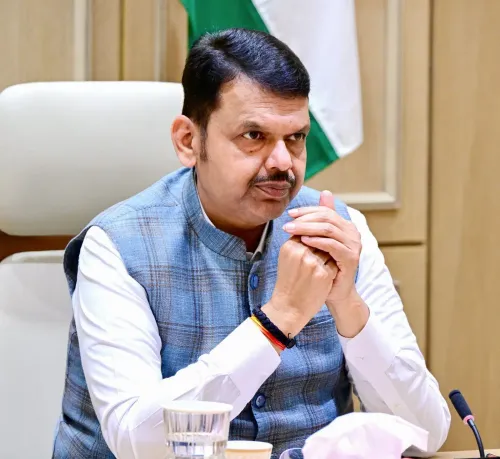
CM Fadnavis Secures Central Silk Board Office for Mumbai
Synopsis
Maharashtra CM Devendra Fadnavis announced on 19 October 2026 that the Centre has approved a Central Silk Board regional office in Mumbai, following his August 2026 letter to Union Textiles Minister Giriraj Singh. The move aims to expand sericulture and silk production in Maharashtra.
Key Takeaways
Central Silk Board regional office approved for Mumbai by the Union government on or before 19 October 2026 .
CM Devendra Fadnavis had formally requested the office via a letter to Union Textiles Minister Giriraj Singh on 24 August 2026 .
Giriraj Singh conveyed the approval in a personal letter to the Maharashtra Chief Minister.
Maharashtra has historically lagged behind Karnataka and Andhra Pradesh in sericulture despite suitable agricultural land.
The new office will help channel resources from the Centre's Silk Samagra integrated scheme into Maharashtra's silk and weaving sector.
Operationalisation timeline and state-level production targets remain to be announced.
Two months after Maharashtra Chief Minister Devendra Fadnavis formally wrote to the Centre requesting a dedicated sericulture office, the Union government has delivered — approving a new regional office of the Central Silk Board in Mumbai to drive silk production across the state. The announcement, made on Monday, 19 October 2026, signals a meaningful push to bring Maharashtra into India's mainstream sericulture map.
The letter, the response, and what unlocked it
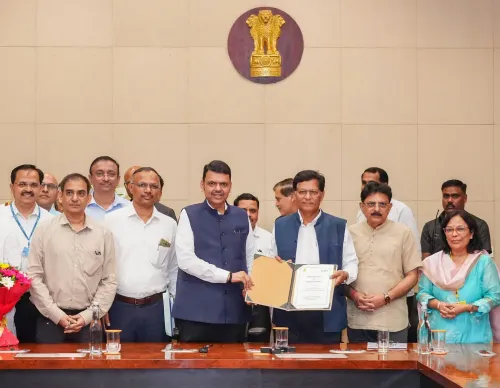
Fadnavis had sent a formal request to Union Textiles Minister Giriraj Singh on 24 August 2026, seeking the establishment of a regional Central Silk Board office in Maharashtra. Singh personally wrote back conveying the Centre's approval — a relatively swift turnaround that the Chief Minister publicly acknowledged on X, thanking Prime Minister Narendra Modi and Singh for their support.
Posting in Marathi, Fadnavis wrote: 'मला हे सांगताना आनंद होतो' — 'I am happy to announce' — that the approval has come through. He added that the new office would give a 'significant boost' to the sericulture sector across Maharashtra.
Why Maharashtra needed its own silk hub
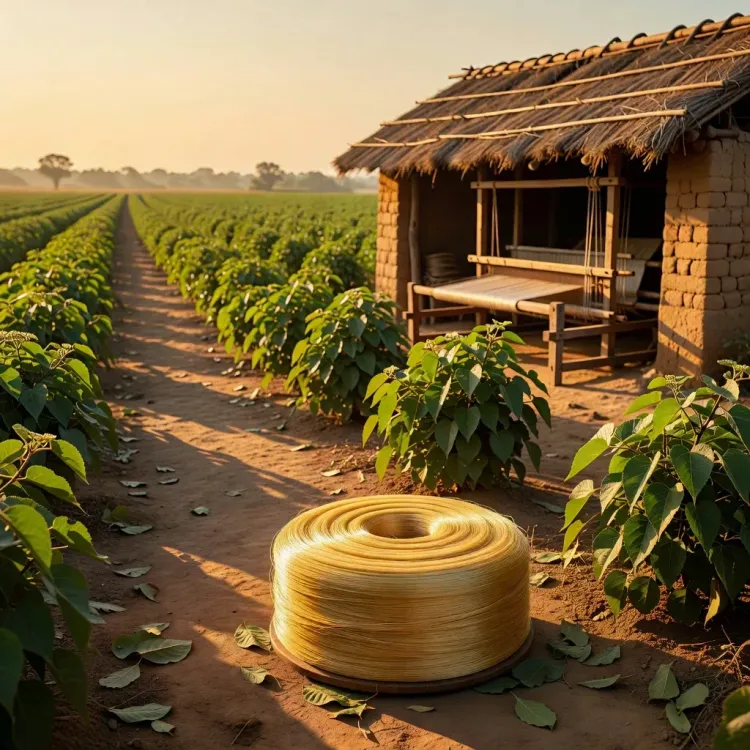
The Central Silk Board is a statutory body under the Ministry of Textiles, responsible for research, promotion, and development of India's silk and sericulture industry. Historically, its infrastructure has been concentrated in powerhouse silk states — Karnataka and Andhra Pradesh — while Maharashtra, despite having agricultural land suited to mulberry cultivation, has remained a peripheral player.
That gap matters at scale. A dedicated regional office brings technical advisory, quality certification, and supply-chain linkages directly to Maharashtra's farmers rather than routing them through offices in other states. The Silk Samagra integrated scheme, operational since 2017, already funds sericulture expansion in multiple states — and a Mumbai-based regional office would be the institutional anchor to channel those resources into Maharashtra more effectively.
What this means for Maharashtra's silk farmers
Silk farming in India is deeply rural and labour-intensive, making it a genuine income diversification tool for small landholders. Central government strategy has in recent years pushed to decentralise the Silk Board's footprint precisely to unlock this potential in non-traditional states, connecting local weavers and farmers to the broader handloom value chain.
For Maharashtra, the immediate beneficiaries are farmers in districts with mulberry cultivation potential and the artisan clusters that process raw silk into fabric. With the office now approved, the clock starts on operationalisation — and on whether state-level production targets and incentive schemes follow to complete the picture.
Maharashtra has the land, the labour, and now the institutional architecture. Whether it becomes a serious silk-producing state depends on how fast that office opens its doors — and how ambitiously it works once it does.
Point of View
It is also a visible governance dividend: a clean ask made in August, answered in October, with the paper trail public. The move could, over time, reduce Maharashtra's dependence on Karnataka-based procurement channels and create rural employment in agriculturally stressed districts. The real test, however, is institutional execution — India has no shortage of approved offices that take years to become functional.
NationPress
19 Oct 2026
Frequently Asked Questions
What is the Central Silk Board regional office approved for Maharashtra?
The Centre has approved a new regional office of the Central Silk Board — a statutory body under the Ministry of Textiles — to be set up in Mumbai to promote sericulture and silk production across Maharashtra.
Why did CM Fadnavis request a Central Silk Board office in Maharashtra?
Maharashtra has historically had limited sericulture infrastructure compared to leading silk states like Karnataka and Andhra Pradesh. Fadnavis wrote to Union Textiles Minister Giriraj Singh on 24 August 2026 seeking the office to give the sector a dedicated institutional boost.
Who approved the Central Silk Board office for Mumbai?
The Union government approved it, with Union Textiles Minister Giriraj Singh personally writing to CM Fadnavis conveying the decision. PM Narendra Modi was also thanked by Fadnavis for the approval.
What is the Silk Samagra scheme and how does it relate to this?
Silk Samagra is an integrated development scheme for the silk industry launched by the Ministry of Textiles from 2017 onwards. A Mumbai-based Central Silk Board office would help channel Silk Samagra funds and technical support to Maharashtra's farmers and weavers more effectively.
When will the new Central Silk Board office in Mumbai become operational?
The operationalisation timeline has not yet been announced. The approval was confirmed on 19 October 2026; the timeline for the office to begin functioning and any state-level production targets are yet to be declared.