Should Lalu and Rabri Resolve Family Issues Raised by Rohini Acharya?
Click to start listening
Synopsis
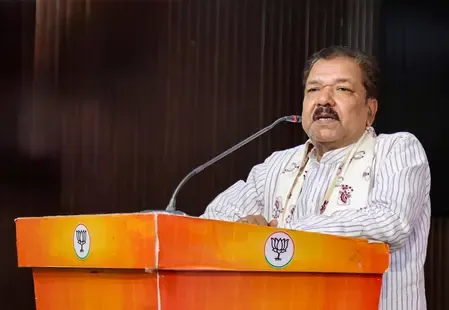
Bihar Minister Dilip Jaiswal insists that the grievances voiced by Rohini Acharya, daughter of Lalu Prasad Yadav, are a private family matter requiring resolution at home. This highlights the intersection of personal and political realms in Bihar's socio-political landscape.
Key Takeaways
- Dilip Jaiswal insists family grievances should be resolved privately.
- Rohini Acharya advocates for genuine women's empowerment.
- Politicizing personal matters can detract from their significance.
- Addressing patriarchal attitudes is crucial for societal progress.
- Every daughter deserves a safe and supportive home environment.
New Delhi, Dec 13 (NationPress) Bihar Minister Dilip Jaiswal stated on Saturday that the concerns raised by Rohini Acharya, the estranged daughter of Rashtriya Janata Dal (RJD) leader Lalu Prasad Yadav, are fundamentally a personal family issue and ought to be handled internally, free from political or governmental involvement.
In his comments regarding Rohini Acharya's recent tweet, Jaiswal remarked, "This primarily pertains to Lalu Yadav's family dynamics. Rohini Acharya should seek justice directly from Lalu and Rabri Devi. It's crucial for Lalu and Rabri to address any familial grievances their daughter might have. We hold that parental intervention is the most appropriate course of action, and public officials, including the Chief Minister, should not meddle in such personal affairs."
He underscored that while social issues warrant attention, internal family disagreements should not be politicized or resolved through state mechanisms.
Rohini Acharya's tweet on X earlier this week sparked renewed discussions regarding a perceived rift within the Yadav family. Although she did not specifically name anyone, her comments were broadly interpreted as a personal critique, addressing wider issues of women’s rights, gender equality, and patriarchal norms in society, particularly in Bihar.
In her message, Rohini contended that superficial welfare initiatives are inadequate for genuinely empowering women. "Providing girls with 10,000 rupees or distributing bicycles, even with noble intentions, fails to tackle the underlying systemic issues that obstruct women’s empowerment in India," she stated. She emphasized that both government and society must take "tangible measures to safeguard the equal rights of daughters, especially in light of social and familial negligence."
She further called attention to what she characterized as a deeply rooted patriarchal mindset in Bihar, urging comprehensive reforms in both social and political arenas.
“Every daughter deserves to grow up assured that her parental home is a safe haven, where she can return without fear, guilt, shame, or needing to justify herself to anyone,” Rohini asserted, emphasizing that guaranteeing such security transcends administrative duty and is a moral obligation.
While Rohini's tweet concentrated on women's rights and social change, political responses quickly emerged due to her connection with one of Bihar's most influential political families.
Point of View
It is essential to recognize the delicate nature of family matters, particularly in high-profile political families like the Yadavs. While addressing women’s rights is crucial, it is equally important to respect personal boundaries in familial relationships.
NationPress
13/12/2025
Frequently Asked Questions
What is the main issue raised by Rohini Acharya?
Rohini Acharya expressed her grievances regarding women's rights and empowerment, indicating that symbolic measures are insufficient for true change.
What did Bihar Minister Dilip Jaiswal say about the situation?
Dilip Jaiswal emphasized that the concerns raised by Rohini are a personal family matter that should be resolved internally, without political interference.
How did Rohini Acharya's tweet impact public discussion?
Her tweet reignited conversations about family dynamics and women's rights in Bihar, highlighting ongoing societal issues.