FASTag annual pass hits 19% of toll traffic, up 6 points in six months
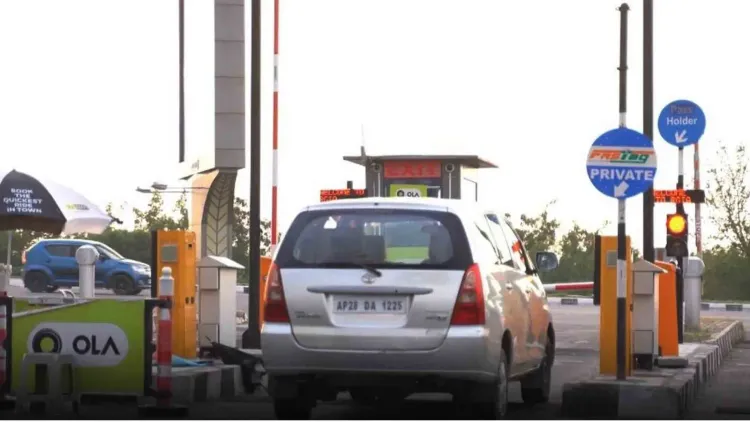
Synopsis
FASTag annual pass adoption has jumped six percentage points in just six months, now covering 19% of all toll traffic. With 8.4 crore of 44.4 crore June trips on annual passes and a net revenue shortfall of 7–8% for toll operators, India's highway financing model is quietly being reshaped by a ₹3,075 subscription launched just last August.
Key Takeaways
FASTag annual pass share of toll traffic rose to 19% in June 2025 , up from 13% in December 2024 — a 6 percentage point gain in six months.
Total toll gate trips in June reached 44.4 crore ; annual passes accounted for 8.4 crore of those.
FASTag trip volume grew 15% year-on-year, but revenue grew only 3.5% — the gap attributed to annual pass uptake.
Effective revenue loss for toll operators is estimated at 7–8% after annual pass subscription income is factored in.
The annual pass, priced at ₹3,075 for 200 trips , is available only to private passenger vehicles ; commercial vehicles pay standard rates.
FASTag annual pass usage on Indian highways has climbed to 19 per cent of all toll pass traffic as of June 2025, up from roughly 13 per cent in December 2025 — a six percentage point jump in just six months, according to data compiled by the Reserve Bank of India (RBI). The rapid uptake signals a structural shift in how private motorists are engaging with the national toll ecosystem.
Key Traffic and Revenue Figures
Total vehicle trips through toll gates in June 2025 reached 44.4 crore, of which annual pass holders accounted for 8.4 crore trips. The remaining 36 crore trips generated ₹7,214 crore in collections during the month.
Comparing year-on-year, June 2024 recorded 38.6 crore FASTag trips, raising ₹6,973 crore. While trip volume grew 15 per cent, revenue grew at a slower 3.5 per cent — a divergence the RBI data attributes directly to the rising share of annual passes.
Impact on Toll Revenue
The overall drag on toll gate collections is estimated at around 10 per cent, partially offset by annual pass subscription revenue itself, bringing the effective revenue shortfall for toll road operators to approximately 7–8 per cent, according to the data.
Notably, the annual pass is available only to private passenger vehicles, which make up around 40 per cent of all toll gate traffic but contribute only about 25 per cent of total toll revenue. This limits the scheme's revenue impact, since commercial vehicles — trucks, buses, and vans — continue to pay standard, higher toll rates.
How the Annual Pass Works
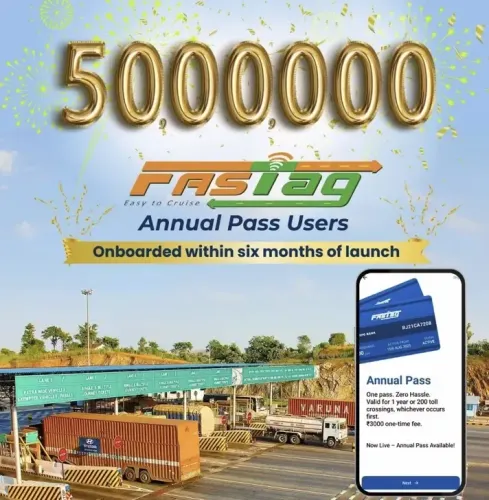
The FASTag annual pass, launched on 15 August at ₹3,075, grants holders 200 highway trips per year, working out to approximately ₹15.40 per trip — significantly below standard per-trip toll rates. It is designed to eliminate per-trip deductions for frequent highway users on specified toll roads and expressways.
With FASTag now the mandatory payment mode at most toll plazas across the country, the annual pass adds a further layer of convenience and cost efficiency for high-frequency commuters.
What This Means Going Forward
The six-point surge in annual pass adoption within a single half-year suggests uptake could continue to accelerate, particularly as awareness grows among regular highway commuters. Toll road operators and highway concessionaires will likely need to factor the growing revenue gap into their financial projections. Policymakers may also face pressure to revisit annual pass pricing or trip caps if the effective revenue loss widens beyond the current 7–8 per cent band.
Point of View
075 flat fee at ₹15.40 per effective trip is a compelling arbitrage for any driver doing more than roughly 25–30 highway trips a year — a threshold many urban commuters clear easily. Toll road operators, many of whom operate under concession agreements with fixed revenue assumptions, are absorbing a 7–8% effective shortfall that was not priced into their models. If adoption crosses 25–30% of traffic — plausible within a year at current growth rates — the pressure on highway concession economics will become hard to ignore. The policy question the data quietly raises: was the ₹3,075 price point set with operator viability in mind, or primarily as a political convenience signal?
NationPress
30 Sept 2026
Frequently Asked Questions
What is the FASTag annual pass and how much does it cost?
The FASTag annual pass is a prepaid highway travel subscription launched on 15 August, priced at ₹3,075 for 200 highway trips per year — working out to approximately ₹15.40 per trip, well below standard per-trip toll rates. It is available exclusively for private passenger vehicles and is valid on specified toll roads and expressways.
How fast has FASTag annual pass adoption grown?
Adoption has risen from around 13% of all toll pass traffic in December 2024 to 19% in June 2025 — a six percentage point increase in six months, according to RBI data. In absolute terms, 8.4 crore of the 44.4 crore total toll trips in June were made using annual passes.
What is the impact of the annual pass on toll revenue?
The annual pass creates an estimated 10% drag on toll gate collections, which is partially offset by subscription revenue from pass sales, bringing the net effective revenue loss to approximately 7–8% for toll road operators. The impact is contained partly because commercial vehicles — trucks, buses, and vans — are not eligible for the annual pass and continue paying standard rates.
Why did FASTag revenue grow slower than trip volume in June 2025?
FASTag trip volume grew 15% year-on-year in June 2025, but revenue grew only 3.5%, according to RBI data. The divergence is directly linked to the rising share of annual pass holders, who pay a flat annual fee rather than per-trip tolls, reducing per-trip revenue realisations.
Who is eligible for the FASTag annual pass?
The FASTag annual pass is available only to private passenger vehicles, which account for around 40% of all toll gate traffic but contribute approximately 25% of total toll revenue. Commercial vehicles such as trucks, buses, and vans are not eligible and must pay standard toll charges.