FinMin review: Economy holds firm momentum, core sector up 10.9%

Synopsis
India's core sector grew 10.9% in October and cumulative core growth nearly tripled to 6.0% from 2.3% a year ago. The Finance Ministry says the economy enters Q3 FY27 on firm footing, but a possible strong El Nino and base effects could push inflation up in the near term.
Key Takeaways
The Finance Ministry's November review, released on 28 November 2026 , says the economy enters the coming months with firm domestic momentum .
The Index of Core Industries grew 10.9% in October 2026 .
April–October growth was 6.0% , against 2.3% a year earlier.
Industrial production rose 6.7% in September , led by manufacturing.
Inflation faces near-term upside risks from base effects and a possible strong El Nino .
Crude below $100 per barrel and a stronger rupee may offset some of this pressure.
Forex reserves stood at $705.3 billion as of 13 November , enough for about 10 months of imports .
Labour force participation rose and unemployment eased in the first half of FY27 .
India's economy enters the coming months with firm domestic momentum, the Finance Ministry said on Saturday, 28 November 2026, pointing to resilient consumption demand, a gradual broadening of private investment and continued policy support for manufacturing. The assessment comes from the ministry's Monthly Economic Review for November, released in New Delhi. It also flags near-term inflation risks from base effects and a possible strong El Nino.
Key Growth Indicators
According to the Review, economic activity sustained its broad-based momentum as the economy entered Q3 FY27, with domestic demand and industrial activity continuing to support growth.
High-frequency indicators pointed to continued strength in October. E-way bill generation, GST collections, electricity consumption and freight movement all recorded robust growth, the Review said.
Consumption also remained supportive. Rural spending showed continued strength, while sequential vehicle sales and other indicators pointed to sustained underlying demand.
Industry and Manufacturing Performance
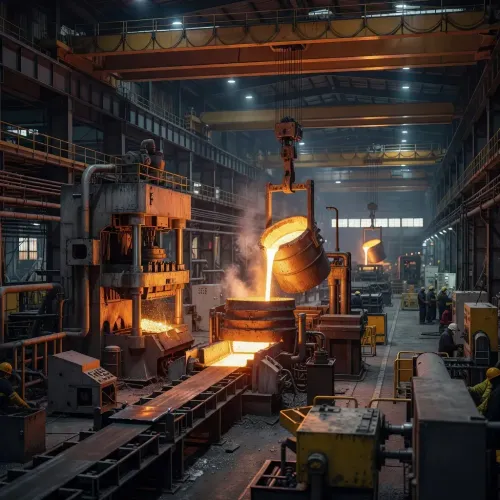
Industrial production grew by 6.7 per cent in September, with manufacturing the principal contributor. Manufacturing activity remained expansionary in October, bank credit to industry strengthened and steel consumption recorded healthy growth.
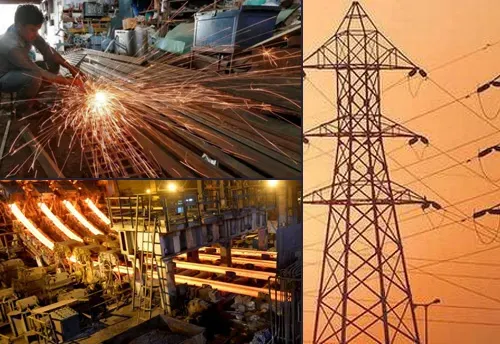
The Index of Core Industries (ICI) grew 10.9 per cent year-on-year (provisional) in October 2026. Cumulative growth for April–October 2026-27 stood at 6.0 per cent, compared with 2.3 per cent in the same period of the previous year. That is a marked improvement in the economy's infrastructure backbone.
The Review credited recent policy measures with supporting domestic manufacturing capabilities and capacity creation in strategic sectors. These include critical minerals, electronics, energy storage and container manufacturing.
Inflation Outlook and External Risks
The ministry cautioned that inflation may face near-term upside pressure from the persistence of the base effect and weather-related uncertainties, including the possibility of a strong El Nino. However, the recent moderation in crude oil prices below $100 per barrel and a strengthening rupee could help contain imported inflation, if sustained.
“The external sector is also expected to remain resilient, supported by robust merchandise exports, a strong services trade surplus and adequate foreign exchange reserves. Nevertheless, the evolving geopolitical situation, alongside uncertainty surrounding global trade policies, could weigh on the outlook,” the Review document stated.
Trade, Balance of Payments and Forex Buffers
The Review described the external sector as a source of resilience amid a challenging global trade environment. Both the overall and merchandise trade deficits narrowed in October 2026.
The overall balance of payments remained in surplus during April–October FY27, supported by higher net FDI and net banking capital inflows. Foreign exchange reserves stood at $705.3 billion as of 13 November, equivalent to about 10 months of imports.
Labour Market Trends
The labour market remained robust in the first half of FY27, the Review noted. It cited rising labour force participation, easing unemployment and a modest shift towards regular wage and salaried employment and the secondary sector.
Notwithstanding external uncertainties, the ministry said resilient domestic fundamentals and adequate macroeconomic buffers give the economy the capacity to navigate emerging challenges. The next test will be whether inflation stays contained through the El Nino season and whether the private investment pickup broadens in the coming quarters.
Point of View
But part of it is a low-base story. Cumulative growth of 2.3% last year makes this year's 6.0% look stronger than the underlying trend may be. The ministry itself admits the base effect will cut the other way on inflation, and a strong El Nino could hit rural incomes, the very demand engine the Review praises. The 'gradual broadening' of private investment is the phrase to watch. Until private capex stops being gradual, India's growth will keep leaning on government-led manufacturing incentives.
NationPress
28 Nov 2026
Frequently Asked Questions
What did the Finance Ministry's November 2026 Monthly Economic Review say?
It said India's economy enters the coming months with firm domestic momentum. The ministry credited resilient consumption, a gradual broadening of private investment and policy support for manufacturing.
How much did India's core sector grow in October 2026?
The Index of Core Industries grew 10.9% year-on-year (provisional) in October 2026. Cumulative growth for April–October 2026-27 was 6.0%, compared with 2.3% a year earlier.
What are the inflation risks flagged in the review?
The ministry warned of near-term upside pressure from the persistence of the base effect and weather-related uncertainties, including a possible strong El Nino. Crude prices below $100 per barrel and a stronger rupee could help contain imported inflation, if sustained.
What are India's forex reserves as of November 2026?
India's foreign exchange reserves stood at $705.3 billion as of 13 November 2026, equivalent to about 10 months of imports. The Review called this an adequate external buffer.
How is India's labour market performing in FY27?
The labour market remained robust in the first half of FY27, according to the Review. Labour force participation rose and unemployment eased, alongside a modest shift towards regular salaried jobs and the secondary sector.