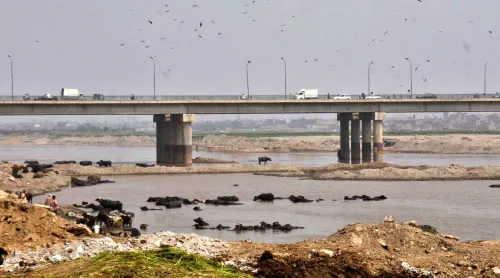
Pakistan water crisis rooted in mismanagement, not IWT: Report
Synopsis
Pakistan blames India for its water woes, but a European Times report argues the problem is self-made: just 30 days of storage, a quarter of canal water lost to leakage, and groundwater pumped faster than it recharges. Per capita supply has fallen from 5,260 to below 1,000 cubic metres since 1951, and western river flows have not changed.
Key Takeaways
A European Times report says Pakistan's water crisis stems from five decades of governance failures, not India's IWT abeyance.
Pakistan holds about 30 days of water storage and loses a quarter of its canal water to leakage, according to the report.
Per capita freshwater availability has fallen from 5,260 cubic metres in 1951 to below 1,000 today.
Only 47 percent of Pakistanis have access to safe drinking water, and nearly 70 percent of households get contaminated supply.
Waterborne disease kills around 53,000 children a year, and 44 percent of children are stunted, the report says.
Pakistan raised the IWT issue at the United Nations in November; India says the treaty stays in abeyance until cross-border terrorism ends.
Pakistan's worsening water crisis is the product of decades of failed governance, weak infrastructure and poor financial management, not India's decision to hold the Indus Waters Treaty (IWT) in abeyance, according to a report in the European Times. The analysis, cited from Brussels on 28 November 2026, argues that Islamabad has been unable to manage its water resources effectively despite having the Indus River system.
The report says Pakistan continues to struggle to secure water for its farmers, protect farmland from floods and salinity, and safeguard the future of its agriculture.
Key Findings of the Report
The report states that Pakistan's water vulnerabilities long predate India's move on the treaty. New Delhi placed the IWT in abeyance after the 2025 Pahalgam terror attack, which the report attributes to Pakistan-backed terrorists.
It says Islamabad should address these systemic failures rather than blame India for its water insecurity and use the issue to divert attention from domestic shortcomings.
“Pakistan has spent the past 18 months presenting its local water crisis as something India did to it. The argument is convenient because it plays well domestically and does not require Islamabad to explain anything to the people. However, this claim is also unsupported by any real evidence,” the report said.
It added that “every serious weakness in Pakistan’s water position stems from decisions made over five decades and would remain the same even if the Indus Waters Treaty (IWT) had not been suspended last year.”
Storage, Leakage and Groundwater Failures
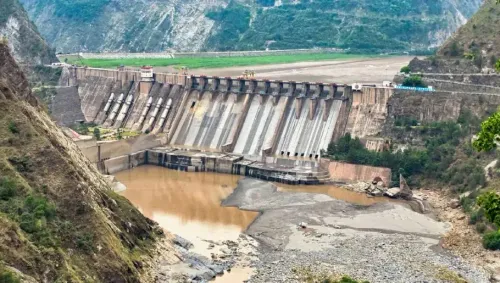
The report points to structural problems in Pakistan's canal network, reservoirs and water management system as the main drivers of the crisis. It notes that the country holds only about 30 days of water storage and loses roughly a quarter of its canal water to leakage.
“Pakistan, a country that holds about 30 days of storage, loses a quarter of its canal water to leakage and pumps more groundwater than it recharges is not short of water because of a diplomatic dispute with India. Pakistan faces a water shortage because it has never been governed as though water mattered,” the report stated.
According to the report, Islamabad has used the IWT dispute to draw international attention and shift public focus away from pressing domestic concerns, instead of strengthening its storage infrastructure.
The Diplomatic Dimension
The report also addresses the legal and diplomatic side of the dispute. “India has maintained that the treaty stays in abeyance until Pakistan ends its support for cross-border terrorism, and Pakistan raised the matter again at the United Nations in November,” it said.
“Those proceedings will run for years. Meanwhile, nothing has happened to reduce western river flows into Pakistan, which is the only thing that would turn a legal argument into a hydrological one,” it added.
The report's central argument is that Pakistan's water flows from the western rivers have not changed. It says the crisis Pakistanis face is therefore a domestic governance failure, not a hydrological shock caused by India.
Human Cost of the Crisis
The report sets out data on the scale of the shortage. Per capita freshwater availability in Pakistan has fallen from 5,260 cubic metres in 1951 to below 1,000 today, placing the country in the water-scarce category.
It adds that only 47 percent of Pakistanis have access to safe drinking water. Close to 70 percent of households receive contaminated supply.
According to the report, waterborne disease kills around 53,000 children a year, and 44 percent of children are stunted. These figures point to a public health emergency that goes well beyond agriculture.
With Pakistan's case at the United Nations expected to run for years and India holding firm on its terrorism condition, the report suggests the more urgent question is whether Islamabad will invest in storage, canal repair and groundwater regulation at home.
Point of View
Yet Islamabad has framed the crisis as an Indian act for 18 months, a story that avoids accountability for 30-day storage and leaking canals. The most damning figures are the 53,000 child deaths a year and 44% stunting, which point to a public health failure no UN petition can fix. India's position is strengthened by this evidence, but the human toll in Pakistan is still a regional concern that will outlast the legal fight.
NationPress
28 Nov 2026
Frequently Asked Questions
What is causing Pakistan's water crisis?
According to a European Times report, Pakistan's water crisis is driven mainly by decades of poor governance, weak infrastructure and financial mismanagement. It cites about 30 days of storage, a quarter of canal water lost to leakage and groundwater over-extraction.
Is India's Indus Waters Treaty decision responsible for Pakistan's water shortage?
The report argues it is not, saying Pakistan's water weaknesses would remain the same even if the treaty had not been suspended. It notes that nothing has happened to reduce western river flows into Pakistan.
Why did India hold the Indus Waters Treaty in abeyance?
India placed the treaty in abeyance after the 2025 Pahalgam terror attack. India has maintained that it will stay in abeyance until Pakistan ends its support for cross-border terrorism.
How much freshwater does Pakistan have per person?
Per capita freshwater availability in Pakistan has fallen from 5,260 cubic metres in 1951 to below 1,000 today, according to the report. This places Pakistan in the water-scarce category.
What is the human impact of Pakistan's water crisis?
The report says only 47 percent of Pakistanis have access to safe drinking water and close to 70 percent of households receive contaminated supply. Waterborne disease kills around 53,000 children a year, and 44 percent of children are stunted.