KTR: BRS Rajya Sabha MPs will vote for delimitation plan
Synopsis
BRS working president K. T. Rama Rao said his party's three Rajya Sabha MPs will back a delimitation proposal that, he argued, raises Telangana's Lok Sabha seats from 17 to 26 and protects South India's 24 percent parliamentary share until 2051, while restating support for women's reservation.
Key Takeaways
BRS working president K.
Rama Rao said the party's three Rajya Sabha MPs will vote in favour of a delimitation proposal.
He said the proposal would raise Telangana's Lok Sabha seats from 17 to 26.
He demanded protection of South India's existing 24 percent share in Parliament.
He described a 50 percent increase in seats and a freeze on the inter-state ratio until 2051.
He restated BRS support for implementing women's reservation.
The 84th Constitutional Amendment of 2001 froze Lok Sabha seat allocation on the 1971 census until the first census after 2026.
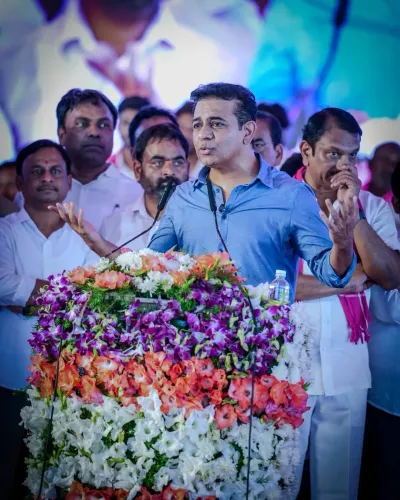
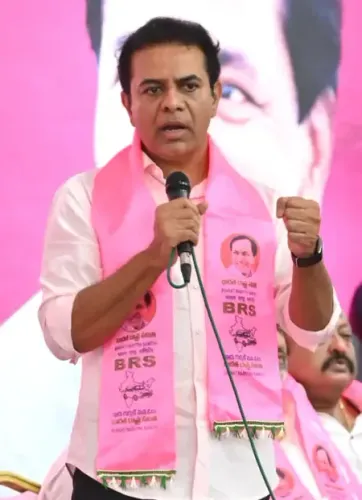
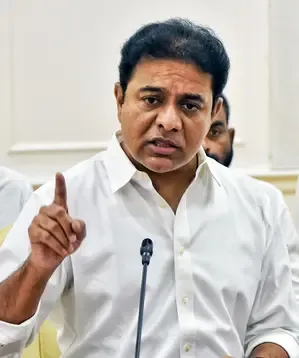
BRS working president K. T. Rama Rao on 28 November 2026 put his party's three Rajya Sabha votes on the table from Hyderabad. They will back a delimitation proposal he says raises Telangana's Lok Sabha seats from 17 to 26 and shields South India's existing 24 percent share of Parliament. The announcement turns a decade of southern protest into a yes on the floor.
Rama Rao's post left little room for parsing. 'Our stand on Delimitation has always been clear: No reduction in South India's parliamentary representation. No injustice to Telangana will be tolerated,' he wrote. The party, he said, has 'consistently demanded that the South's existing 24% share in parliament be protected.'
Telangana's claimed jump from 17 seats to 26
The working president described a specific bargain. A 50 percent increase in overall Lok Sabha seats, paired with a safeguard against changing the inter-state representation ratio until 2051, would, in his account, meet that 24 percent test while expanding Telangana's contingent from 17 to 26. Keeping Telangana's interests paramount, he said, the party's three Rajya Sabha MPs will vote in favour.
That seat count is the political payload. Telangana entered the Union in 2014 with 17 Lok Sabha constituencies carved from the old Andhra Pradesh map. Any freeze that merely holds those 17 while northern states grow would leave the new state relatively smaller in a larger House. An absolute gain of nine seats is the number Rama Rao is now selling to his voters.
The 1971 freeze and the southern fertility trap
The fight did not begin this week. The 84th Constitutional Amendment of 2001 locked the allocation of Lok Sabha seats to the 1971 census until the first census after 2026. That freeze was meant to stop states from being punished for family-planning success. It is now running out.
Southern states have long argued that a purely population-based redraw would penalise them for lower fertility compared with the Hindi heartland. Successive governments have floated the same structural answer Rama Rao now endorses: grow the total number of seats so no region loses in raw numbers, then hold the inter-state ratio for a defined period. Whether the formula he outlined is the one Parliament actually considers remains a matter for the House, not this post.
Women's reservation on the same whip
Rama Rao closed the message by restating a second constitutional pledge. 'We have always supported women's reservation and remain committed to its implementation,' he wrote. A one-third reservation for women in the Lok Sabha and state assemblies has long been yoked to the post-delimitation map, because reserved constituencies would be drawn only after new boundaries exist.
For BRS, folding both positions into one statement is a single transaction: more Telangana seats, a southern ratio lock, and a yes on women's reservation. Three Rajya Sabha votes will not pass a constitutional amendment alone. They can, however, signal whether a Telangana regional party is willing to own the compromise when the division bell rings.
The census clock after 2026 is what makes this more than a social-media note. Delimitation is no longer a seminar. It is a whip count, and Rama Rao has just told his MPs which way to walk.
Point of View
Because seat shares track population and the South's lower fertility would shrink its voice on a raw headcount. Rama Rao is backing a grow-the-pie formula: expand the House so Telangana gains in absolute seats while the inter-state ratio is described as frozen until 2051. Pairing that yes with a restated commitment to women's reservation folds two map-dependent constitutional projects into one whip. The test is whether other southern parties accept the same arithmetic when the Rajya Sabha actually divides.
NationPress
28 Nov 2026
Frequently Asked Questions
What did KTR say about delimitation?
BRS working president K. T. Rama Rao said there should be no reduction in South India's parliamentary representation and no injustice to Telangana. He announced that the party's three Rajya Sabha MPs will vote in favour of a proposal he said protects the South's 24 percent share.
How many Lok Sabha seats does Telangana have?
Telangana currently has 17 Lok Sabha seats. Rama Rao said the proposal he supports would raise that number to 26.
Why are southern states worried about delimitation?
Southern states have argued that redrawing seats purely by latest population would penalise them for lower fertility than northern states. The 84th Constitutional Amendment froze seat shares on the 1971 census until the first census after 2026.
Will BRS support women's reservation in Parliament?
Rama Rao said BRS has always supported women's reservation and remains committed to its implementation. He paired that pledge with the party's announced yes vote on the delimitation proposal he described.
What is the 24 percent share KTR mentioned?
He said BRS has consistently demanded that the South's existing 24 percent share in Parliament be protected. In his account, a larger House with a ratio freeze until 2051 would address that concern.