India becomes SIAC's third-largest foreign user with 178 parties
Synopsis
178 Indian parties took part in SIAC arbitrations last year, making India the centre's third-largest foreign user. Singapore's Law Minister Edwin Tong says Indian lawyers and arbitrators now shape cases that involve no Indian parties at all. CJI Surya Kant pushed for joint work on mediation and technology.
Key Takeaways
India is the third-largest foreign user jurisdiction of SIAC , with 178 Indian parties in arbitrations over the last year.
Singapore's Law Minister Edwin Tong said Indian lawyers and arbitrators also play a prominent role in proceedings that do not involve Indian parties.
CJI Surya Kant called for collaboration on institutional design, professional standards, legal training, mediation and technology.
India-Singapore bilateral trade rose from about $6.7 billion in 2004-05 to $34.3 billion in 2024-25 .
Singapore accounted for nearly 24 per cent of India's cumulative FDI inflows, about $174.88 billion , between April 2000 and March 2025 .
The ICA symposium marked the 200th anniversary of Singapore's Second Charter of Justice .
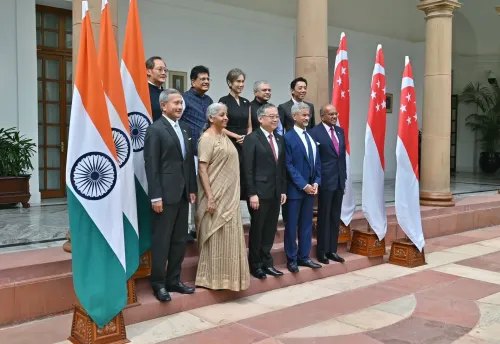
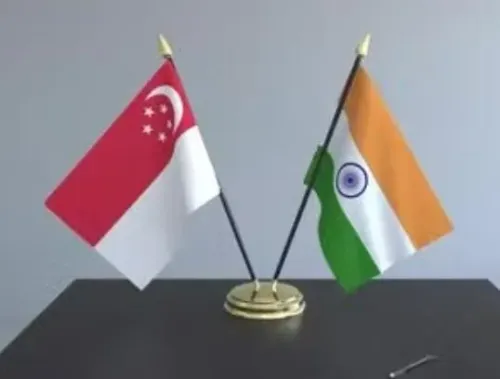
India has emerged as the third-largest foreign user jurisdiction of the Singapore International Arbitration Centre (SIAC), with 178 Indian parties taking part in arbitrations over the last year. The figure was cited by Edwin Tong, Singapore's Minister for Law and Second Minister for Home Affairs, and announced in New Delhi on Saturday, 28 November 2026. Tong called for closer India-Singapore cooperation to strengthen the global arbitration ecosystem.
Key Developments
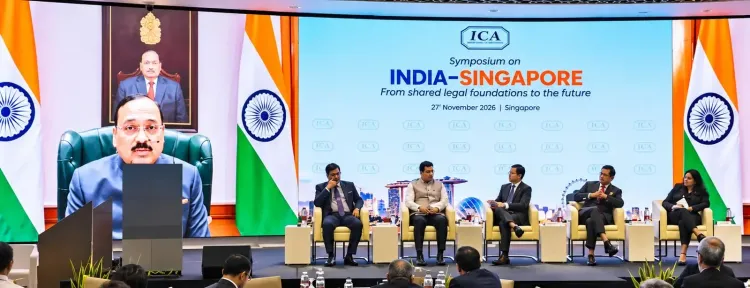
Tong was speaking at a symposium hosted by the Indian Council of Arbitration (ICA). He said India's role in international dispute resolution is growing.
He noted that India has consistently been one of SIAC's most important foreign user jurisdictions. He added that Indian lawyers and arbitrators also play a prominent role in SIAC proceedings that involve no Indian parties at all.
Notably, this second point extends India's footprint beyond its role as a source of disputes. It suggests that Indian legal talent is increasingly part of the supply side of international arbitration, not only its client base.
What Singapore's Law Minister Said
Tong linked the rapid expansion of international trade and investment to the need for efficient and predictable dispute resolution. “Investors need confidence that disputes arising from their investments will be resolved fairly, transparently and predictably,” he said.
He pointed to the challenge of increasingly complex cross-border transactions. Tong said arbitration institutions and legal professionals must innovate to handle disputes involving multiple contracts and interconnected parties, while preserving the core principle of party consent.
“India and Singapore should aspire not merely to succeed in international arbitration, but to make international arbitration better,” he added.
CJI Surya Kant on Deeper Collaboration
Chief Justice of India Justice Surya Kant called for deeper collaboration between the two countries. He named institutional design, professional standards, legal training, mediation and technology as areas for cooperation.
He said predictability in dispute resolution is essential for economic growth and investor confidence. He also said India's growing emphasis on mediation, including the establishment of the Mediation Council of India, opens new avenues for India-Singapore cooperation.
The Economic Backdrop
The Chief Justice highlighted the expanding economic relationship between the two countries. He noted that bilateral trade rose from about $6.7 billion in 2004-05 to $34.3 billion in 2024-25.
Singapore remains one of the largest sources of foreign direct investment into India. It accounted for nearly 24 per cent of cumulative FDI inflows between April 2000 and March 2025, amounting to about $174.88 billion.
That capital flow helps explain the arbitration figures. Large and sustained cross-border investment tends to generate commercial disputes, and parties on both sides need a forum they trust to resolve them.
A Symbolic Milestone
The symposium also marked the 200th anniversary of Singapore's Second Charter of Justice. It brought together policymakers, legal experts and business leaders to discuss the future of commercial dispute resolution and legal cooperation between India and Singapore.
Both Tong and the Chief Justice focused on institutional cooperation, mediation and predictability. The next phase of India-Singapore legal engagement is likely to go beyond case volumes and centre on shared standards and joint capacity-building.
Point of View
But the figure is also a reminder that a large share of Indian commercial disputes is still resolved offshore. As long as Indian parties keep choosing Singapore over domestic institutions, India's ambition to become an arbitration hub stays more aspiration than reality. The CJI's emphasis on mediation and the Mediation Council of India points to a more realistic path: competing on speed and predictability, the very qualities Tong said investors demand. Cooperation with Singapore is sensible, but the deeper test is whether Indian institutions can earn the same trust at home.
NationPress
28 Nov 2026
Frequently Asked Questions
What is India's position among SIAC's foreign users?
India is the third-largest foreign user jurisdiction of the Singapore International Arbitration Centre. A total of 178 Indian parties participated in SIAC arbitrations over the last year, according to Singapore's Law Minister Edwin Tong.
What did Edwin Tong say about India and arbitration?
Tong said India has consistently been one of SIAC's most important foreign user jurisdictions. He added that Indian lawyers and arbitrators play a prominent role even in cases without Indian parties, and he called for India and Singapore to work together to make international arbitration better.
What did CJI Surya Kant propose for India-Singapore cooperation?
Chief Justice Surya Kant called for deeper collaboration in institutional design, professional standards, legal training, mediation and technology. He said the Mediation Council of India opens new avenues for cooperation.
How large are India-Singapore trade and investment ties?
Bilateral trade rose from about $6.7 billion in 2004-05 to $34.3 billion in 2024-25. Singapore accounted for nearly 24 per cent of India's cumulative FDI inflows, about $174.88 billion, between April 2000 and March 2025.
Why was the ICA symposium significant?
The symposium marked the 200th anniversary of Singapore's Second Charter of Justice. It brought together policymakers, legal experts and business leaders to discuss commercial dispute resolution and legal cooperation between the two countries.