Anurag Thakur hails ₹54,000-cr nod for 6 urea plants
Synopsis
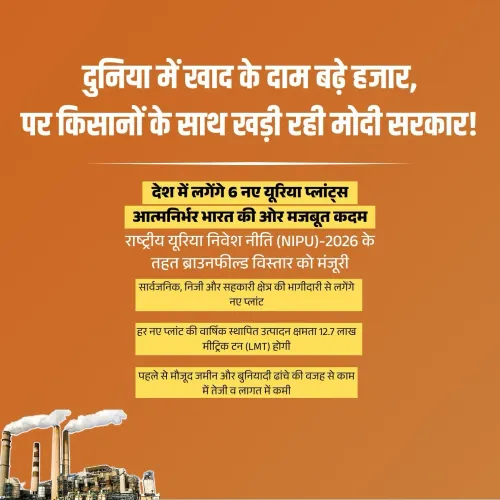
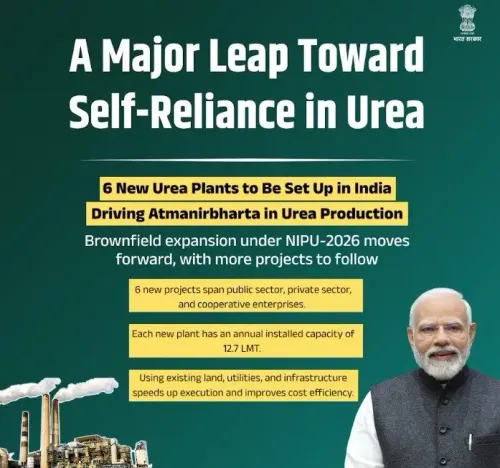
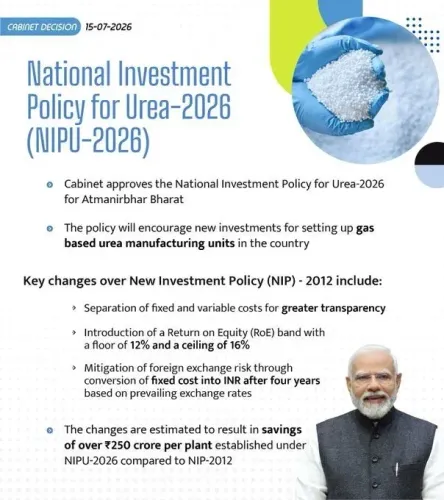
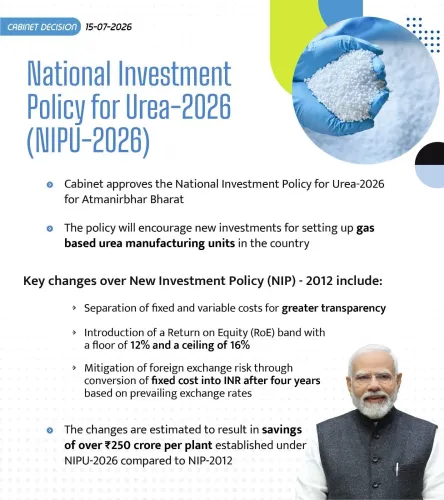
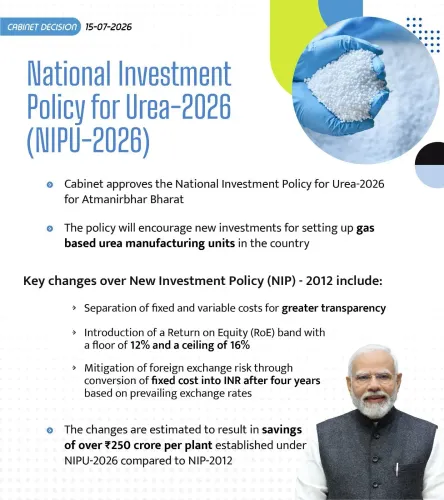
BJP MP Anurag Thakur said the government has approved six brownfield gas-based urea plants worth ₹54,000 crore under NIPU-2026, adding over 60 lakh metric tonnes of annual capacity in Tamil Nadu, Punjab, Uttar Pradesh, West Bengal and Rajasthan. He framed it as lower imports and timely urea for farmers.
Key Takeaways
BJP MP Anurag Thakur on 28 November 2026 said six brownfield gas-based urea plants worth ₹54,000 crore have been approved under NIPU-2026 .
He said the plants will add over 60 lakh metric tonnes of annual domestic urea capacity.
Revival sites cited: Chennai and Nangal ; expansion hubs: Shahjahanpur , Jagdishpur , Panagarh and Gadepan .
Host states named: Tamil Nadu, Punjab, Uttar Pradesh, West Bengal and Rajasthan.
Stated goals: cut import dependence, save foreign exchange and timely affordable urea for farmers.
Earlier Cabinet-backed revivals between 2015 and 2019 covered Gorakhpur, Sindri, Barauni and Talcher.
Six new gas-based urea plants, ₹54,000 crore, and more than 60 lakh metric tonnes of extra domestic capacity a year — that is the scale BJP MP Anurag Thakur attached on 28 November 2026 to a government approval he called a historic leap towards agricultural self-reliance. The Hamirpur MP said the six brownfield plants would rise across Tamil Nadu, Punjab, Uttar Pradesh, West Bengal and Rajasthan under Prime Minister Narendra Modi.
Thakur said the package sits under NIPU-2026 and will revive units in Chennai and Nangal while expanding hubs in Shahjahanpur, Jagdishpur, Panagarh and Gadepan. The stated pay-off, in his words, is to cut import dependence, save foreign exchange and ensure timely, affordable urea for Annadatas. He closed: 'This is real #AtmanirbharKisan and #NewUreaPlants in action.'
Chennai and Nangal revival, four hub expansions
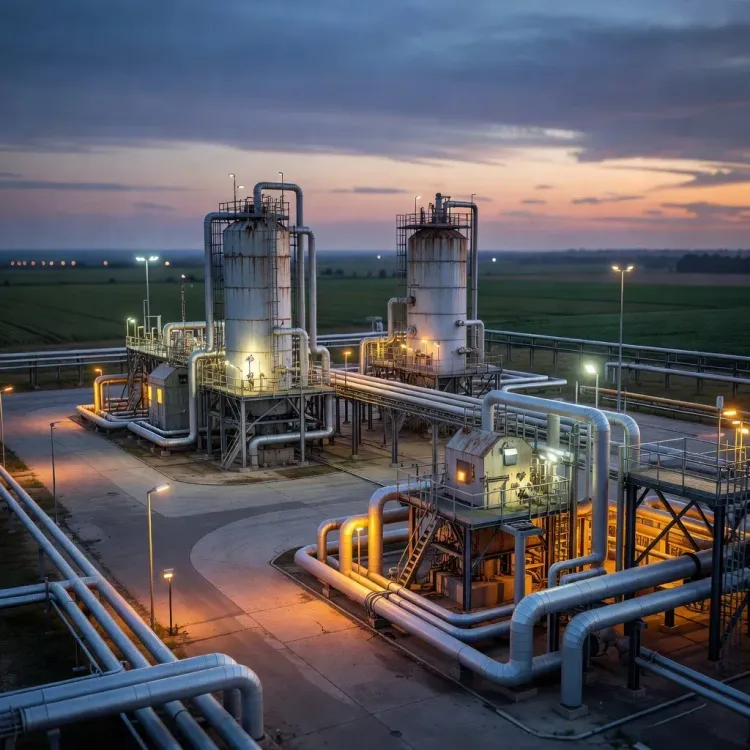
These are brownfield, gas-based plants — steel going up on existing fertilizer sites, not empty land. Chennai in Tamil Nadu and Nangal in Punjab are the revival pair. Shahjahanpur and Jagdishpur deepen Uttar Pradesh's fertilizer belt. Panagarh adds West Bengal. Gadepan adds Rajasthan. Together, Thakur said, they would add over 60 lakh metric tonnes a year.
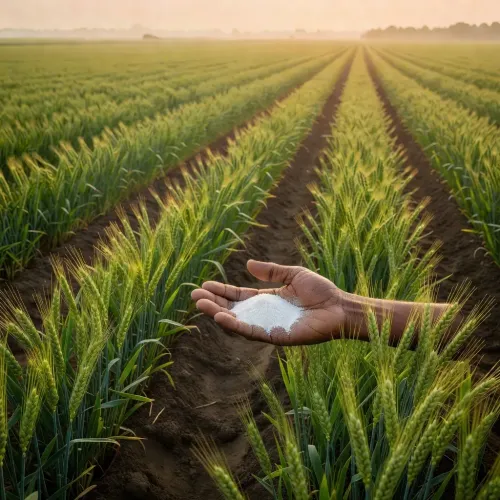
That number is not a rounding error. It is meant to bite into a supply gap farmers feel every sowing season, when delayed bags and import cargoes become political weather.
The import bill urea still writes
India has spent years trying to close the gap between urea demand and what domestic plants can make. Imports have historically exceeded 50 lakh tonnes a year. Between 2015 and 2019, the Cabinet backed revival of closed units at Gorakhpur, Sindri, Barauni and Talcher. The same grammar runs through this announcement: more gas-based tonnes at home, less hard currency leaving the country, the urea subsidy still standing for farmers.
Fertilizer producers and the five host states become the delivery chain. Gas allocation will decide whether nameplate capacity becomes actual product. That is the industrial hinge Atmanirbhar Bharat does not get to skip.
Capacity on paper, bags in the field
Approvals are not tonnes. Project timelines, feedstock linkages and capacity utilisation will determine whether ₹54,000 crore shows up as cheaper, quicker urea or as idle equipment. Parliamentary questions on utilisation, once the plants come on stream, will be the public scoreboard.
Thakur's claim is simple: more plants, less imports, urea for the Annadata. The country will measure it in bags that actually reach the mandi.
Point of View
Continuing a line of post-2014 capacity revivals that already targeted closed units in the east and north. The political payoff is timely subsidised bags; the fiscal and energy risk is gas feedstock and under-utilised plants. If the six sites deliver the 60 lakh tonnes, import dependence shrinks. If they do not, the subsidy bill and the import bill both stay.
NationPress
28 Nov 2026
Frequently Asked Questions
What urea plants did Anurag Thakur mention?
BJP MP Anurag Thakur said the government has approved six new brownfield gas-based urea plants under NIPU-2026, covering revival at Chennai and Nangal and expansions at Shahjahanpur, Jagdishpur, Panagarh and Gadepan.
How much investment did Anurag Thakur cite for the urea plants?
He put the outlay at ₹54,000 crore for the six plants.
How much urea capacity will the six plants add?
Thakur said they will add over 60 lakh metric tonnes of annual domestic capacity.
Which states will host the new urea plants?
Tamil Nadu, Punjab, Uttar Pradesh, West Bengal and Rajasthan, according to his post.
Why is India adding domestic urea plants?
Successive governments have tried to close a long gap between domestic urea demand and supply; imports have historically exceeded 50 lakh tonnes a year. The stated aim is to cut import dependence, save foreign exchange and keep subsidised urea available for farmers.