Sitharaman highlights Modi govt's honours for Tamil Thirumurai tradition
Synopsis
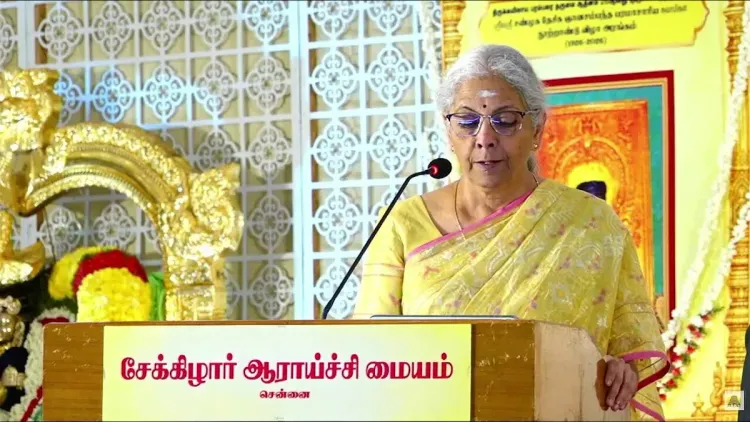
Union Finance Minister Nirmala Sitharaman, addressing an audience in Chennai, highlighted that the Modi government conferred a Padma Shri on an Othuvar for the first time and honoured several Thirumurai reciters on Aadi Thiruvathirai last year, framing it as sustained recognition of Tamil's devotional heritage.
Key Takeaways
For the first time , a Padma Shri has been awarded to an Othuvar — a hereditary reciter of Tamil Shaiva hymns — in 2026 .
Nirmala Sitharaman made the announcement during a public address in Chennai on 1 August 2026 .
Several Othuvars were also honoured at the Aadi Thiruvathirai festival in the previous year.
Othuvars recite the Thirumurai , a twelve-volume Shaiva devotional canon, in Tamil temples as part of living ritual tradition.
The recognition aligns with a broader pattern of the central government expanding civilian awards to include South Indian intangible and temple-art heritage.
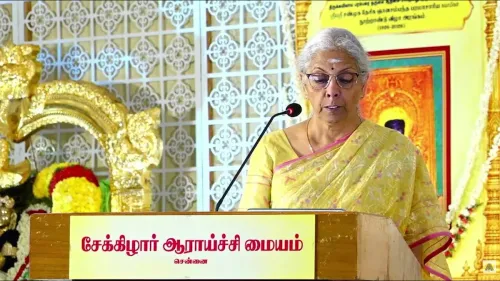
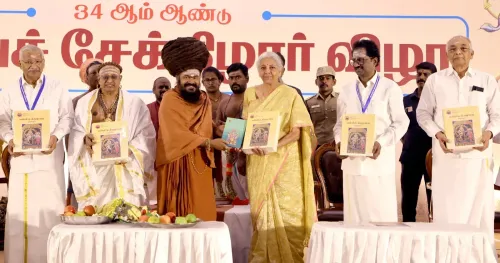
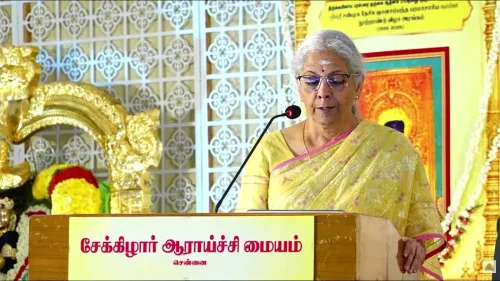
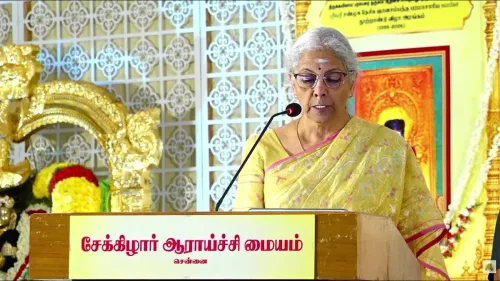
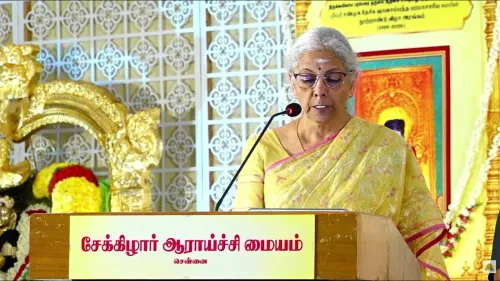
A first-ever Padma Shri for an Othuvar — a practitioner of Tamil Shaiva devotional hymns — marks what Union Finance Minister Nirmala Sitharaman called a sustained effort by the Modi government to honour Tamil language and the Thirumurai (Tamil Shaiva scriptural canon) tradition, she said while addressing an audience in Chennai on Saturday, 1 August 2026.
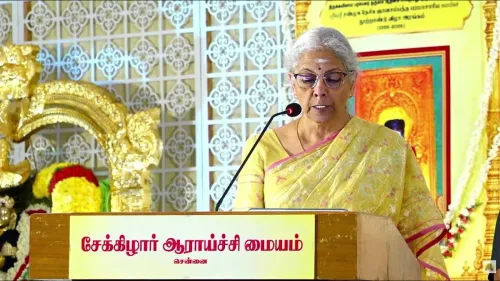
Speaking in Tamil, Sitharaman noted: 'For the first time this year, a Padma Shri has been conferred on an Othuvar. Last year, on the occasion of Aadi Thiruvathirai, several Othuvars were honoured.' The remarks, posted as the first in a thread from her official handle, were delivered as part of a broader address on the government's cultural outreach toward Tamil Nadu.
Who are Othuvars — and why the Padma Shri matters
Othuvars are the hereditary male cantors of Tamil Shaiva temples, trained to recite the Thirumurai — a twelve-volume corpus of devotional hymns by saints such as Thirugnana Sambandar, Appar, and Manickavasagar — during daily and festival rituals. Despite their centrality to living temple worship across Tamil Nadu, practitioners of this tradition had, until this year, not received India's fourth-highest civilian honour.
The Padma Shri, announced annually on Republic Day, is awarded for distinguished contributions across fields including arts, literature, and social work. Recognising an Othuvar places an oral, ritual, temple-bound art form on the same national stage as classical concert performers — a distinction that practitioners and Tamil cultural scholars have long sought.
Aadi Thiruvathirai and the broader pattern of recognition
Aadi Thiruvathirai is the annual Tamil festival marking the birth of the Shaiva saint Manickavasagar, observed with special temple recitations and performances. Sitharaman's reference to Othuvars being honoured at last year's Aadi Thiruvathirai points to a pattern of state-backed recognition that goes beyond award cycles — embedding cultural acknowledgement into festival calendars.
Successive central governments have gradually expanded civilian awards to include practitioners of regional temple arts and intangible heritage previously underrepresented at the national level. The National Education Policy 2020 also emphasised preservation of classical languages, with Tamil — India's only living classical language with an unbroken literary tradition of over two millennia — a central focus.
Sitharaman's Tamil cultural signalling from Chennai
As a senior BJP leader from Tamil Nadu, Sitharaman frequently uses public addresses in the state to draw direct lines between central government policy and Tamil cultural identity — a political terrain where the BJP has historically faced headwinds. Her framing of the Othuvar Padma Shri as a 'first' carries deliberate weight: it signals institutional acknowledgement of a community that has kept a living scriptural tradition alive inside temple walls for centuries.
The next Republic Day Padma list and any central or state scheme for Othuvar training and documentation will test whether this recognition translates into sustained institutional support — or remains a milestone moment.
Point of View
A state where the party has struggled electorally. By framing the award as a 'first,' Sitharaman positions the Modi government as the administration that finally brought temple-bound, oral Tamil heritage into national recognition — a narrative aimed squarely at Tamil pride. The broader pattern of linking civilian honours to classical language policy and festival calendars suggests a deliberate, multi-channel cultural strategy rather than a one-off gesture. Whether it translates into institutional depth — training programmes, documentation, sustained funding — will determine its lasting political and cultural dividend.
NationPress
15 Sept 2026
Frequently Asked Questions
Who is an Othuvar in Tamil culture?
An Othuvar is a hereditary male cantor trained to recite the Thirumurai — Tamil Shaiva devotional hymns — during daily and festival rituals in Shaiva temples across Tamil Nadu.
Has an Othuvar ever received the Padma Shri before 2026?
No. According to Finance Minister Nirmala Sitharaman, 2026 marks the first time a Padma Shri has been conferred on an Othuvar by the Government of India.
What is Aadi Thiruvathirai and why were Othuvars honoured on that day?
Aadi Thiruvathirai is an annual Tamil festival marking the birth of Shaiva saint Manickavasagar, observed with special temple recitations. Sitharaman stated that several Othuvars were honoured on that occasion last year as part of the government's cultural recognition efforts.
What is the Thirumurai?
The Thirumurai is a twelve-volume corpus of Tamil Shaiva devotional hymns composed by saints including Thirugnana Sambandar, Appar, and Manickavasagar, and forms the liturgical backbone of Shaiva temple worship in Tamil Nadu.
Why did Nirmala Sitharaman speak about Tamil cultural recognition in Chennai?
As a senior BJP leader from Tamil Nadu, Sitharaman regularly addresses state-specific cultural matters during Chennai visits, using such occasions to highlight central government initiatives aimed at Tamil heritage and identity.