First snowfall of season blankets J&K passes and Gulmarg resort
Synopsis
Kashmir's mountains turned white on 14 October as the season's first snowfall blanketed Gulmarg, Zojila Pass, Razdan Pass, and Sinthan Top. Tourists danced in the snow while farmers secured their apple harvest and trekkers were warned to stay off the trails — the Himalayan winter has officially begun.
Key Takeaways
The season's first snowfall hit Jammu and Kashmir's higher reaches, including Gulmarg , Zojila Pass , Razdan Pass , and Sinthan Top , on 14 October 2026 .
The Meteorological Department forecasts further precipitation until 15 October , followed by generally dry weather for ten days .
Srinagar recorded a maximum of 20°C ; Gulmarg dropped to 11.8°C on Tuesday.
Trekkers have been advised to avoid mountain routes; travellers and tourists urged to exercise caution on high-altitude roads.
All paddy has been harvested and roughly 90% of the apple crop picked; farmers are now preparing to sow the Rabi crop.
Snowfall in the mountains is expected to raise water levels in springs, streams, and lakes ahead of winter.
The season's first snowfall swept across the higher reaches of Jammu and Kashmir over the past 24 hours, dusting the Gulmarg ski resort and high-altitude passes with a fresh coat of white, even as the Meteorological Department forecast continued inclement weather through 15 October. The wintry arrival has delighted tourists, prompted safety advisories for trekkers, and signalled the start of the transition season for Kashmiri farmers.
Where the Snow Fell
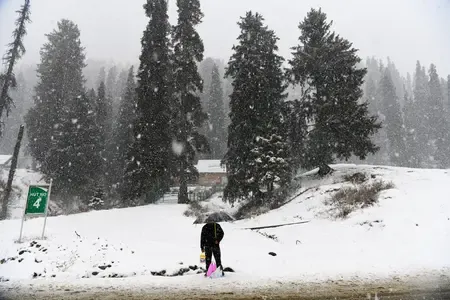
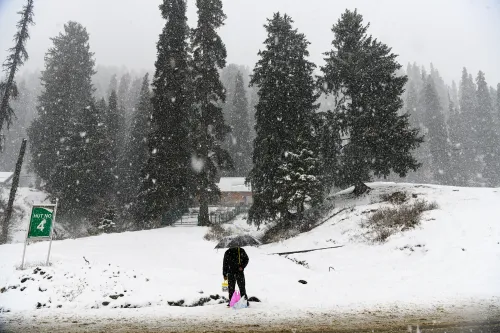
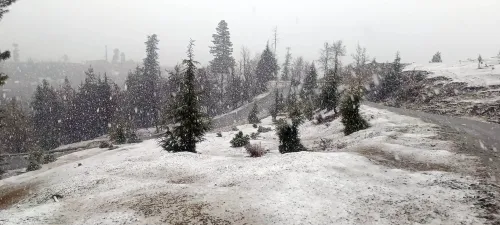
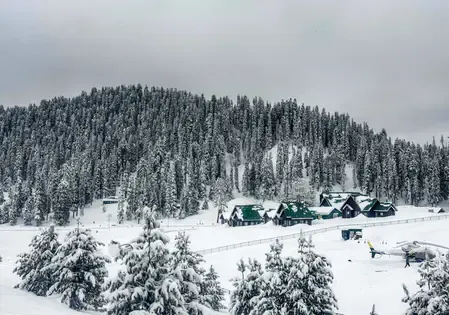
Fresh snowfall was recorded at the Gulmarg ski resort on Tuesday, 14 October, drawing joyful reactions from visitors. The Zojila Pass, Razdan Pass, Sinthan Top, and several other high-altitude areas also received the season's inaugural snowfall. These mountain passes serve as critical connectivity arteries for the region, and snowfall at this juncture signals the impending onset of the Himalayan winter.
Tourist Delight at Gulmarg
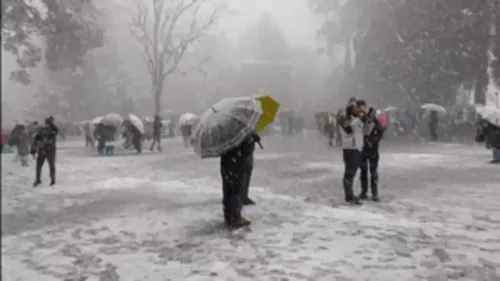
Visitors at Gulmarg were visibly elated as a pristine white blanket covered the popular resort. Several tourists said they had been left awestruck by Kashmir's beauty and grandeur, surpassing their expectations. Some younger visitors described it as the first time they had witnessed snowfall outside a film, celebrating by throwing snowballs and dancing in the snow.
Weather Forecast and Temperature Drop
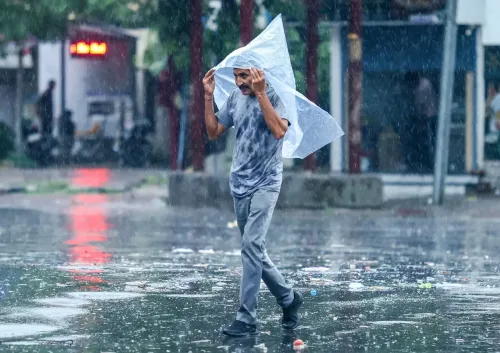
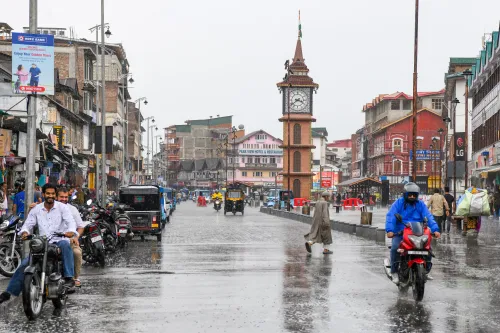
The Meteorological Department has forecast further precipitation through 15 October, after which weather conditions are expected to improve. Forecasters indicate that from the afternoon of 15 October onwards, the region will experience generally dry conditions for the following ten days. Temperatures have already dipped sharply: Srinagar recorded a maximum of 20 degrees Celsius on Tuesday, while Pahalgam saw 14.2°C and Gulmarg a cooler 11.8°C. Residents have begun reaching for woollens, with the traditional Kashmiri tweed overgarment known as the 'Phiren' making its seasonal comeback.
Advisories for Farmers, Trekkers and Travellers
Authorities have issued a series of precautionary advisories. Farmers and apple growers have been urged to ensure safe storage of harvested grain and apple produce, given the risk of thunderstorms, gusty winds, and snow in higher reaches until 15 October. Trekkers have been advised to avoid mountain routes until conditions improve, and all travellers have been counselled to exercise caution on roads near affected passes. Notably, all paddy in the Kashmir Valley has already been harvested, and approximately 90 per cent of the apple crop has been picked, limiting agricultural exposure to the early snowfall.
Agricultural and Water Outlook
Local farmers are reportedly preparing to sow the Rabi crop — including oilseeds — and the accompanying rains are considered beneficial for pre-sowing soil moisture. With snowfall now accumulating in the mountains, water levels in springs, streams, lakes, and wells are expected to rise, replenishing reserves ahead of the winter months. This aligns with a broader seasonal pattern where the first high-altitude snowfall helps recharge the valley's freshwater sources. As the weather window improves from mid-October, the region's tourism season is set to gain momentum through the crisp autumn weeks ahead.
Point of View
Farmers, and climate watchers alike. This year's early-October arrival at Gulmarg and the high passes is broadly in line with seasonal norms, but the convergence with the tail end of the apple harvest is worth watching: a single untimely storm can wipe out the final 10% of a crop that anchors the Valley's rural economy. The broader pattern of abbreviated transition seasons — shorter autumn windows before the cold sets in — also deserves attention, even if this particular snowfall is well within historical range.
NationPress
14 Oct 2026
Frequently Asked Questions
Where did the season's first snowfall occur in Jammu and Kashmir?
The first snowfall of the season was recorded at the Gulmarg ski resort and across several high-altitude passes including Zojila Pass, Razdan Pass, and Sinthan Top on 14 October 2026. These are among the highest and most frequently snowbound points in the union territory.
What is the weather forecast for Jammu and Kashmir after 15 October?
The Meteorological Department has forecast that weather will begin to improve from the afternoon of 15 October, with generally dry conditions expected across the union territory for the following ten days. Precipitation and gusty winds are possible in higher reaches until that date.
Are trekkers and tourists safe to visit Kashmir right now?
Authorities have advised trekkers to avoid mountain treks until conditions improve after 15 October. Travellers and tourists have also been urged to exercise caution, particularly on roads near affected passes. Gulmarg itself is accessible and was hosting tourists during the snowfall.
How does the early snowfall affect Kashmir's apple crop and farmers?
Approximately 90 per cent of the apple crop has already been harvested, limiting direct damage risk. Farmers have been advised to safely store remaining produce ahead of possible thunderstorms. The accompanying rains are considered beneficial for those preparing to sow the Rabi crop, including oilseeds.
What impact does mountain snowfall have on Kashmir's water supply?
Snowfall accumulation in the mountains is expected to raise water levels in springs, streams, lakes, and wells across the Valley, replenishing freshwater reserves that communities and agriculture rely on during the winter months.