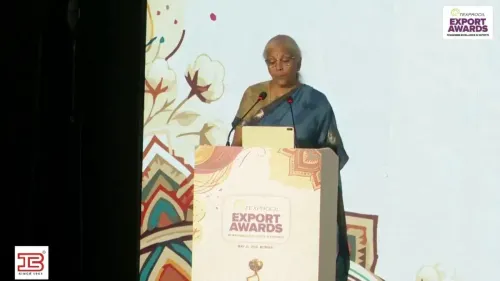
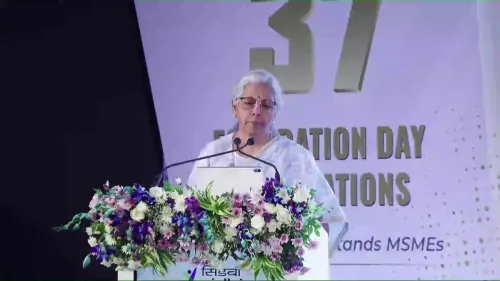
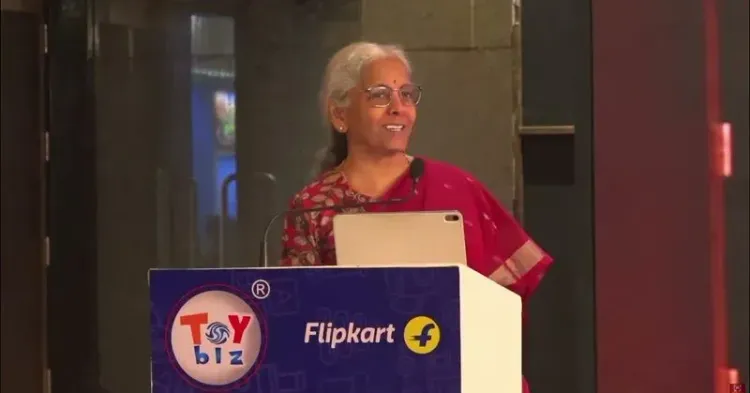
FM Sitharaman Addresses Toy Association of India Event in Delhi
Synopsis
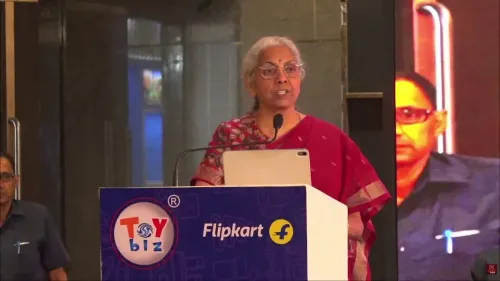
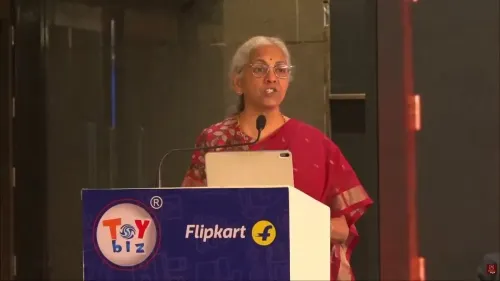
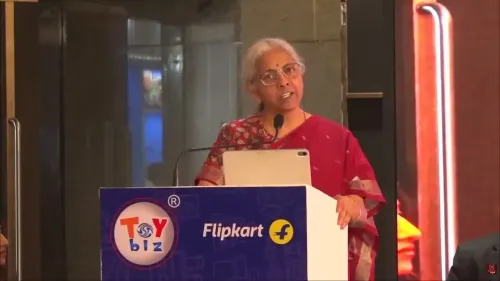
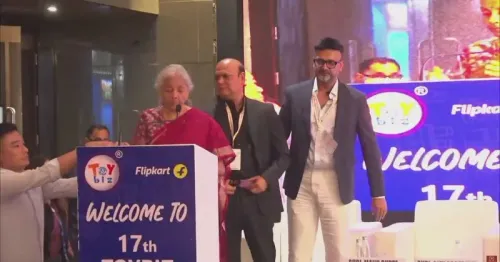
Union Finance Minister Nirmala Sitharaman addressed the Toy Association of India in New Delhi on 7 July 2026, engaging manufacturers and MSME exporters on sector policy amid India's ongoing push to boost domestic toy production and reduce import dependence.
Key Takeaways
Union Finance Minister Nirmala Sitharaman addressed a formal event organised by the Toy Association of India in New Delhi on 7 July 2026 .
The event was officially documented by the Press Information Bureau and the Ministry of Information and Broadcasting .
India's toy sector policy shift began in 2019-20 , with the Toys (Quality Control) Order 2020 mandating BIS certification to curb substandard imports.
The Atmanirbhar Bharat campaign and Make in India initiative form the policy backbone for domestic toy manufacturing revival.
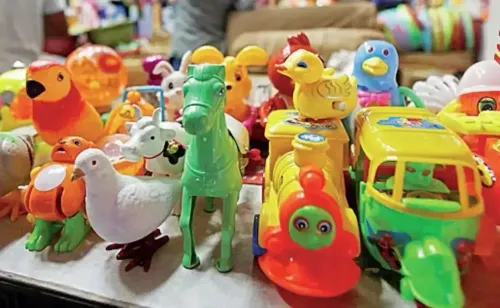
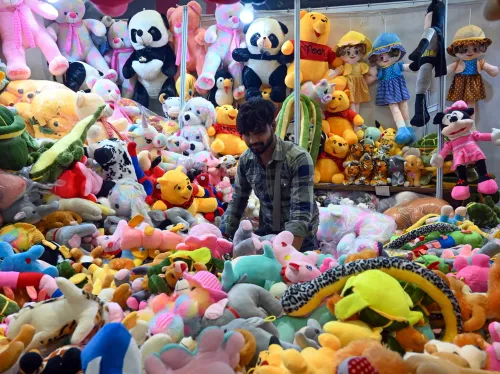
Key stakeholders include MSME toy manufacturers and exporters , with major production clusters in Uttar Pradesh , Karnataka , and Maharashtra .
The next Union Budget and quarterly trade data will be watched for fresh incentives or export growth signals in the toy sector.
Union Finance Minister Nirmala Sitharaman addressed an event organised by the Toy Association of India in New Delhi on 7 July 2026, engaging with industry stakeholders on the sector's growth trajectory and policy priorities.
Context
The Toy Association of India is the apex industry body representing domestic toy manufacturers, exporters, and allied MSMEs. Events of this nature serve as a formal platform for the sector to engage directly with the Union government on regulatory, fiscal, and export-related concerns. Finance Minister addresses to sector associations of this scale typically preview budget priorities or review the outcomes of existing schemes.
The event was held in New Delhi, with official documentation shared by the Press Information Bureau and the Ministry of Information and Broadcasting, signalling a formal government-industry engagement rather than a routine interaction.
Policy Backdrop
India's toy sector has undergone a significant policy shift since 2019-20. The government notified the Toys (Quality Control) Order in 2020, mandating Bureau of Indian Standards (BIS) certification to curb the entry of substandard imports and create space for domestic manufacturers to grow. The move was widely seen as a direct check on the earlier dominance of Chinese toy imports in the Indian market.
Under the Atmanirbhar Bharat campaign, also launched in 2020, the toy sector was identified as a priority area for self-reliance, with cluster development and production incentives forming the backbone of the strategy. The broader Make in India initiative, which dates to 2014, has provided the overarching framework for these manufacturing revival efforts, including Production Linked Incentive schemes across consumer goods sectors.
India has sought to position itself as an alternative global sourcing hub for toys, leveraging its large MSME base and improving quality standards to attract both domestic and international buyers.
Stakeholders and Impact
The primary stakeholders at the event included domestic toy manufacturers, MSME exporters, and industry representatives who have been navigating the post-Quality Control Order landscape. For these businesses, direct access to the Finance Minister represents an opportunity to flag concerns around raw material costs, export logistics, credit access, and taxation structures that affect their competitiveness.
The toy sector's revival has broader implications for employment, particularly in manufacturing clusters across states such as Uttar Pradesh, Karnataka, and Maharashtra, where artisanal and industrial toy production is concentrated. Any fiscal signal from the Finance Minister — whether on GST rationalisation, export incentives, or cluster funding — carries direct consequence for these communities.
What's Next
The toy industry will closely watch the next Union Budget for any fresh incentives, tariff adjustments, or export promotion measures that may follow from engagements such as this. Trade statistics releases in the coming quarters will also serve as a barometer for whether India's import-substitution strategy in the toy sector is translating into measurable export growth. Sitharaman's continued engagement with manufacturing associations underscores the government's intent to keep sectoral competitiveness at the centre of its economic agenda.
Point of View
And the government has repeatedly cited the sector as a Make in India success story. A Finance Minister address at this juncture, ahead of the next budget cycle, is likely to be read by the industry as an opportunity to press for further fiscal support, whether on GST, export incentives, or credit access. The broader pattern here is of the government using sectoral associations as a structured feedback loop for budget-making.
NationPress
7 Jul 2026
Frequently Asked Questions
Why did Finance Minister Nirmala Sitharaman address the Toy Association of India?
Sitharaman addressed the Toy Association of India event in New Delhi on 7 July 2026 as part of the government's engagement with domestic manufacturing sectors, providing the industry a platform to discuss policy priorities, fiscal concerns, and growth strategies directly with the Finance Ministry.
What is the Toy Association of India?
The Toy Association of India is the apex industry body representing domestic toy manufacturers, MSME exporters, and related businesses. It organises events and engagements with the government to influence policy on quality standards, taxation, and export promotion.
What policies has India introduced to support the toy manufacturing sector?
India introduced the Toys (Quality Control) Order in 2020, mandating BIS certification to restrict substandard imports. The Atmanirbhar Bharat campaign and Make in India initiative have further supported domestic toy production through cluster development and production incentives.
How has India's toy sector changed since 2020?
Since the Toys (Quality Control) Order 2020, India has significantly reduced its dependence on Chinese toy imports by enforcing mandatory quality standards. Domestic manufacturers have expanded production, with clusters in Uttar Pradesh, Karnataka, and Maharashtra growing as a result.
What should the toy industry expect from the next Union Budget?
Industry stakeholders will watch the next Union Budget for potential announcements on GST rationalisation, export incentives, credit access for MSMEs, and cluster development funding — all areas where Finance Minister engagements with sector bodies typically feed into budget deliberations.