Is France Now a Top Priority in India's Foreign Policy?
Synopsis
In a significant diplomatic move, France and India have upgraded their ties to a 'Special Global Strategic Partnership'. This partnership signals a shift in New Delhi's foreign policy focus. Discover how this elevated relationship is set to reshape cooperation in technology, security, and economic resilience.
Key Takeaways
'Special Global Strategic Partnership' elevates India-France relations.
Focus on long-term cooperation in technology , security , and economic resilience.
Strengthens India's position among global powers like the United States and Russia .
21 agreements signed across diverse sectors during Macron's visit. 'India-France Year of Innovation 2026' aims to foster collaboration in high technology.
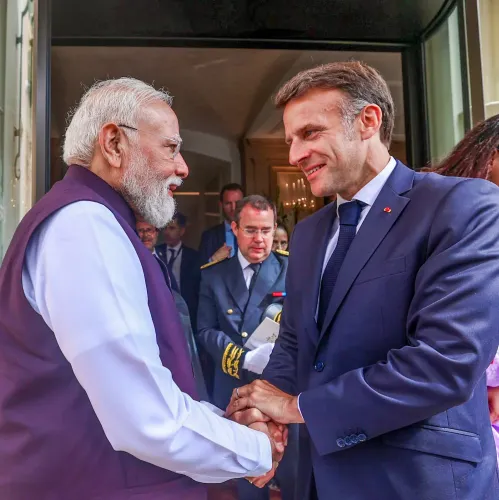
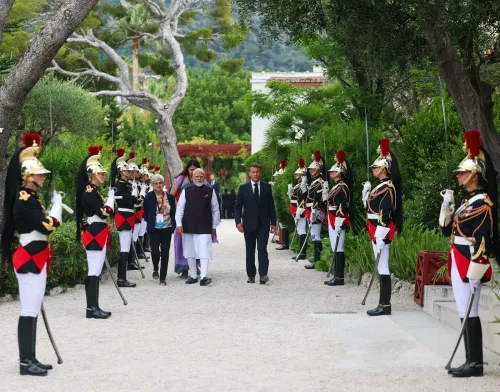
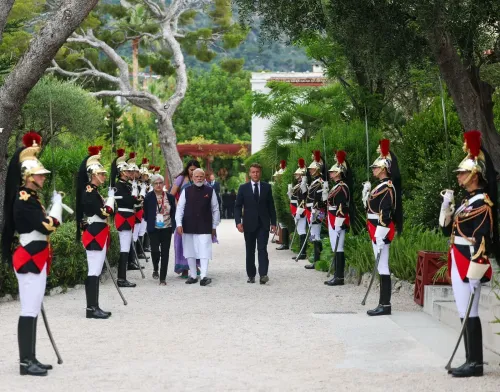
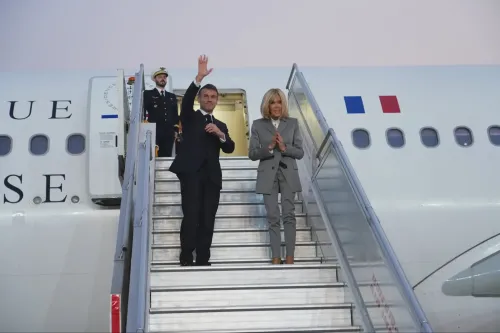
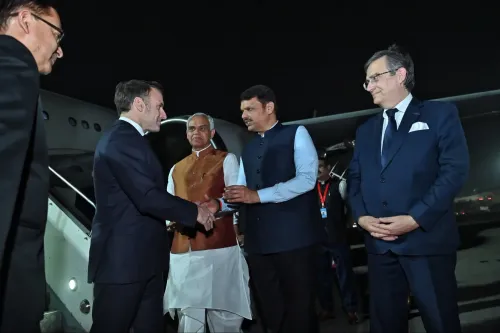
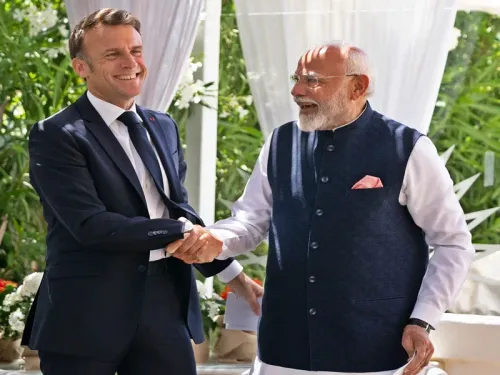
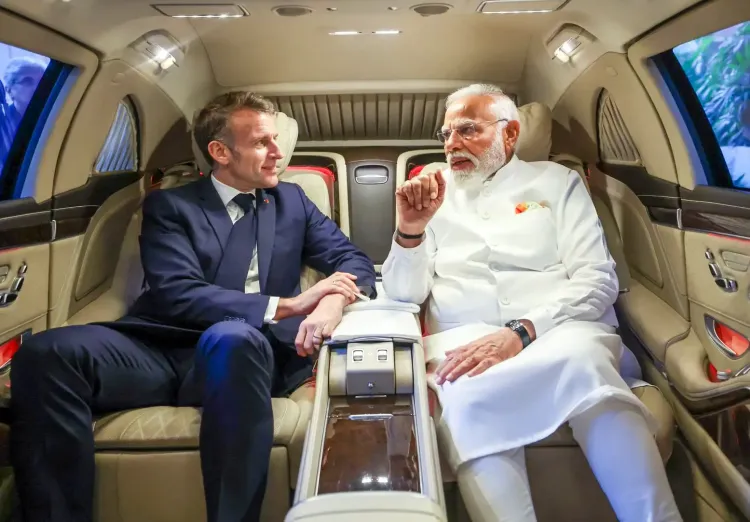
New Delhi, Feb 18 (NationPress) By enhancing their bilateral ties to a 'Special Global Strategic Partnership' during the ongoing visit of French President Emmanuel Macron to India, both nations have indicated that Paris is ascending into the forefront of New Delhi's foreign policy considerations.
A report from India Narrative suggests that this partnership transcends mere trade or defense agreements, involving long-term global collaboration in technology, security, and economic stability.
President Macron underscored this importance in a post on X, stating, “India and France have decided to elevate their strategic partnership to the level of a Special Global Strategic Partnership. In diplomacy, that means a great deal.”
The report highlighted that the 'Special Global Strategic Partnership' is not a conventional diplomatic classification; rather, it serves as a political indication that the existing ‘strategic partnership’ established in 1998 is being intensified and globalized. This involves three primary dimensions: both countries regard each other as long-term partners in a multipolar world rather than simply transactional allies; they frame their cooperation as a “force for global stability” amidst conflicts and great-power rivalries; and they are institutionalizing the relationship through new dialogues, such as an annual foreign ministers' review tied to India's Horizon 2047 plan, ensuring continuity across electoral cycles.
For India, France now joins an elite group, including the United States and Russia, as “special” strategic partners, while also enhancing India’s broader connection with the European Union.
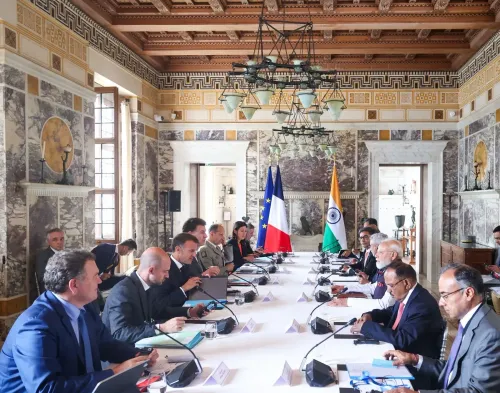
During Macron’s visit, 21 agreements and documents were formalized across various sectors, including defense production, critical minerals, high technology, AI, energy transition, and health.
Key initiatives comprise a joint venture between Bharat Electronics Ltd (BEL) and Safran for manufacturing HAMMER air-to-ground missiles in India, along with reciprocal officer deployment in each country's land forces to bolster interoperability.
Agreements on lithium and rare earth minerals, renewable energy, nuclear collaboration, and advanced technologies were also reached, providing operational depth for the partnership.
The India Narrative report highlighted that France’s industrial presence in India — ranging from Rafale and Mirage aircraft to Scorpene submarines — has now expanded to co-production and exports, granting India technology absorption, manufacturing capabilities, and job opportunities while offering France a reliable Asian production base.
Regarding critical minerals and energy, the partnership aids India in diversifying its supply chains, while the 'India-France Year of Innovation 2026' is set to connect start-ups, researchers, and private enterprises in fields like AI, space, quantum, and clean technology.
“In high technology, the launch of the 'India‑France Year of Innovation 2026' aims to extend the relationship beyond state-level projects into start-ups, researchers, and private firms in areas like AI, space, quantum, and clean tech. This “people‑centric” innovation focus emphasized by Prime Minister Narendra Modi is designed to foster networks of co-development that persist beyond any single government contract,” the report noted.
The report concluded that this partnership is a strategic answer to global unpredictability and rivalry, with both nations collaborating to balance multipolar interests.
It emphasized that the true measure of this enhanced partnership will be whether the co-production, energy and mineral agreements, and innovation initiatives translate into tangible projects, establishing a long-lasting, robust alignment that influences bilateral trade and global alliances.
Point of View
It is imperative to recognize the strategic significance of this partnership between India and France. The elevation to a 'Special Global Strategic Partnership' showcases India's intent to strengthen ties with trusted allies, thus enhancing its geopolitical stance in a multipolar world. This collaboration is vital for addressing global challenges and ensuring long-term stability.
NationPress
29 Sept 2026
Frequently Asked Questions
What is the significance of the 'Special Global Strategic Partnership'?
The 'Special Global Strategic Partnership' signifies a deeper and more comprehensive alliance between India and France, focusing on long-term cooperation in technology, security, and economic resilience.
How does this partnership affect India's global standing?
This partnership elevates India’s status among its strategic partners, aligning it with key global players like the United States and Russia, and strengthening its ties with the European Union.
What key agreements were signed during Macron's visit?
During President Macron's visit, 21 agreements were signed, covering areas such as defense production, critical minerals, high technology, AI, and health.
What initiatives are part of the 'India-France Year of Innovation 2026'?
The 'India-France Year of Innovation 2026' aims to connect start-ups, researchers, and private firms in sectors like AI, space, quantum, and clean technology.
How will this partnership address global challenges?
The partnership seeks to act as a stabilizing force in a multipolar world, enhancing cooperation to address global challenges and balance competing interests.