UPI hits 24,000 crore transactions in FY26, reshaping India's daily commerce
Synopsis
UPI has gone from 2 crore transactions in its debut year to over 24,000 crore in FY2025-26 — and India now handles one in every two real-time digital payments on the planet. With 86% of merchant payments under ₹500, this is no longer a fintech story; it is a street-level economic transformation playing out at tea stalls and medical shops across the country.
Key Takeaways
UPI recorded more than 24,000 crore transactions in FY2025-26 , up from just 2 crore in FY2016-17 .
Transaction value grew from ₹0.07 lakh crore to ₹314 lakh crore over the same decade.
India accounts for approximately 1 in 2 real-time digital transactions globally, according to available data.
86% of UPI merchant payments are below ₹500 , reflecting deep penetration into everyday small purchases.
UPI reportedly accounts for around 84% of all digital payments in India.
In July 2026 alone, UPI processed more than 2,360 crore transactions .
The Unified Payments Interface (UPI) has fundamentally reshaped how India transacts, growing from roughly 2 crore transactions in financial year 2016-17 to more than 24,000 crore transactions in financial year 2025-26 — a scale that now places India at the centre of the global real-time payments revolution. In value terms, transaction volumes have surged from ₹0.07 lakh crore to ₹314 lakh crore over the same period.
India's Dominance in Real-Time Payments
According to available data, approximately one in every two real-time digital transactions worldwide now originates in India — a statistic that underscores the platform's extraordinary reach. In July 2026 alone, UPI recorded more than 2,360 crore transactions, reflecting sustained month-on-month momentum. UPI reportedly accounts for around 84 per cent of all digital payments in the country, making it the dominant rail for consumer and merchant settlements alike.
Small Purchases, Big Impact
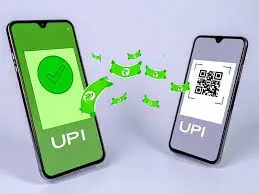
Perhaps the most telling indicator of UPI's grassroots penetration is the transaction-size data: 86 per cent of UPI merchant payments are below ₹500. This signals that the platform has moved well beyond urban, high-value use cases and is now the default payment method for everyday small-scale purchases — from a cup of tea to a packet of biscuits. The ubiquitous QR code at shop counters has become shorthand for this shift, eliminating the perennial problem of arranging exact change for both buyers and sellers.
Voices from the Market
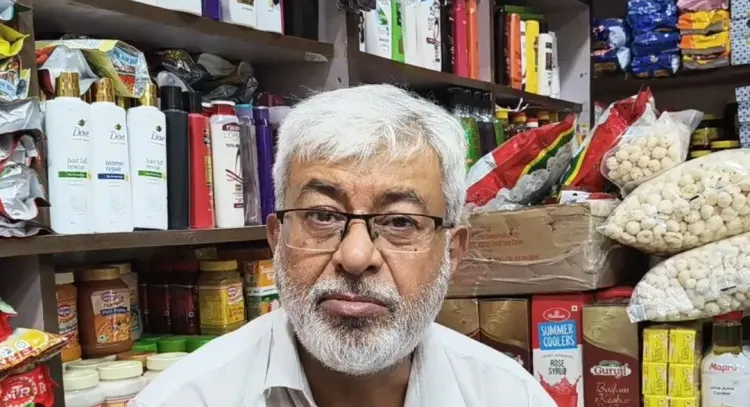
Traders and store owners across localities in New Delhi say the change has been tangible. At Jai Bharat Departmental Store in Sector 1, Pushp Vihar, shopkeepers said digital payments have made transactions 'quicker and more convenient,' allowing customers to scan a QR code and pay instantly even for small purchases without worrying about cash or change. Small business owners added that digital records have simplified bookkeeping and reduced dependence on physical currency.
Medical store owners Nand Lal, Santosh Kumar Jha, and Abhishek said they have witnessed a significant surge in bank transactions since adopting UPI, and noted that the longstanding problem of change money has been effectively resolved. Tea stall owners and other micro-traders have similarly benefited, with QR-code adoption visibly altering customer habits even in neighbourhood markets.
A Decade of Transformation
Launched a decade ago as a new interbank payment architecture, UPI has evolved from a pilot-stage experiment into the backbone of India's consumer economy. From grocery runs and utility bill payments to travel recharges and medical purchases, digital payments have increasingly displaced cash for routine transactions across income segments. This comes amid a broader national push toward a less-cash economy, with UPI serving as the primary vehicle for financial inclusion in semi-urban and rural India as well.
As the platform enters its second decade, the question for policymakers and the payments industry is how to extend its reach further — into cross-border settlements, credit-linked transactions, and deeper rural corridors — building on a foundation that has already made India a benchmark for the world.
Point of View
But the more consequential data point is the 86% figure — the share of merchant payments below ₹500. That is not a fintech metric; it is a measure of how deeply a payment rail has penetrated informal commerce. What mainstream coverage underplays is the distributional shift: UPI has effectively transferred float and transaction-fee leverage away from cash-and-carry intermediaries toward the formal banking system, with implications for credit scoring, tax compliance, and financial inclusion that are still unfolding. The next frontier — cross-border UPI and credit-on-UPI — will test whether India can export this architecture or whether its success remains largely domestic.
NationPress
25 Aug 2026
Frequently Asked Questions
How much has UPI grown since it launched?
UPI grew from approximately 2 crore transactions in FY2016-17 to more than 24,000 crore transactions in FY2025-26, while transaction value rose from ₹0.07 lakh crore to ₹314 lakh crore over the same period. The platform has expanded from a new interbank system into the dominant rail for consumer payments in India.
What share of global real-time payments does India handle through UPI?
According to available data, India accounts for approximately one in every two real-time digital transactions worldwide. In July 2026 alone, UPI recorded more than 2,360 crore transactions, reflecting the platform's sustained global scale.
Why is the 86% figure for small UPI payments significant?
The fact that 86% of UPI merchant payments are below ₹500 shows the platform has moved beyond high-value urban transactions into everyday micro-purchases such as tea, groceries, and medicines. It demonstrates grassroots adoption across informal and semi-formal commerce.
How has UPI affected small traders and shopkeepers?
Small traders, including tea stall owners, departmental store operators, and medical shop owners, report that UPI has eliminated the problem of arranging exact change, simplified bookkeeping through digital records, and made payment collection faster. Shopkeepers in Pushp Vihar, New Delhi, described the change as making transactions 'quicker and more convenient.'
What share of India's digital payments does UPI account for?
UPI reportedly accounts for around 84% of all digital payments in India, making it by far the most dominant payment method in the country. This share has grown steadily as the platform expanded to cover utilities, travel, groceries, and merchant payments.