Amit Shah: 2014 will split modern India's history into two eras
Synopsis
Amit Shah’s prediction that historians will split modern India into pre- and post-2014 halves is less a historical claim than a political one — delivered at the launch of a welfare-tech pilot in his own Lok Sabha constituency, the PM Family Care Tracker, which the government is positioning as a model for national rollout.
Key Takeaways
Home Minister Amit Shah on 28 June declared 2014 a ‘defining year’ that will split modern India’s history into two eras.
Shah attributed the transformation to the election of Narendra Modi as Prime Minister in the 2014 General Election .
He said the BJP -led government brought ‘fundamental changes in every sector’ with long-term, time-bound planning.
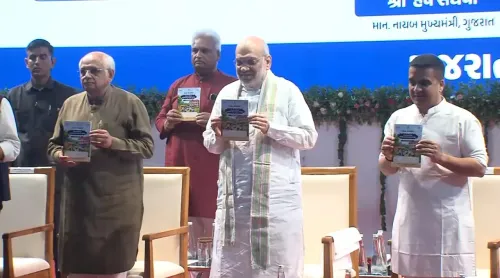
The PM Family Care Tracker (PM-FCT) pilot was launched in Gandhinagar Lok Sabha constituency , integrating health, nutrition, education, and welfare databases.
The PM-FCT monitors beneficiaries from pregnancy through childhood and adolescence to ensure no eligible recipient is missed.
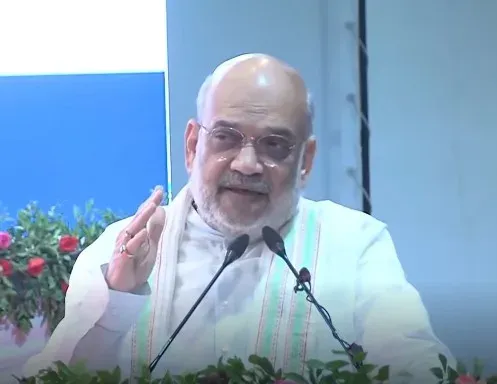
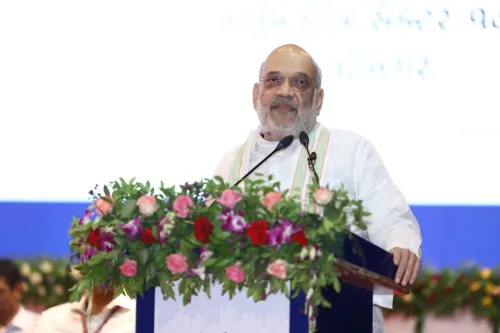
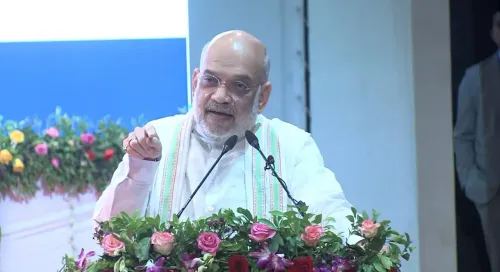
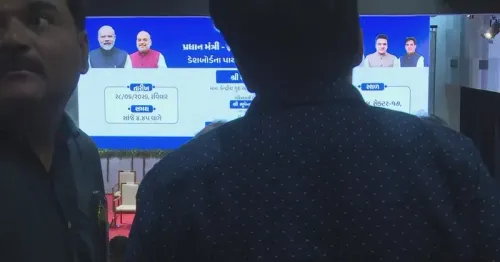
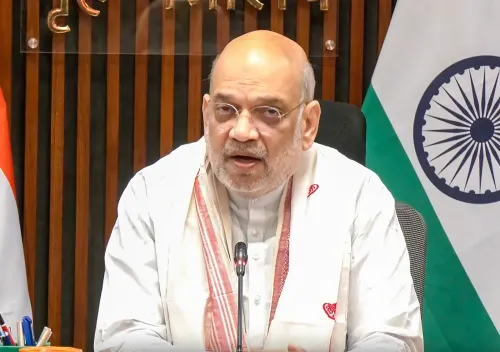
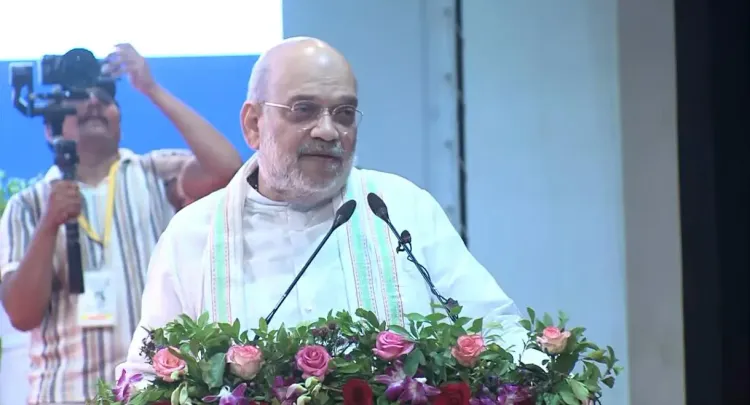
Union Home Minister Amit Shah on Sunday, 28 June declared that 2014 would stand as a “defining year” in India’s history, predicting that future historians documenting the country’s journey to its centenary of Independence would divide modern India into two distinct periods — before and after 2014. Shah made the remarks while addressing a gathering in Gandhinagar at the launch of the pilot project of the PM Family Care Tracker (PM-FCT) and Health Passports.
What Shah Said
“2014 will be recorded as an important year in the history of this country. Twenty-five to 50 years from now, when someone writes the history leading up to 100 years of India’s Independence, there will be two sections in that history: India before 2014 and India after 2014,” Shah said.
He attributed the shift to what he described as the democratic mandate of the 2014 General Election, in which voters chose Narendra Modi — then serving as Chief Minister of Gujarat — as Prime Minister of India. “This transformation became possible because of the democratic acceptance of leadership by the people,” he added.
Governance Transformation Since 2014
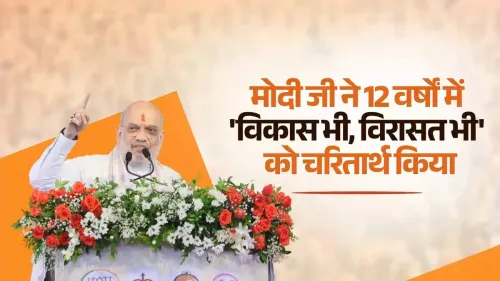
Shah argued that the Bharatiya Janata Party (BJP)-led Union government introduced structural changes across every sector after assuming office. “There is hardly any sector for whose development there is no long-term, time-bound planning,” he said.
He credited Prime Minister Modi with establishing “a new definition of inclusive and all-round development” through sustained long-term governance. Shah also stressed that policies were not merely framed but continuously monitored and implemented on the ground — a distinction he presented as a departure from earlier administrations.
PM-FCT Pilot: What It Does
The PM Family Care Tracker pilot, launched in the Gandhinagar Lok Sabha constituency, integrates health, nutrition, education, and welfare databases to monitor beneficiaries from pregnancy through childhood and adolescence. Shah described it as the next phase of the government’s welfare delivery model, using technology to ensure eligible beneficiaries receive services without omission.
The Health Passports, launched alongside the PM-FCT, are designed to consolidate individual health records as part of the same digital welfare framework.
Context and Significance
Shah’s remarks come as the BJP government approaches the completion of its third consecutive term in office. The framing of a pre-2014 and post-2014 binary is a recurring rhetorical device in BJP political communication, used to contrast the current administration with the preceding decade of Congress-led government. Critics have previously contested such characterisations, arguing that development gains are multi-decadal and cannot be cleanly attributed to a single political transition.
The PM-FCT launch in Gandhinagar — Shah’s own Lok Sabha constituency — signals an intent to use the constituency as a model for the programme’s eventual national rollout, according to officials present at the event.
Point of View
But its deployment at a welfare-tech launch in his own constituency adds a layer of political choreography worth noting. The PM Family Care Tracker is a substantive initiative — if it delivers on integration across health, nutrition, and education databases, it could meaningfully reduce exclusion errors in welfare delivery. But the historical claim itself invites scrutiny: development indices rarely hinge on a single electoral inflection point, and opposition parties have consistently challenged the attribution of decade-long gains to post-2014 policy alone. The real question is whether the PM-FCT pilot in Gandhinagar generates replicable outcomes — or remains a constituency showcase.
NationPress
28 Jun 2026
Frequently Asked Questions
What did Amit Shah say about 2014 and India’s history?
Home Minister Amit Shah said 2014 would be recorded as a defining year in India’s history, predicting that historians writing about the country’s journey to its centenary of Independence would divide modern India into two periods — before and after 2014. He attributed this shift to the democratic election of Narendra Modi as Prime Minister in 2014.
What is the PM Family Care Tracker (PM-FCT)?
The PM Family Care Tracker is a government initiative that integrates health, nutrition, education, and welfare databases to monitor beneficiaries from pregnancy through childhood and adolescence. Its pilot was launched in the Gandhinagar Lok Sabha constituency to ensure eligible beneficiaries receive services without omission.
Where was the PM-FCT pilot launched?
The pilot project of the PM Family Care Tracker and Health Passports was launched in the Gandhinagar Lok Sabha constituency in Gujarat on 28 June, with Home Minister Amit Shah presiding over the event.
Why did Shah credit 2014 as a turning point?
Shah said the 2014 General Election brought a democratic change in leadership, with Narendra Modi — then Chief Minister of Gujarat — elected as Prime Minister. He argued this enabled the BJP-led government to introduce long-term, time-bound structural reforms across every sector of the country.
What are Health Passports launched alongside PM-FCT?
Health Passports are digital documents launched as part of the same welfare-tech framework as the PM Family Care Tracker. They are designed to consolidate individual health records and form part of the government’s broader effort to use technology for seamless welfare delivery.