Gadkari rallies Indians behind Har Ghar Tiranga for Viksit Bharat
Synopsis
Union Minister Nitin Gadkari has amplified the Har Ghar Tiranga campaign ahead of Independence Day 2026, invoking the Tricolour's symbolism and the 150th anniversary of Vande Mataram to rally citizens behind the Viksit Bharat vision.
Key Takeaways
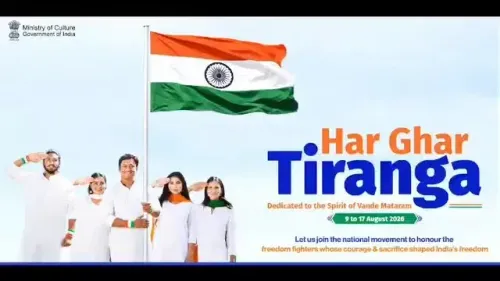
Union Minister Nitin Gadkari posted on 9 August 2026 urging citizens to hoist the Tricolour under the Har Ghar Tiranga campaign.
The campaign was first launched in 2022 as part of Azadi Ka Amrit Mahotsav marking 75 years of independence.
Gadkari linked the campaign to the 150th anniversary of 'Vande Mataram' , India's national song.
The post connects flag-hoisting to the government's long-term Viksit Bharat vision for a developed India by 2047 .
Citizens can register participation at the official portal harghartiranga.com .
Four years after it first unfurled across the country, Har Ghar Tiranga is back — and this time it carries the added weight of a historic cultural milestone. Union Road Transport and Highways Minister Nitin Gadkari on Sunday, 9 August 2026, called on every Indian to hoist the Tricolour at home, weaving together the campaign's patriotic drive with the 150th anniversary of 'Vande Mataram', India's national song.
Gadkari wrote that the Tricolour 'embodies India's freedom, unity, dignity and the sacrifices of generations who devoted themselves to the nation,' and urged citizens to reaffirm their resolve toward a 'stronger, united and Viksit Bharat.' He credited Prime Minister Narendra Modi's leadership for transforming Har Ghar Tiranga into what he called 'a powerful expression of our collective patriotism.'
From Azadi Ka Amrit Mahotsav to a standing August tradition
Har Ghar Tiranga was first launched in 2022 as the centrepiece of Azadi Ka Amrit Mahotsav — the government's celebration of 75 years of Indian independence. What began as a one-season push has since evolved into an annual pre-Independence Day ritual, with senior ministers across portfolios amplifying the campaign each August through social media and public events.
The pattern is deliberate. By pairing the flag with the long-term Viksit Bharat vision — the government's roadmap for a fully developed India by 2047 — the messaging frames patriotic symbolism as a bridge to economic and social aspiration. Gadkari's post fits squarely in that tradition, adding the Vande Mataram centenary as fresh emotional fuel.
Why Vande Mataram's 150th year sharpens the moment
Composed by Bankim Chandra Chattopadhyay, Vande Mataram — 'I bow to thee, Mother' — became a rallying cry of the independence movement and was later adopted as India's national song. Its 150th commemoration lands in the same week as Independence Day, giving this year's Har Ghar Tiranga cycle a cultural resonance beyond routine annual repetition.
Gadkari's post links the song's anniversary directly to the flag campaign, inviting citizens to treat the dual occasion as a single act of national reaffirmation. The official campaign portal, harghartiranga.com, allows Indians to register their flag-hosting and upload photographs — a digital participation layer that has grown with each edition.
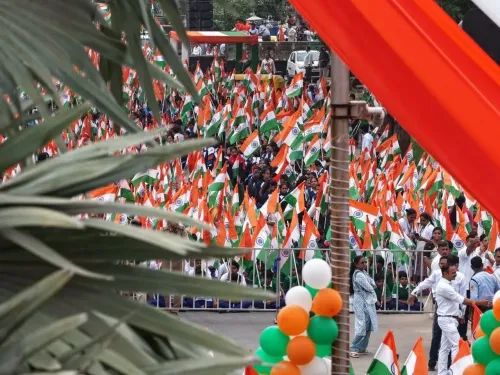
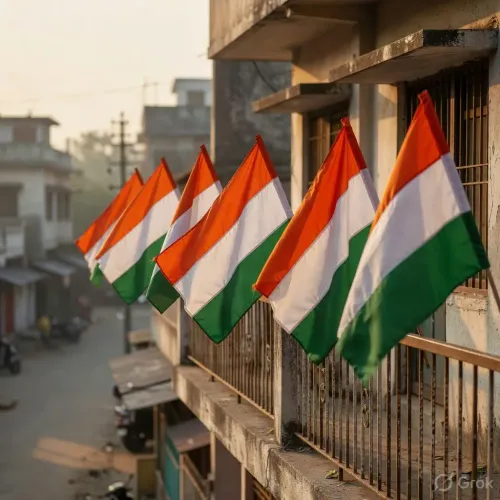
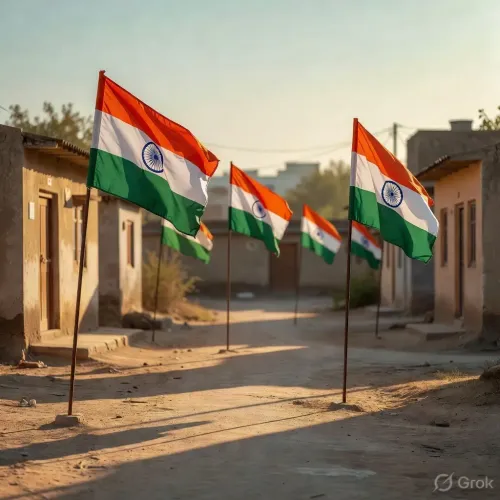
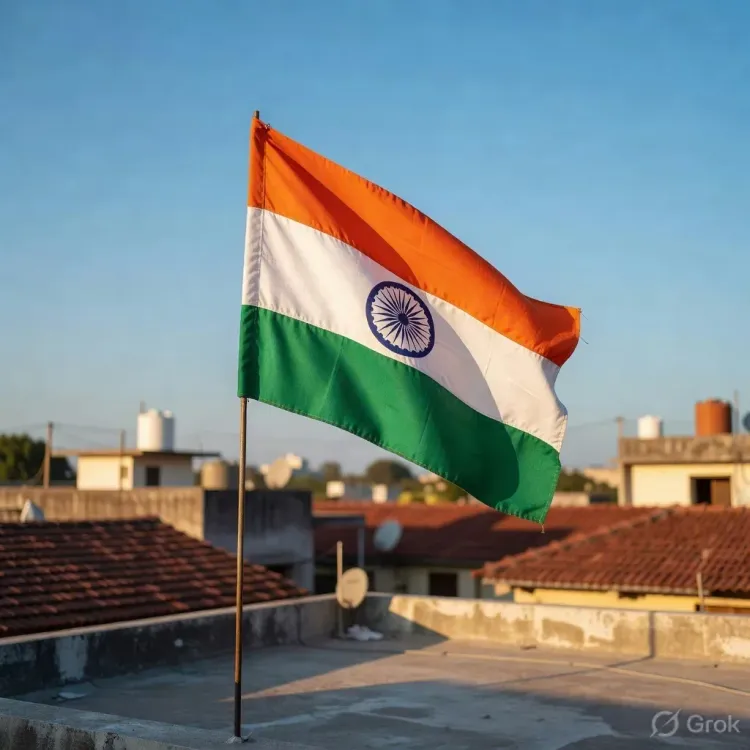
With 15 August 2026 days away, the streets, balconies, and social feeds of India are about to turn saffron, white, and green. The Tricolour has always meant something. This year, it is being asked to mean a little more.
Point of View
The challenge remains distinguishing between genuine civic mobilisation and electoral brand-building around the national flag.
NationPress
24 Sept 2026
Frequently Asked Questions
What is the Har Ghar Tiranga campaign?
Har Ghar Tiranga is a government campaign that encourages every Indian household to display the national flag as an act of patriotism. It was first launched in 2022 as part of Azadi Ka Amrit Mahotsav, celebrating 75 years of Indian independence, and has since been held annually around Independence Day.
How can I register for Har Ghar Tiranga 2026?
Citizens can participate and register their flag-hoisting at the official portal harghartiranga.com, where they can also upload photographs of their Tricolour display.
Why is Vande Mataram's 150th anniversary significant in 2026?
Vande Mataram, composed by Bankim Chandra Chattopadhyay, served as a rallying anthem during India's independence movement and is the country's national song. Its 150th commemoration coincides with Independence Day week in 2026, adding historic cultural weight to this year's Har Ghar Tiranga campaign.
What is Viksit Bharat and how does it connect to Har Ghar Tiranga?
Viksit Bharat is the Modi government's vision for India to become a fully developed nation by 2047, the centenary of independence. The Har Ghar Tiranga campaign is increasingly framed as a citizen pledge toward this goal, linking patriotic symbolism with long-term national development aspirations.
What did Nitin Gadkari say about the Tricolour on 9 August 2026?
Gadkari said the Tricolour 'embodies India's freedom, unity, dignity and the sacrifices of generations,' and called on citizens to hoist it proudly while commemorating 150 years of Vande Mataram and reaffirming their resolve toward a stronger, united Viksit Bharat.