Gadkari hails Modi's tribute article on Syama Prasad Mookerjee
Synopsis
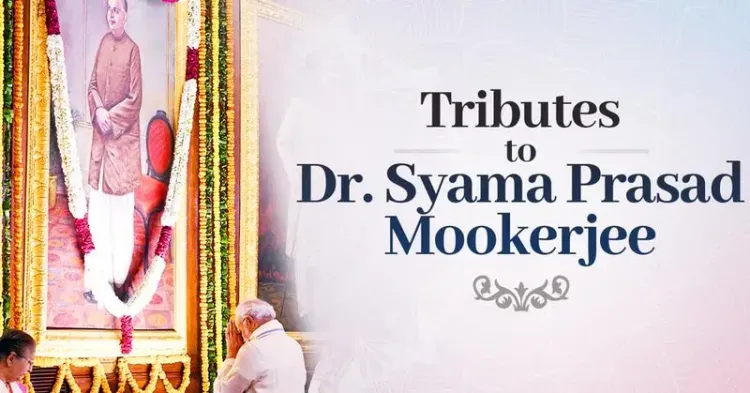
Union Minister Nitin Gadkari on July 6, 2026 endorsed PM Modi's reflective essay on Dr. Syama Prasad Mookerjee's birth anniversary, calling it a powerful tribute and urging citizens to reflect on Mookerjee's ideals of national unity and sacrifice that continue to shape India's political journey.
Key Takeaways
Nitin Gadkari publicly endorsed PM Modi 's article on Dr.
Syama Prasad Mookerjee on July 6, 2026 , Mookerjee's birth anniversary.
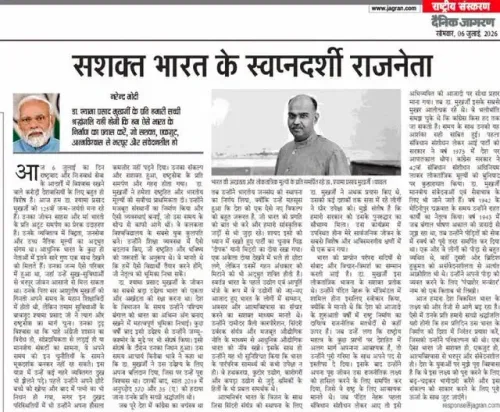
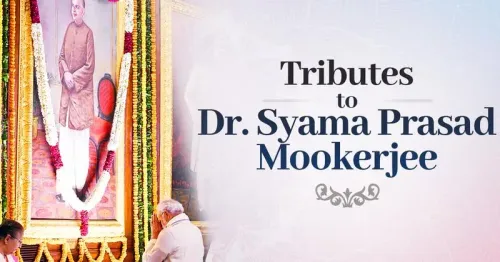
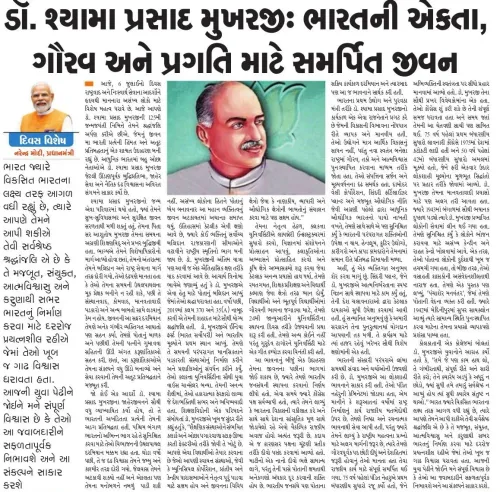
PM Modi's essay, titled 'A Life Devoted to India's Unity and Progress,' was published on his personal website.
Syama Prasad Mookerjee founded the Bharatiya Jana Sangh in 1951 , the ideological predecessor of the BJP .
Gadkari described Mookerjee's commitment to India's unity as a source of inspiration 'across generations.' The BJP government abrogated Article 370 in August 2019 , framing it as the fulfilment of Mookerjee's political vision.
Senior BJP leaders routinely commemorate Mookerjee to connect present-day policy on Kashmir with the party's founding ideology.
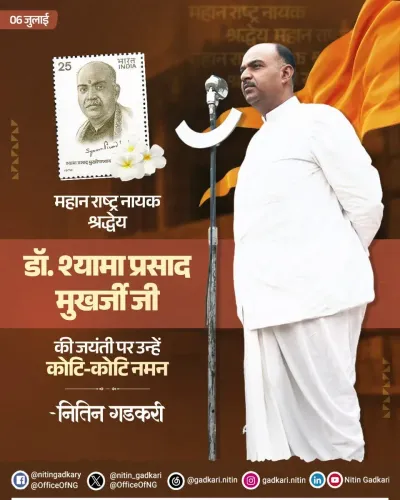
Union Road Transport and Highways Minister Nitin Gadkari on Monday, July 6, 2026, publicly endorsed Prime Minister Narendra Modi's article on Dr. Syama Prasad Mookerjee, calling it a 'powerful tribute to a visionary patriot' and urging citizens to read the piece and reflect on Mookerjee's ideals of national unity.
Context
Prime Minister Narendra Modi published a reflective essay on Dr. Syama Prasad Mookerjee on his personal website, titled 'A Life Devoted to India's Unity and Progress.' Gadkari shared the link on X on the morning of July 6, describing the article as 'deeply reflective' and calling Mookerjee's commitment to India's unity a source of inspiration 'across generations.'
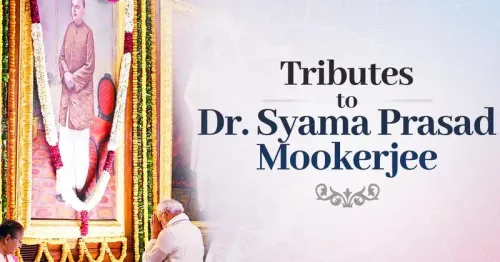
Mookerjee's death anniversary falls on June 23, while his birth anniversary is observed on July 6 — making the timing of the Prime Minister's article and Gadkari's endorsement significant in the BJP's political calendar. Gadkari wrote that Mookerjee's life 'reminds us that national integration is sustained by conviction, courage and sacrifice.'
Policy Backdrop
Dr. Syama Prasad Mookerjee founded the Bharatiya Jana Sangh in 1951, the ideological predecessor of the Bharatiya Janata Party. He was a fierce advocate for complete national integration and a prominent opponent of the constitutional special status granted to Jammu and Kashmir under Article 370, a cause he pursued until his death in custody in 1953.
The BJP-led government abrogated Article 370 in August 2019, ending Jammu and Kashmir's special constitutional status. The ruling party has consistently framed that decision as the fulfilment of Mookerjee's lifelong political vision, cementing his place as a central figure in the party's ideological narrative.
Stakeholders and Impact
The endorsement by a senior Cabinet minister like Gadkari amplifies the Prime Minister's article to a broader audience, reinforcing the BJP's practice of commemorating pre-independence and early-independence era Jana Sangh figures to anchor present-day policy positions in a longer historical arc. BJP leaders across the country regularly issue tributes to Mookerjee to connect the party's current stance on Kashmir and national unity with its founding ideology.
For BJP supporters and national integration advocates, such tributes serve as ideological affirmations. For political observers, they signal how the ruling party uses historical memory as a tool to reinforce its governance narrative, particularly around territorial integrity and cultural nationalism.
What's Next
With July 6 marking Mookerjee's birth anniversary, further tributes, official events, or commemorative programmes from BJP leaders and affiliated organisations are expected throughout the day. The Prime Minister's essay is likely to be widely circulated within party networks as a definitive statement on Mookerjee's legacy.
Observers will watch whether the renewed focus on Mookerjee's vision is accompanied by any policy announcements or administrative steps related to Jammu and Kashmir's ongoing integration process, a pattern that has emerged in previous anniversary cycles.
Point of View
Senior leaders collectively frame the party's governance record — particularly the abrogation of Article 370 — as the logical culmination of a decades-old political mission. The gesture also signals internal party cohesion, with a minister of Gadkari's stature lending institutional weight to what might otherwise be read as a routine anniversary post. In a broader arc, this pattern of commemorative politics serves as a durable tool for mobilising the BJP's core support base around foundational nationalist themes.
NationPress
5 Oct 2026
Frequently Asked Questions
Who is Dr. Syama Prasad Mookerjee and why is he important to the BJP?
Dr. Syama Prasad Mookerjee was the founder of the Bharatiya Jana Sangh in 1951, the ideological predecessor of the BJP. He is revered by the party for his advocacy of complete national integration, particularly his opposition to Article 370 that granted Jammu and Kashmir special constitutional status.
What did Nitin Gadkari say about PM Modi's article on Mookerjee?
Gadkari called PM Modi's article 'deeply reflective' and a 'powerful tribute to a visionary patriot,' adding that Mookerjee's life reminds us that national integration is sustained by conviction, courage and sacrifice. He urged everyone to read the piece.
When is Syama Prasad Mookerjee's birth anniversary?
Dr. Syama Prasad Mookerjee's birth anniversary falls on July 6. The Prime Minister's article and Gadkari's endorsement were both shared on this date in 2026.
What is the connection between Syama Prasad Mookerjee and Article 370?
Mookerjee was a prominent opponent of Article 370, which granted Jammu and Kashmir a special constitutional status. The BJP government abrogated Article 370 in August 2019 and has consistently presented that decision as the fulfilment of Mookerjee's political vision.
Where can I read PM Modi's article on Syama Prasad Mookerjee?
PM Modi's article titled 'A Life Devoted to India's Unity and Progress' was published on his personal website, narendramodi.in, and the link was shared by Gadkari in his post on July 6, 2026.