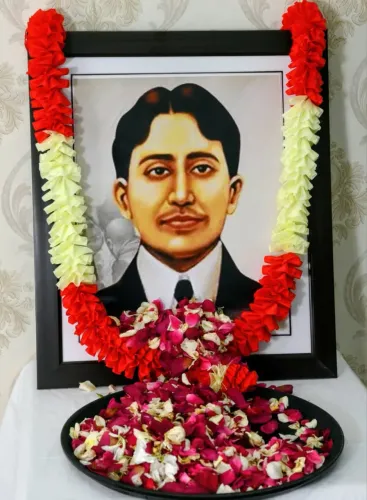
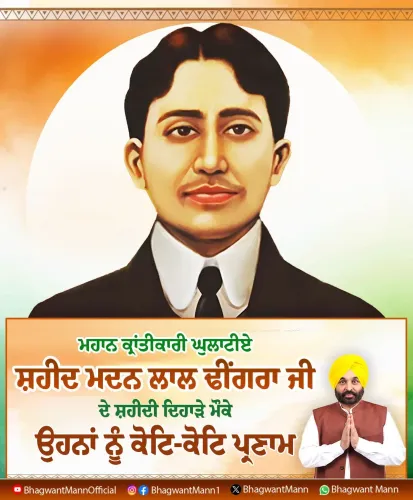
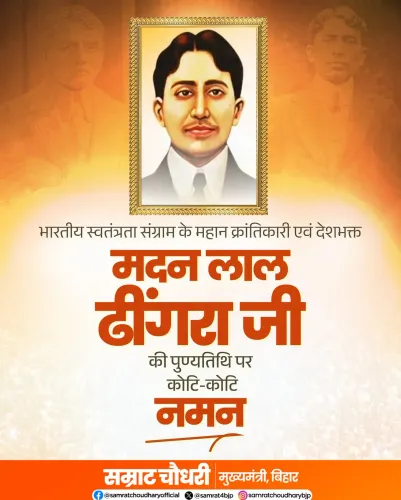
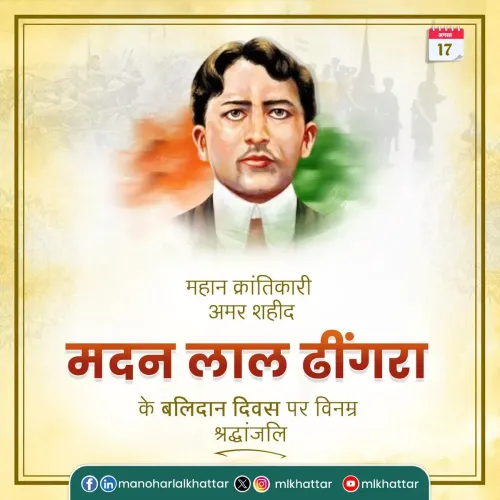
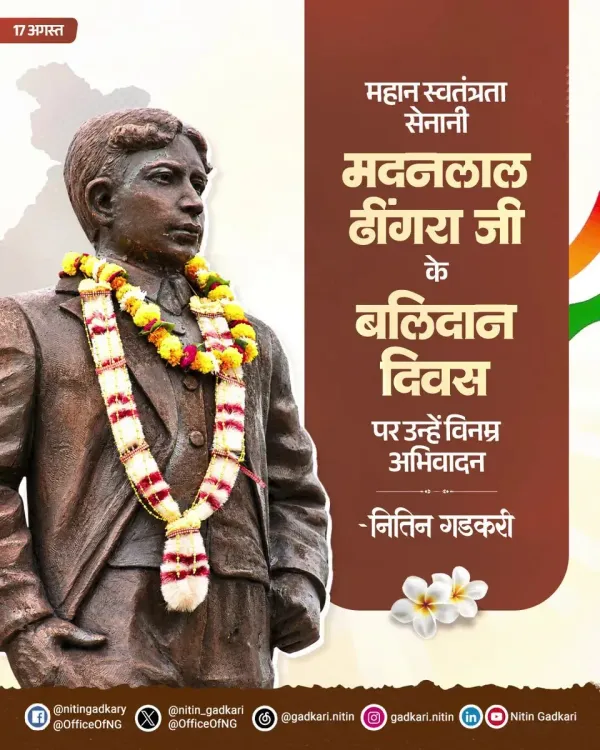
Gadkari pays tribute to martyr Madan Lal Dhingra on death anniversary
Synopsis
Union Minister Nitin Gadkari paid tribute to Madan Lal Dhingra on his death anniversary — 17 August, the day the Indian revolutionary was executed in London in 1909 after assassinating British official Curzon Wyllie.
Key Takeaways
Nitin Gadkari posted a tribute to Madan Lal Dhingra on 17 August 2026 , his death anniversary.
Madan Lal Dhingra was hanged at Pentonville Prison, London on 17 August 1909 , aged approximately 25.
Dhingra assassinated British officer Sir Curzon Wyllie in London on 1 July 1909 as a protest against British colonial rule.
He is regarded as one of the earliest and boldest revolutionary martyrs of India's freedom struggle.
BJP leaders routinely mark such anniversaries as part of a broader emphasis on India's revolutionary nationalist heritage.
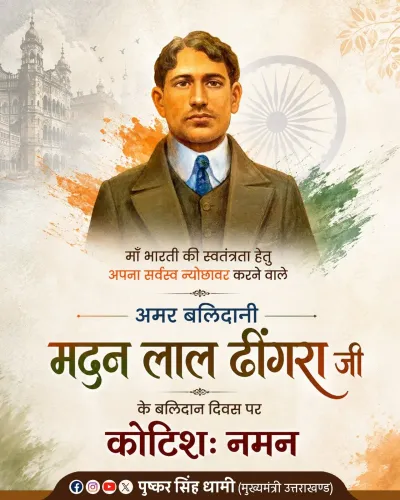
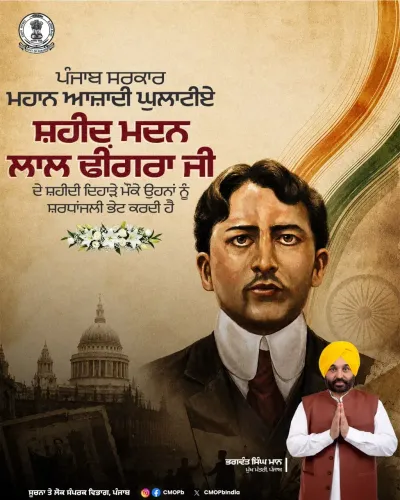
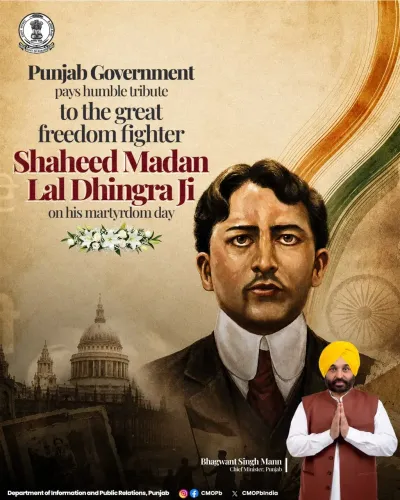
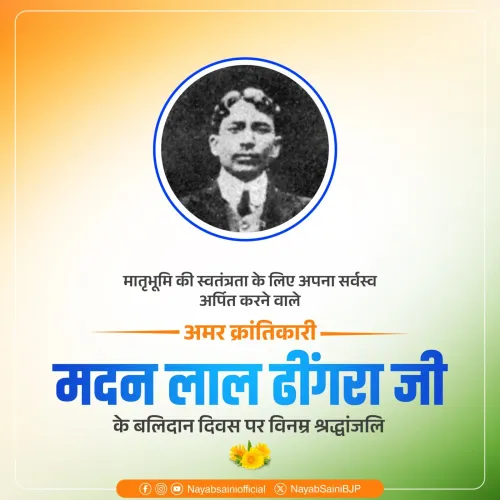
On the 117th death anniversary of Madan Lal Dhingra, Union Road Transport and Highways Minister Nitin Gadkari paid solemn tribute to the revolutionary who gave his life in the cause of India's freedom — hanged by British authorities in London on 17 August 1909.
Who was Madan Lal Dhingra
Madan Lal Dhingra was an Indian student-revolutionary studying in England who, on 1 July 1909, assassinated Sir Curzon Wyllie, a British Indian Army officer and aide-de-camp to the Secretary of State for India, at a public function in London. His act was a deliberate political statement against British colonial rule. Tried swiftly, he refused to disown his deed and was executed by hanging at Pentonville Prison, London on 17 August 1909.
Dhingra's final statement in court — in which he declared his life belonged to his motherland — became one of the most cited testaments of revolutionary nationalism in India's freedom movement. He was in his mid-twenties at the time of his execution.
BJP's annual observance of revolutionary martyrs
Gadkari's tribute is part of a consistent pattern among BJP leaders of publicly marking the anniversaries of revolutionaries who pursued armed resistance against British rule — figures often positioned alongside the mainstream independence movement. These commemorations, shared widely on social media, are an annual feature around dates such as 17 August and serve to foreground the revolutionary strand of India's freedom struggle in public memory.
No new policy announcement accompanied the post. The tribute stands as a moment of national remembrance — restrained, deliberate, and pointed.
Dhingra died at 25, thousands of miles from home, refusing clemency. That defiance, more than a century later, still commands a bow.
Point of View
Senior leaders signal an ideological lineage that the party considers foundational. The gesture carries no policy weight but considerable symbolic freight: it reinforces a narrative of sacrifice and armed defiance as co-equal pillars of the independence movement. Over time, this annual cadence of tributes has helped shift public familiarity with figures like Dhingra from specialist history into mainstream political culture.
NationPress
17 Aug 2026
Frequently Asked Questions
Who was Madan Lal Dhingra?
Madan Lal Dhingra was an Indian revolutionary who assassinated British officer Sir Curzon Wyllie in London on 1 July 1909. He was tried and hanged at Pentonville Prison on 17 August 1909, becoming one of the earliest martyrs of India's armed independence movement.
Why is 17 August significant for Madan Lal Dhingra?
17 August 1909 is the date on which Madan Lal Dhingra was executed by British authorities in London, making it his death anniversary and the day observed as his 'Balidan Diwas' (martyrdom day).
Who did Madan Lal Dhingra assassinate?
Dhingra assassinated Sir Curzon Wyllie, a British Indian Army officer serving as aide-de-camp to the Secretary of State for India, at a public function in London on 1 July 1909.
Why did Nitin Gadkari pay tribute to Madan Lal Dhingra?
Gadkari posted the tribute on 17 August, Dhingra's death anniversary, as part of a consistent BJP practice of publicly commemorating India's revolutionary freedom fighters on significant dates.
What did Madan Lal Dhingra say at his trial?
At his trial, Dhingra declared that his life belonged to his motherland and refused to disown his act of assassination. His court statement is widely cited as one of the most powerful testaments of revolutionary Indian nationalism.