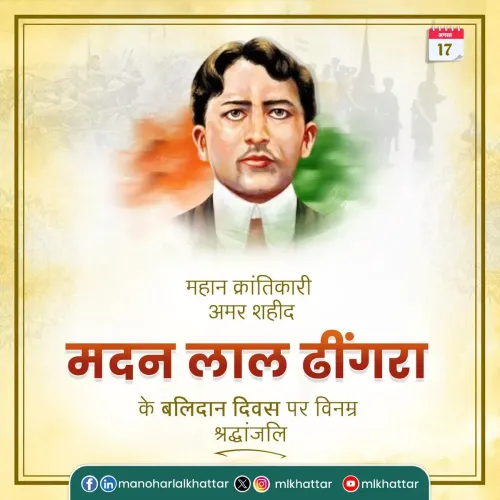
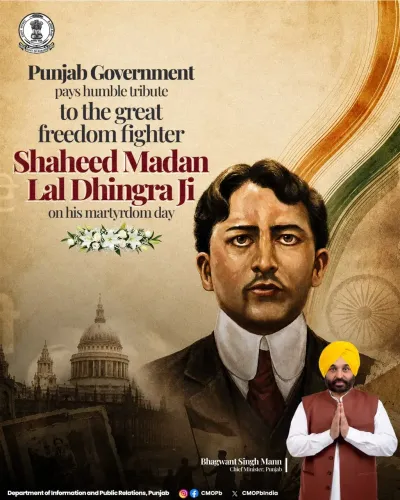
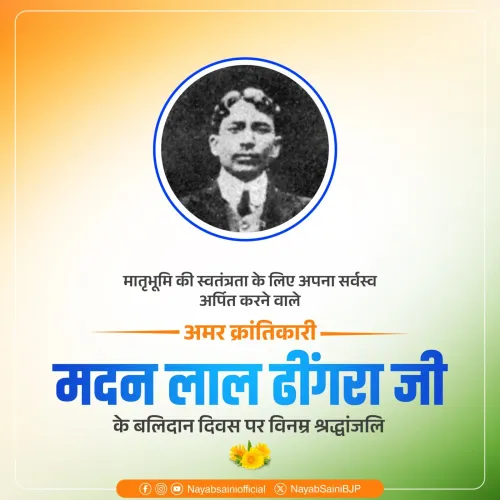
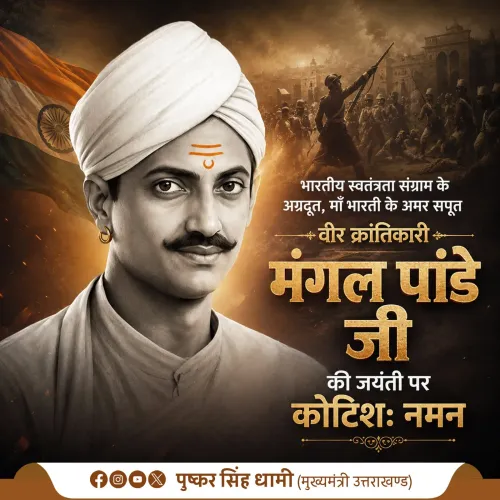
CM Dhami pays tribute to revolutionary Madan Lal Dhingra
Synopsis
Uttarakhand Chief Minister Pushkar Singh Dhami paid tribute to Madan Lal Dhingra on his martyrdom day, 17 August, honouring the revolutionary hanged in London in 1909 for assassinating British official Curzon Wyllie. Dhami called his life a source of eternal inspiration.
Key Takeaways
Madan Lal Dhingra was hanged in London on 17 August 1909 after assassinating British official Sir Curzon Wyllie .
He was 24 years old at the time of his execution and refused to seek clemency.
Uttarakhand CM Pushkar Singh Dhami posted a tribute on X calling Dhingra a 'brave son of Mother India' and an 'immortal martyr'.
Annual tributes to Dhingra on 17 August are a regular feature across India's political spectrum.
Dhingra is a prominent figure in the pre-Gandhian armed resistance tradition of the independence movement.
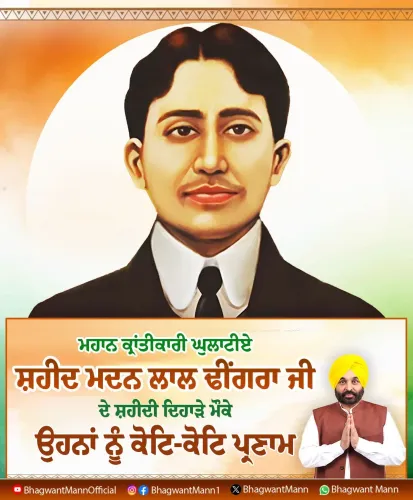
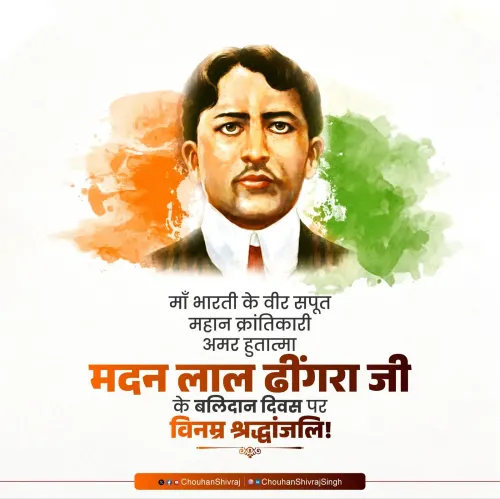
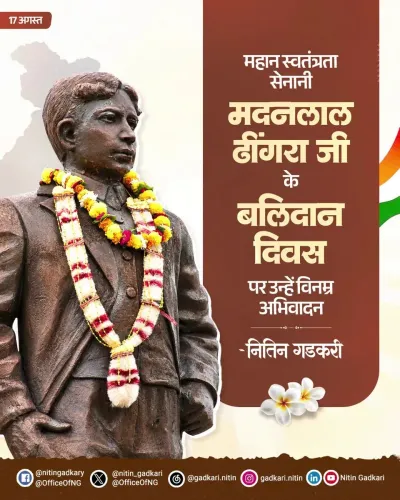
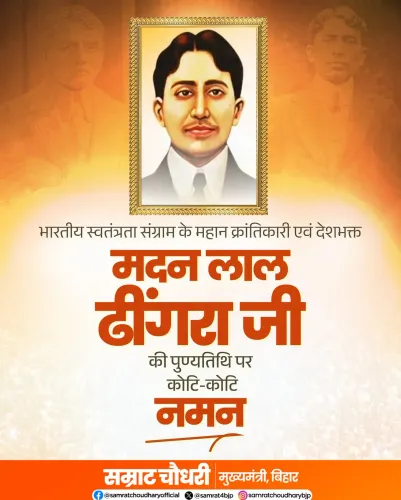
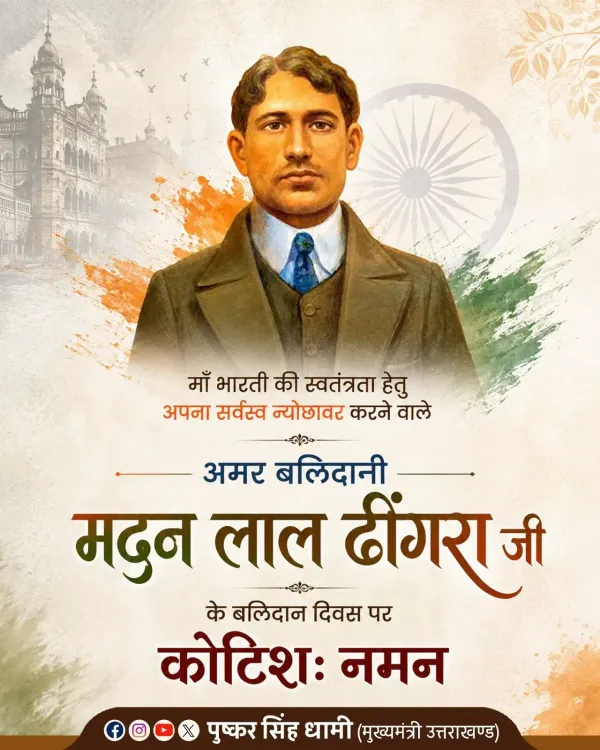
A century and more after Madan Lal Dhingra walked to the gallows in London on 17 August 1909, his sacrifice still commands the attention of India's political class. Uttarakhand Chief Minister Pushkar Singh Dhami marked the revolutionary's martyrdom day on 17 August with a heartfelt tribute on X, calling him a brave son of Mother India and an eternal martyr whose life story remains an enduring source of inspiration.
Posting in Hindi, CM Dhami wrote: 'माँ भारती के वीर सपूत, महान क्रांतिकारी और अमर बलिदानी मदन लाल ढींगरा जी के बलिदान दिवस पर कोटिशः नमन।' — 'Countless salutations on the martyrdom day of the brave son of Mother India, great revolutionary and immortal martyr Madan Lal Dhingra.' He added that Dhingra's life, 'steeped in patriotism', is a source of inspiration for all.
Who was Madan Lal Dhingra — and why 17 August matters
Madan Lal Dhingra was among the most dramatic figures of India's pre-Gandhian armed resistance. A student in London, he shot and killed British official Sir Curzon Wyllie at the Imperial Institute on 1 July 1909, declaring it an act of patriotic duty against colonial rule. He was tried, convicted, and hanged on 17 August 1909 — refusing to appeal for clemency, and delivering a defiant statement from the dock that circulated widely among Indian nationalists. He was 24 years old. His execution made him a martyr in the eyes of the revolutionary underground, and his name became a rallying point for those who argued that armed resistance, not petition, was the answer to British imperialism.A ritual of remembrance that crosses party lines
Dhingra's martyrdom day has become a fixed point in India's political calendar. Leaders across the spectrum issue tributes on 17 August each year, recognising the pre-Gandhian revolutionary tradition that often gets less classroom attention than the non-cooperation movement. For the BJP, figures like Dhingra — who chose sacrifice over negotiation — carry particular resonance, fitting neatly into a broader cultural narrative of armed valour in the independence struggle. CM Dhami, who regularly commemorates independence-era figures through social media, used the occasion to reinforce that thread of national memory — a reminder that India's freedom was paid for in many currencies, including the lives of young men who never saw it arrive.Point of View
These annual commemorations serve double duty: they signal ideological alignment with a particular reading of nationalist history while keeping the chief minister visible on national occasions. Dhingra's story — a young man who chose death over submission — carries obvious emotive power in that framing. The ritual nature of 17 August tributes across parties also suggests that Dhingra has crossed from contested historical figure to broadly accepted national martyr.
NationPress
1 Oct 2026
Frequently Asked Questions
Who was Madan Lal Dhingra?
Madan Lal Dhingra was an Indian revolutionary student based in London who assassinated British official Sir Curzon Wyllie on 1 July 1909. He was hanged on 17 August 1909 at the age of 24 and is remembered as one of the early martyrs of India's independence movement.
Why is 17 August significant for Madan Lal Dhingra?
17 August marks the day in 1909 when Madan Lal Dhingra was executed by hanging in London after being convicted for the assassination of Sir Curzon Wyllie. Indian political leaders observe this date as his martyrdom day each year.
What did CM Pushkar Singh Dhami say about Madan Lal Dhingra?
CM Dhami posted a tribute in Hindi calling Dhingra a 'brave son of Mother India,' a 'great revolutionary,' and an 'immortal martyr,' and said his life steeped in patriotism is a source of inspiration for all Indians.
What did Madan Lal Dhingra do?
Dhingra shot and killed British official Sir Curzon Wyllie at the Imperial Institute in London on 1 July 1909, declaring it an act of patriotism against colonial rule. He was tried, refused to appeal for clemency, and was hanged six weeks later.
Why do Indian leaders pay tribute to Madan Lal Dhingra?
Dhingra is recognised as one of the earliest and most dramatic figures of the armed resistance phase of India's independence struggle. Annual tributes on 17 August are a cross-party tradition that acknowledges the pre-Gandhian revolutionary tradition in the freedom movement.