Gadkari: PM Modi Launches ₹12,470 Cr Highway Projects in Jind

Synopsis
PM Modi dedicated and laid the foundation stone of National Highway projects worth over ₹12,470 crore at Jind, Haryana, on 17 July 2026, including the 157.92 km Haryana section of the Delhi–Amritsar–Katra Expressway and two other highway corridors, as announced by Minister Nitin Gadkari.
Key Takeaways
PM Narendra Modi dedicated and laid the foundation stone of National Highway projects worth over ₹12,470 crore at Jind, Haryana on 17 July 2026 .
The 157.92 km Haryana section of the Delhi–Amritsar–Katra Expressway (NE-05) was dedicated to the nation, cutting Delhi–Katra travel time from ~14 hours to ~6 hours.
The foundation stone for the 24.27 km Hansi–Barwala section of NH-148B was laid, upgrading it to a 2/4-lane highway with paved shoulders.
The 40.6 km Jind–Gohana section of NH-352A was dedicated, reducing travel time between the towns from ~2 hours to ~40 minutes.
The projects are aligned with the Bharatmala Pariyojana and PM Gati Shakti framework for integrated multimodal logistics.
Key beneficiaries include Haryana farmers, freight transporters, pilgrimage tourists, and residents of Delhi, Punjab and Jammu and Kashmir .
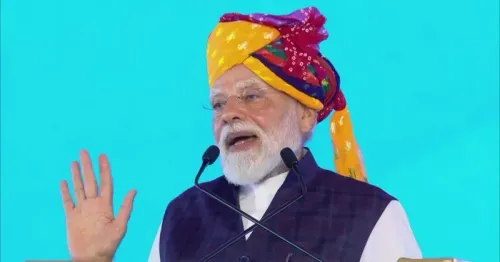
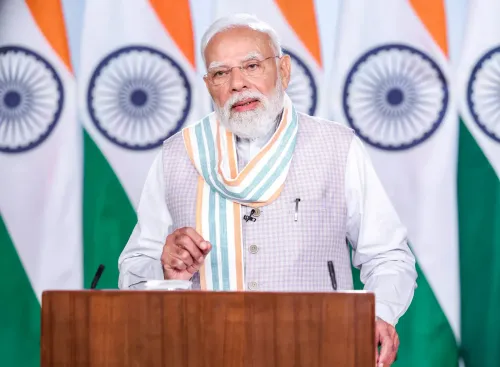
Union Road Transport and Highways Minister Nitin Gadkari announced on Friday, 17 July 2026, that Prime Minister Narendra Modi dedicated to the nation and laid the foundation stone of National Highway projects worth over ₹12,470 crore at an event in Jind, Haryana, marking a significant push for road connectivity across northern India.
Context
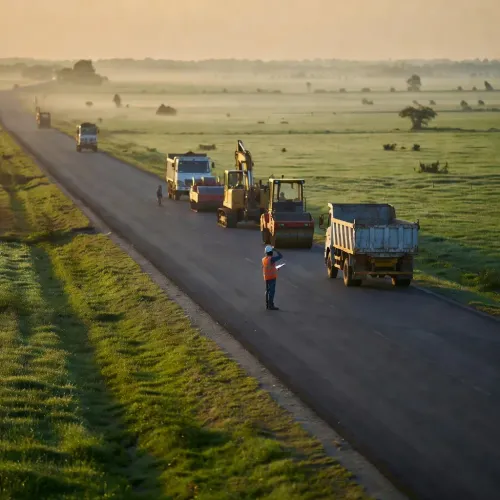
At the Jind event, PM Modi laid the foundation stone for the 24.27 km Hansi–Barwala section of NH-148B, which will be upgraded to a 2/4-lane highway with paved shoulders. The project is designed to improve road safety and travel comfort, enable faster movement of agricultural produce and freight, and support employment generation in the region.
He also dedicated to the nation two completed stretches: the 157.92 km Haryana section of the Delhi–Amritsar–Katra Expressway (NE-05) and the 40.6 km Jind–Gohana section of NH-352A. Together, these projects represent a substantial addition to Haryana's national highway network.
Policy Backdrop
The projects sit within the Bharatmala Pariyojana, launched in 2015 to develop approximately 34,800 km of national highways and expressways across India. They also align with the PM Gati Shakti framework, which seeks to integrate road infrastructure with multimodal logistics and economic corridors.
The Delhi–Amritsar–Katra Expressway (NE-05) is among the flagship corridors of this programme, designed to link the national capital with Punjab and the Vaishno Devi shrine in Jammu and Kashmir. Minister Gadkari noted that the expressway would cut Delhi–Katra travel time from roughly 14 hours to nearly 6 hours, and Delhi–Amritsar travel from about 8 hours to around 4 hours.
Stakeholders and Impact
The Jind–Gohana section of NH-352A is expected to reduce travel time between the two towns from approximately 2 hours to just 40 minutes, while also cutting fuel consumption and vehicular emissions. Farmers and freight transporters in Haryana stand to benefit directly from reduced logistics costs and faster connectivity to markets.
The Delhi–Amritsar–Katra Expressway is expected to boost tourism to the Vaishno Devi shrine and strengthen trade and logistics across Delhi, Haryana, Punjab and Jammu and Kashmir. Pilgrimage tourists and long-haul truckers are among the primary beneficiaries of the sharply reduced travel times.
What's Next
Attention will now turn to the progress of remaining segments of the Delhi–Amritsar–Katra Expressway beyond the Haryana section, particularly the stretches in Punjab and Jammu and Kashmir. Any new funding allocations for highway projects in the forthcoming Union Budget will be closely watched by the infrastructure and logistics sectors.
The central government's sustained focus on greenfield expressways and four-laning of national highways signals that road infrastructure will remain a cornerstone of its economic strategy, with northern India emerging as a key theatre for high-capacity corridor development.
Point of View
A state the BJP has governed and contested closely, is receiving a cluster of highway investments that simultaneously address real connectivity gaps and serve as visible proof of governance. The Delhi–Amritsar–Katra Expressway is particularly strategic, linking the capital to a major pilgrimage destination and tying together the economies of four states and a Union Territory. Minister Gadkari's framing of the projects under the PM Gati Shakti banner also signals an effort to present road spending not merely as construction, but as integrated economic infrastructure — a narrative that is increasingly central to the government's pitch ahead of future electoral cycles.
NationPress
17 Jul 2026
Frequently Asked Questions
What highway projects did PM Modi inaugurate in Jind, Haryana?
PM Modi dedicated the 157.92 km Haryana section of the Delhi–Amritsar–Katra Expressway (NE-05) and the 40.6 km Jind–Gohana section of NH-352A to the nation, and laid the foundation stone for the 24.27 km Hansi–Barwala section of NH-148B , with a combined value of over ₹12,470 crore .
How will the Delhi–Amritsar–Katra Expressway reduce travel time?
The expressway is expected to cut Delhi–Katra travel time from approximately 14 hours to nearly 6 hours , and Delhi–Amritsar travel from about 8 hours to around 4 hours , benefiting pilgrims, commuters and freight operators across four states.
What is the Jind–Gohana NH-352A project?
The 40.6 km Jind–Gohana section of NH-352A is a national highway stretch in Haryana that was dedicated to the nation at the Jind event. It is expected to reduce travel time between the two towns from about 2 hours to just 40 minutes while cutting fuel consumption and emissions.
What is the Bharatmala Pariyojana and how are these projects related?
Bharatmala Pariyojana is a central government programme launched in 2015 to develop approximately 34,800 km of national highways and expressways. The Haryana projects announced at Jind form part of this programme and are also aligned with the PM Gati Shakti multimodal logistics framework.
Who will benefit from the Hansi–Barwala NH-148B upgrade?
The upgrade of the Hansi–Barwala section of NH-148B to a 2/4-lane highway with paved shoulders is expected to benefit Haryana farmers by enabling faster movement of agricultural produce and freight, improve road safety for daily commuters, and support local employment and economic growth.