Gadkari Remembers Tagore, Soul of Jana Gana Mana
Synopsis
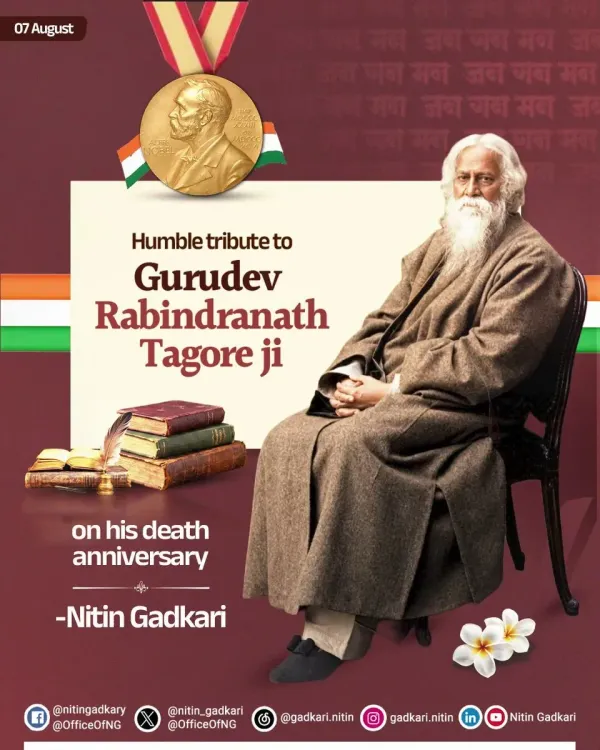
Union Minister Nitin Gadkari marked Rabindranath Tagore's death anniversary on 7 August, honouring the Nobel Laureate and composer of Jana Gana Mana as the 'true soul' of India's National Anthem. Tagore, who died in 1941, remains one of India's most revered cultural and intellectual figures.
Key Takeaways
Union Minister Nitin Gadkari paid tribute to Rabindranath Tagore on his death anniversary, 7 August .
Gadkari described Tagore as the 'true soul' of the National Anthem Jana Gana Mana and an 'Indian Polymath'.
Tagore won the Nobel Prize in Literature in 1913 , becoming the first non-European to do so.
He composed Jana Gana Mana , adopted as India's National Anthem after independence.
Tagore passed away on 7 August 1941 , and his death anniversary is marked annually by political and cultural figures across India.
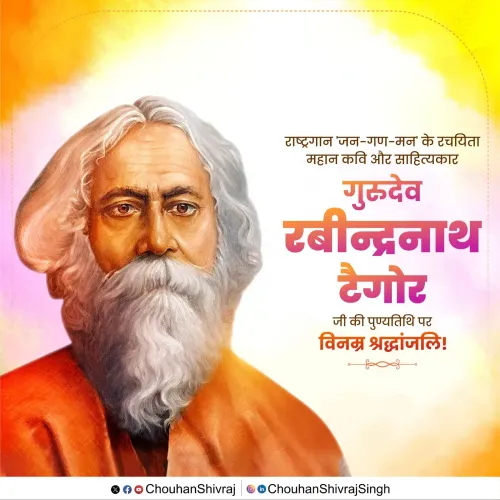
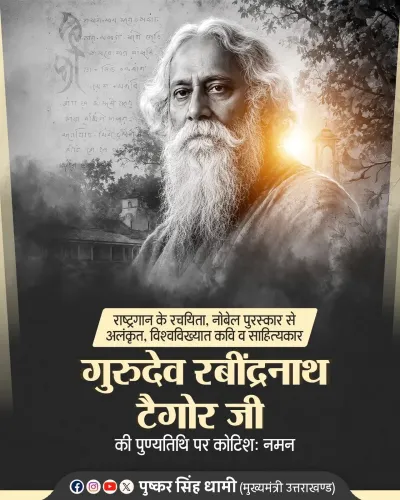
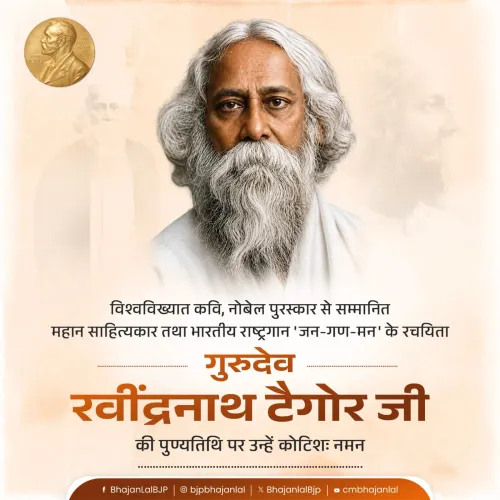
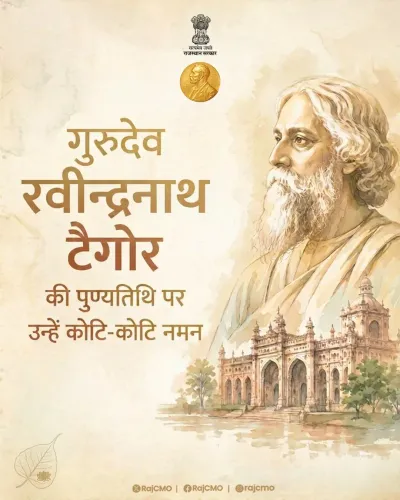
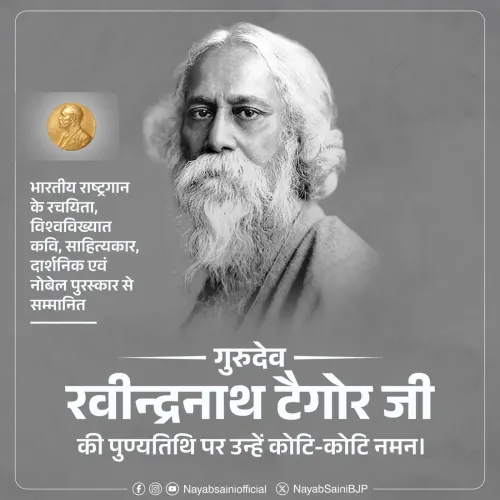
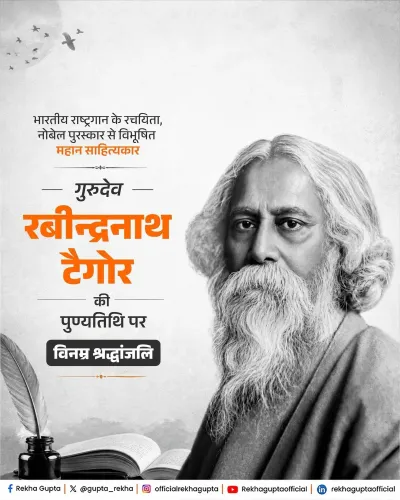
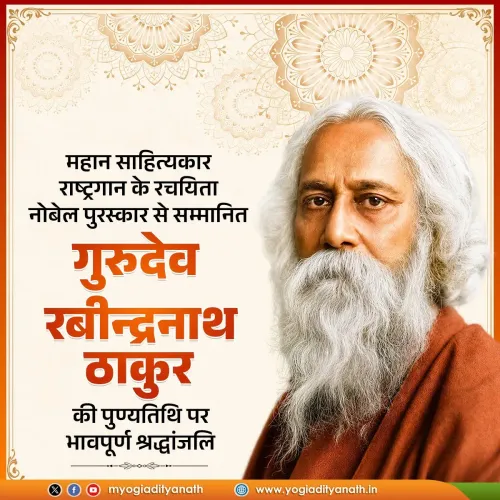
He wrote the words every Indian has sung since childhood — and on his death anniversary, Union Road Transport and Highways Minister Nitin Gadkari paused to remember the man behind them: Gurudev Rabindranath Tagore, Nobel Laureate, polymath, and composer of Jana Gana Mana.
Tagore needs no introduction, yet every anniversary is a reminder of how singular his contribution was. Born in 1861 in Calcutta, he became the first non-European to win the Nobel Prize in Literature, awarded in 1913 for his collection Gitanjali. But it is Jana Gana Mana — adopted as India's National Anthem at the dawn of independence — that places him at the very heartbeat of the republic.
Gadkari, in his post on X, called Tagore 'the true soul' of the National Anthem, describing him as an 'Indian Polymath' and 'Nobel Laureate' — a framing that situates Tagore not merely as a Bengali literary figure but as a civilisational voice belonging to all of India.
A poet who shaped a nation's identity
Tagore's legacy stretches far beyond a single anthem. He composed over 2,000 songs, wrote novels, plays, and essays, founded the Visva-Bharati University in Santiniketan, and returned his knighthood in protest after the Jallianwala Bagh massacre of 1919 — a gesture that remains one of the most powerful acts of moral clarity in India's colonial history. His death on 7 August 1941 marked the end of an era, but his words have never stopped resonating. For Indian political figures, marking Tagore's death anniversary has become a consistent act of national remembrance — a moment to reconnect with the cultural and intellectual foundations of the republic. Gadkari's tribute fits that pattern, but the specific framing around Jana Gana Mana gives it a pointed resonance: in a time of intense public debate about national identity, invoking the anthem's author is never a neutral act. Tagore's Jana Gana Mana is more than a song. It is a philosophical statement — pluralist, humanist, and universal. Every time a minister invokes its 'true soul', they are, whether consciously or not, making a claim about what India is supposed to stand for. That is the quiet weight this anniversary carries, year after year.Point of View
Not mere ceremony. For a government that has frequently engaged debates around national identity and heritage, invoking Tagore — a pluralist, humanist icon — reinforces a claim to India's composite intellectual tradition. Such tributes also reflect a broader BJP effort to project cultural ownership over figures who transcend party lines. The consistency of these annual commemorations across the political spectrum suggests Tagore remains one of the few figures whose legacy commands genuinely cross-ideological reverence in Indian public life.
NationPress
7 Aug 2026
Frequently Asked Questions
When did Rabindranath Tagore die?
Rabindranath Tagore died on 7 August 1941 . His death anniversary is observed annually across India by political leaders, cultural institutions, and citizens.
Who wrote India's National Anthem Jana Gana Mana?
Rabindranath Tagore composed Jana Gana Mana , which was adopted as India's National Anthem after independence.
Why is Rabindranath Tagore called a polymath?
Tagore was a poet, novelist, playwright, composer, philosopher, and educator. He founded Visva-Bharati University and won the Nobel Prize in Literature in 1913 , making him one of the most multifaceted figures in Indian history.
What did Nitin Gadkari say about Tagore?
On Tagore's death anniversary, Gadkari described him as the 'true soul' of the National Anthem Jana Gana Mana and honoured him as an 'Indian Polymath' and 'Nobel Laureate'.
Why did Tagore return his knighthood?
Tagore returned his knighthood in 1919 as a protest against the Jallianwala Bagh massacre , in which British troops killed hundreds of unarmed civilians in Amritsar.