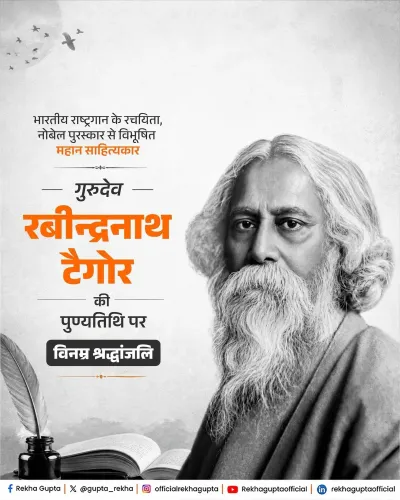
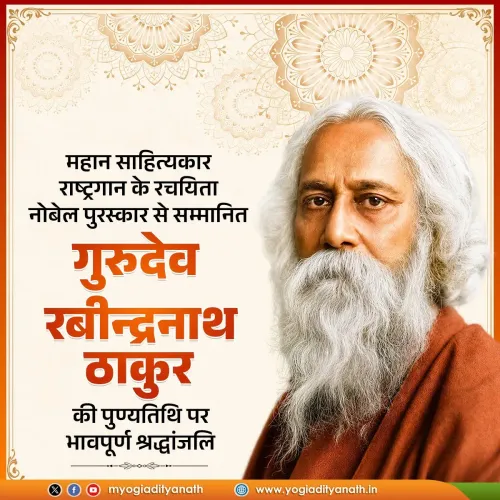
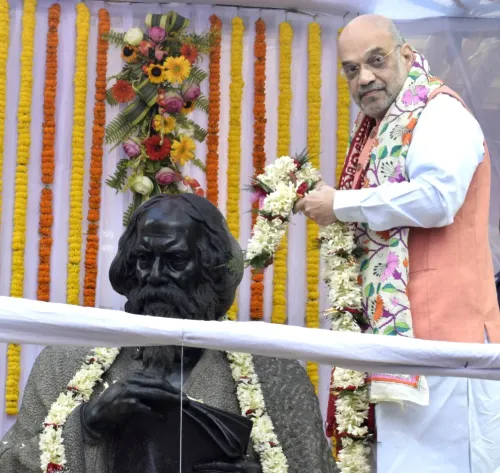
Amit Shah Pays Tribute to Tagore on Death Anniversary

Synopsis
Union Home Minister Amit Shah marked Rabindranath Tagore's death anniversary on 7 August 2026 with a bilingual tribute in Hindi and Bengali, honouring the Nobel laureate's literary legacy, his composition 'Jana Gana Mana', and his founding of Visva-Bharati University at Shantiniketan.
Key Takeaways
Amit Shah paid tribute to Rabindranath Tagore on his death anniversary, 7 August 2026 , in both Hindi and Bengali.
Shah described Tagore's writings as giving 'voice to the soul of India' and injecting new consciousness into the freedom movement. 'Jana Gana Mana' , composed by Tagore in 1911 and adopted as India's national anthem in 1950 , was cited as a symbol of national unity and self-respect.
Shah highlighted Tagore's founding of Visva-Bharati University in 1921 at Shantiniketan as a landmark contribution to Indian culture and global education.
The bilingual tribute — in Hindi and Bengali — reflects the cultural and political significance of Tagore's legacy in West Bengal .
A poet who gave India its voice — and its national anthem. On the death anniversary of Rabindranath Tagore, Union Home Minister Amit Shah on Friday, 7 August 2026 offered his tribute to the Nobel laureate, honouring the man whose words have defined the nation's soul for over a century.
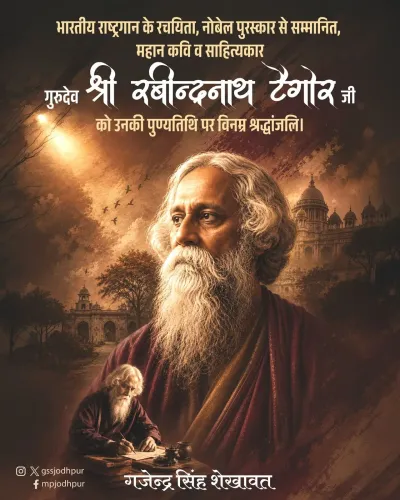
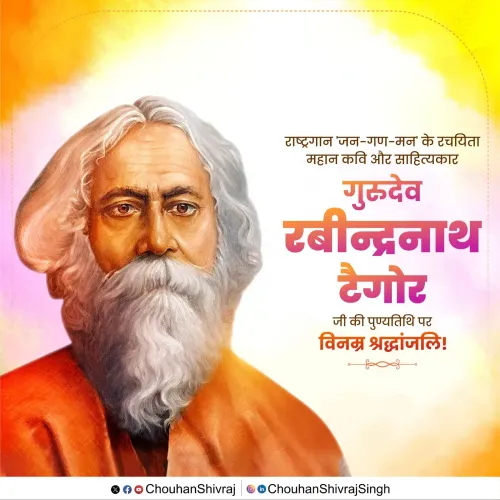
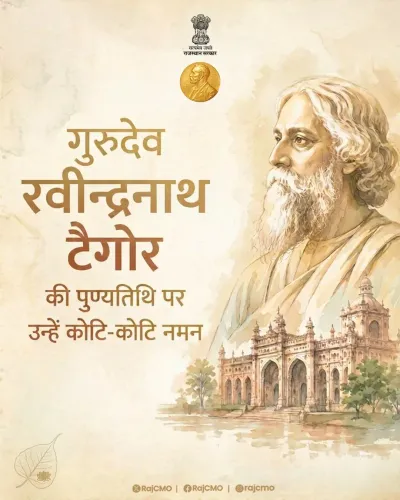
Writing in both Hindi and Bengali, Shah paid homage — 'कोटि-कोटि नमन' (a billion salutations) — to Tagore, describing how the poet's pen gave voice to the spirit of India and infused fresh consciousness into the freedom movement. The bilingual tribute, reaching audiences in two of India's most widely spoken languages, was itself a nod to Tagore's own pan-Indian stature.
'Jana Gana Mana' — a song that became a nation's identity
Shah specifically invoked Tagore's immortal composition 'Jana Gana Mana', calling it a symbol of the nation's unified consciousness and self-respect. Originally composed by Tagore in 1911, the song was officially adopted as India's national anthem by the Constituent Assembly in 1950 — a journey from a poet's vision to a republic's founding declaration.
That a single composition could travel from a literary gathering to the constitutional heart of a nation speaks to the extraordinary weight Tagore's work carried — and continues to carry.
Visva-Bharati: where Indian thought met the world
Shah also highlighted Tagore's founding of Visva-Bharati University at Shantiniketan in 1921 as the poet's enduring institutional gift to India. Declared a central university in 1951, Visva-Bharati was conceived as a space where Indian culture, philosophy and education could engage with — and enrich — the global intellectual tradition.
The university remains one of the few Indian institutions whose founding philosophy is inseparable from its founder's literary and spiritual vision. For Shah, it stands as proof that Tagore did not merely write about India's greatness — he built structures to sustain it.
A tribute that travels across two languages
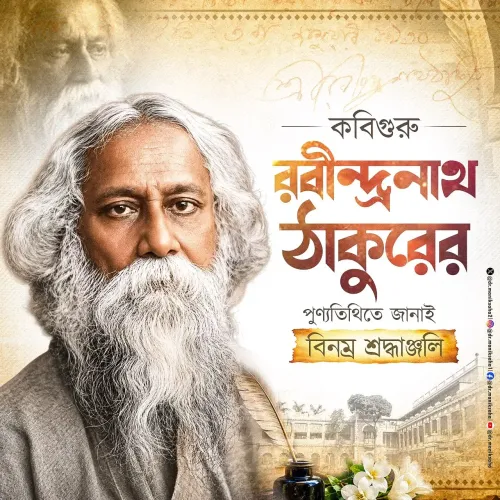
The choice to post in both Hindi and Bengali is deliberate and politically resonant. West Bengal, Tagore's home state and the language in which much of his greatest work was composed, occupies a central place in BJP's electoral and cultural outreach. Marking Tagore's death anniversary in Bengali — 'কবিগুরু রবীন্দ্রনাথ ঠাকুরের প্রয়াণ দিবসে তাঁকে জানাই কোটি কোটি প্রণাম' (On the death anniversary of Kaviguru Rabindranath Tagore, I offer him a billion salutations) — signals a sustained effort to claim cultural common ground in the state.
Tagore's legacy belongs to no single party or region. But the political figures who invoke it most fluently earn a kind of reflected authority. Shah's tribute lands on 7 August, the day Tagore passed away in 1941 — and annual observances at Visva-Bharati and cultural institutions across the country mark it as one of India's most quietly significant commemorative dates.
More than eight decades after his death, Tagore's literature remains, as Shah put it, 'an inexhaustible source of inspiration' — and the nation's leaders still reach for his words to explain what India is.
Point of View
Aligning him with the ruling dispensation's emphasis on cultural nationalism. Such tributes rarely alter policy but consistently reinforce the symbolic register through which political authority is projected.
NationPress
7 Aug 2026
Frequently Asked Questions
When did Rabindranath Tagore die?
Rabindranath Tagore died on 7 August 1941 , and his death anniversary is observed annually across India, particularly at Visva-Bharati University in Shantiniketan.
Who composed India's national anthem Jana Gana Mana?
Rabindranath Tagore composed 'Jana Gana Mana' in 1911 . It was officially adopted as India's national anthem by the Constituent Assembly on 24 January 1950 .
What is Visva-Bharati University and who founded it?
Visva-Bharati University was founded by Rabindranath Tagore in 1921 at Shantiniketan , West Bengal. It was declared a central university in 1951 and is dedicated to blending Indian and global traditions in education.
Why did Amit Shah post his Tagore tribute in Bengali?
Shah posted in both Hindi and Bengali to honour Tagore in his native language. Bengali was the primary language of Tagore's literary work, and the gesture also reflects the political and cultural significance of West Bengal in national discourse.
When did Rabindranath Tagore win the Nobel Prize?
Rabindranath Tagore received the Nobel Prize in Literature in 1913 , becoming the first non-European to win the prize, primarily recognised for his poetry collection 'Gitanjali'.