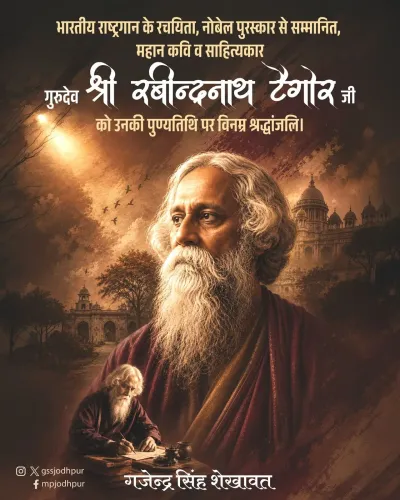
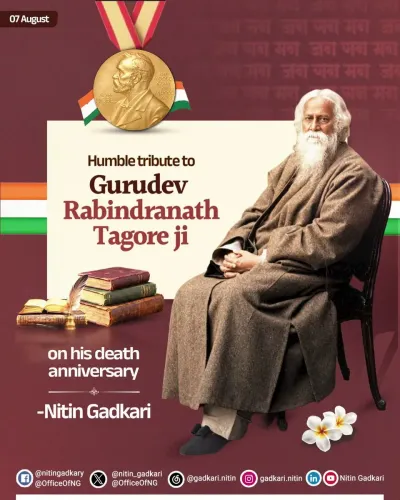
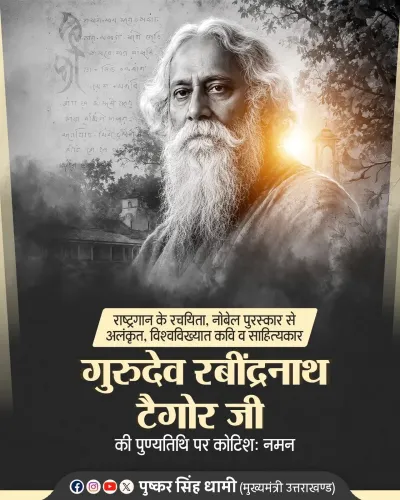
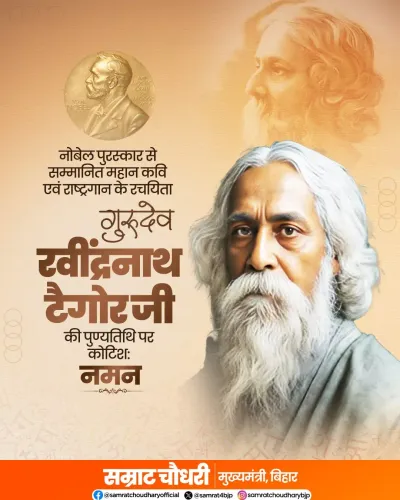
Nadda Pays Tribute to Tagore on Death Anniversary
Synopsis
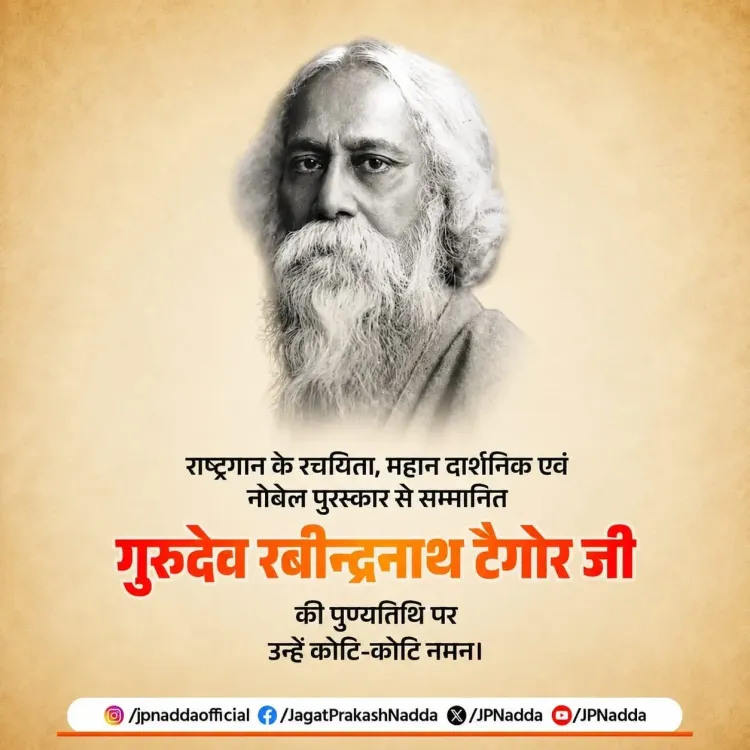
Union Health Minister J. P. Nadda honoured Rabindranath Tagore on his death anniversary, praising the Nobel laureate as a visionary educationist who freed learning from rigid structures and dedicated his creative genius to humanity's welfare.
Key Takeaways
Nadda , Union Health Minister and BJP national president, paid tribute to Rabindranath Tagore on his death anniversary.
Tagore ( 1861–1941 ) composed India's national anthem Jana Gana Mana and won the Nobel Prize in Literature in 1913 .
He founded Visva-Bharati University in Santiniketan to promote free, creative and interdisciplinary education.
Nadda described Tagore as a 'blazing beacon of humanity' who liberated education from rigid structures and made it a vehicle for free thought and social upliftment.
Annual observances of Tagore's death anniversary are held across schools, universities and cultural institutions in India, cutting across political and regional lines.
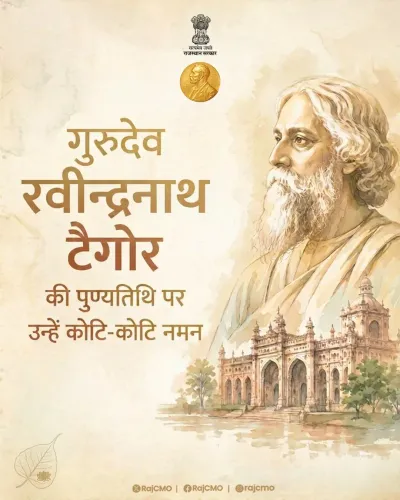
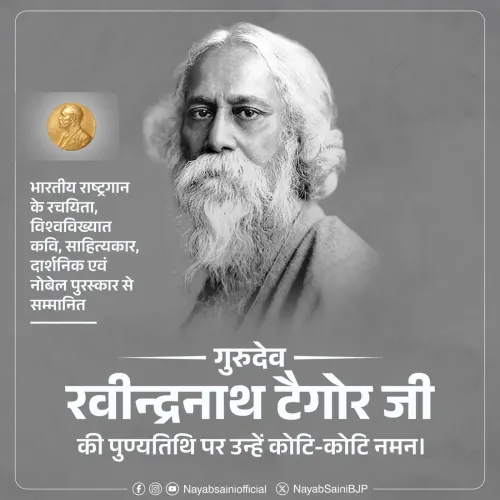
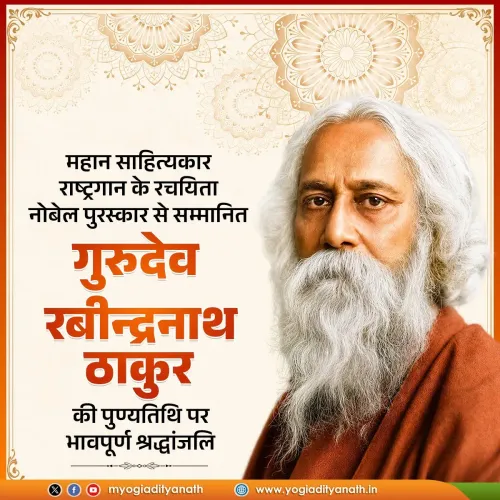
The man who gave India its national anthem — and its most enduring vision of free thought — was remembered on Friday by Union Health Minister J. P. Nadda, who offered homage to Rabindranath Tagore on the poet-philosopher's death anniversary.
Posting in Hindi, Nadda described Tagore as a 'personality of India's finest intellectual tradition' — a poet, philosopher, and 'a blazing beacon of humanity.' He paid tribute to Tagore's role as a visionary educationist who 'liberated education from its shackles and made it a medium of free thought, sensitivity and creativity,' and recalled how Tagore dedicated his creative genius to the welfare of all humankind.
The man behind Jana Gana Mana
Rabindranath Tagore (1861–1941) remains one of the most towering figures in world literature and Indian public life. He became the first non-European to win the Nobel Prize in Literature, awarded in 1913 for his collection Gitanjali. His composition Jana Gana Mana was adopted as India's national anthem, making his words the opening note of the republic itself. He founded Visva-Bharati University in Santiniketan, West Bengal — a living experiment in open-air, interdisciplinary education that challenged the rigid, colonial model of schooling.
A philosophy that outlasted its era
Tagore's educational vision rested on a simple but radical premise: that learning must awaken the whole person — not just train a worker or a subject. He believed knowledge was a tool for social upliftment, not merely individual advancement. That philosophy continues to animate debates about pedagogy and the humanities in India today. Nadda's tribute specifically invoked this dimension, noting that Tagore's works 'still inspire us to work for the nation, society and all of humanity.'
Across India, schools, universities and cultural institutions mark Tagore's death anniversary each year with readings, performances and academic observances — a tradition that cuts across political lines and regional boundaries.
Point of View
Invoking Tagore's humanist and universalist philosophy also implicitly broadens the party's intellectual tent beyond its core ideological touchstones. The specific emphasis on education as a liberating force carries quiet resonance at a time when national education policy and the role of the humanities in Indian universities remain live debates. Such tributes, while ceremonial, function as soft statements of values.
NationPress
7 Aug 2026
Frequently Asked Questions
When is Rabindranath Tagore's death anniversary?
Rabindranath Tagore passed away on 7 August 1941 , and his death anniversary is observed annually on that date across India.
What did JP Nadda say about Rabindranath Tagore?
Nadda described Tagore as a personality of India's finest intellectual tradition and a 'blazing beacon of humanity,' praising him for liberating education from rigid structures and dedicating his creativity to the welfare of all humankind.
Why is Rabindranath Tagore important to India?
Tagore composed India's national anthem Jana Gana Mana , won the Nobel Prize in Literature in 1913 , and founded Visva-Bharati University — making him central to India's cultural, literary and educational identity.
What is Rabindranath Tagore's philosophy of education?
Tagore believed education should be freed from rigid, colonial-era structures and made a medium of free thought, sensitivity and creativity, with knowledge serving as a tool for social upliftment rather than mere vocational training.
Where is Visva-Bharati University located?
Visva-Bharati University, founded by Rabindranath Tagore, is located in Santiniketan, West Bengal , India.