Gehlot Highlights BJP's Internal Conflicts Amidst Raje Controversy
Synopsis
In a striking rebuttal to BJP's Madan Rathore, Ashok Gehlot exposes the party's internal disarray while defending Vasundhara Raje. As political tensions rise, Gehlot emphasizes Congress's readiness to reclaim power in Rajasthan’s upcoming elections.
Key Takeaways
Gehlot critiques BJP’s internal conflicts.
Raje's comments defended by Gehlot.
India's missed opportunity in global mediation.
Contradictory statements show BJP's instability.
Gehlot expresses confidence in Congress's future.
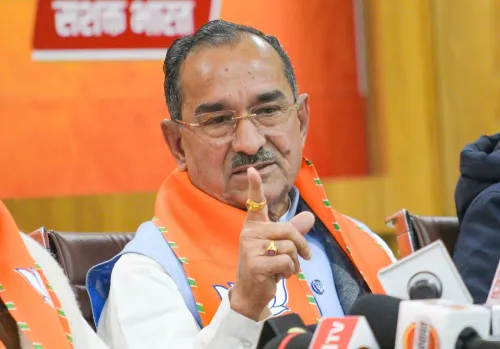
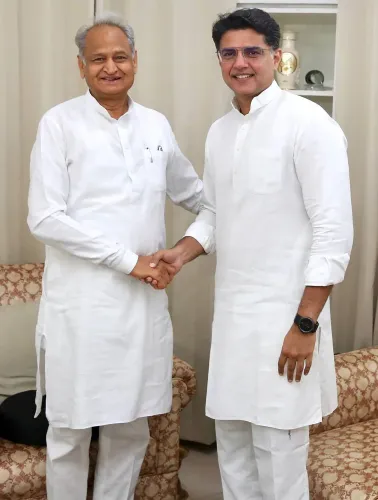
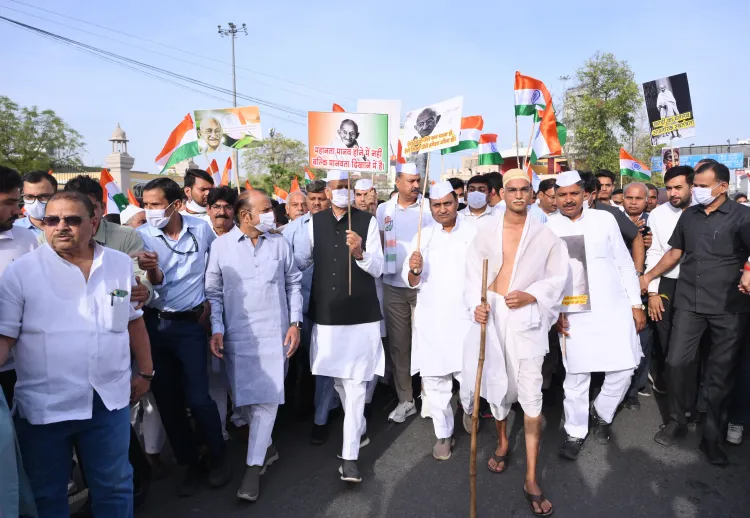
Jaipur, April 13 (NationPress) Former Chief Minister Ashok Gehlot decisively responded to comments made by BJP State President Madan Rathore regarding Vasundhara Raje on Monday.
Gehlot emphasized that Raje does not require any defense, as the public comprehends the essence and backdrop of her comments. He noted that while Raje’s statements may have been unwarranted, they remain her personal choice.
“Vasundhara Raje expresses one viewpoint, while Madan Rathore presents an entirely different narrative. This divergence highlights the internal situation within their party,” he commented.
Critiquing the BJP, Gehlot pointed out that the party frequently charges Congress with internal strife, yet the truth tells another story.
“Their internal turmoil is now evident. One can observe the conflicting statements; their situation has spilled into public view,” he remarked.
Gehlot portrayed Rathore as a decent and sensible individual, but he implied that party dynamics often result in unpredictable public remarks.
Reinforcing his political confidence, Gehlot mentioned that Rajasthan has a history of alternating governments, confidently asserting that Congress is poised to regain power in the upcoming election.
He reiterated Rathore’s claim, stating, “Will Vasundhara Raje become Chief Minister each time... such statements are unsuitable for a state-level leader.”
According to Gehlot, comments like these should be reserved for senior national leaders, including PM Modi or the BJP’s national president. “In any case, that is an internal issue for their party,” he added.
He maintained that Raje need not justify her position, underscoring that the public grasps her perspective.
“These are the same individuals who accuse Congress of infighting, yet it is the BJP facing unmistakable disorder,” he stated, citing contradictory remarks within the party as proof of their internal instability.
In response to Rathore’s accusation of him endorsing Pakistan’s involvement in mediating the US–Israel–Iran tensions, Gehlot clarified that his statements were misconstrued. He noted that India missed a chance to play a constructive role on the global stage.
“India possesses a unique moral position worldwide, advocating for peace, brotherhood, and non-violence. It should have taken the lead in mediation efforts,” he declared.
Gehlot expressed alarm over discussions around Pakistan acting as a mediator.
“When a nation widely regarded as a promoter of terrorism discusses peace, it is understandably troubling,” he remarked.
He stressed that many countries expected India to take the initiative in this context.
Invoking historical context, he referred to Indira Gandhi, highlighting that Pakistan was divided during her leadership, yet is now being considered as a peace facilitator.
“At a moment when global focus is on the tensions between Israel and Iran, nations are seeking leadership in peace initiatives. My argument was simply that India should have been in that leadership role,” Gehlot concluded.
Point of View
It is essential to recognize the complexities of political discourse in Rajasthan. Gehlot's comments not only address the BJP's internal challenges but also set the stage for Congress's narrative as they prepare for the next election cycle.
NationPress
18 Sept 2026
Frequently Asked Questions
What did Ashok Gehlot say about Vasundhara Raje?
Gehlot defended Raje, stating she does not need to clarify her comments, as the public understands her intentions.
How did Gehlot respond to BJP's accusations of infighting?
Gehlot pointed out that while the BJP accuses Congress of internal strife, it is their own party faced with visible discord.
What was Gehlot's stance on Pakistan's mediation role?
He expressed concern about Pakistan being considered for mediation, emphasizing India's potential role in promoting peace.
What did Gehlot suggest about leadership in peace initiatives?
He argued that India should have positioned itself as a leader in mediating tensions between Israel and Iran.
What is the political outlook for Congress in Rajasthan?
Gehlot confidently asserts that Congress is set to return to power in the next election, given Rajasthan's alternating government history.