Rijiju hails Ghana FM's call: 'UN should learn from India'
Synopsis
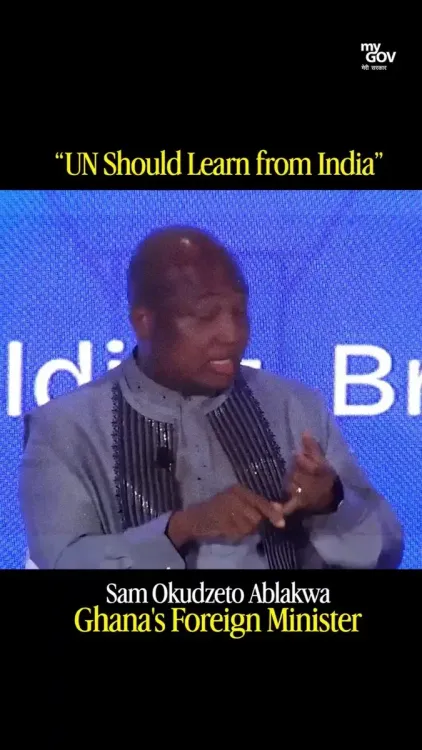
Ghana's Foreign Minister Samuel Okudzeto Ablakwa has publicly praised India's G20 Presidency for securing permanent African Union membership in the G20 at the 2023 New Delhi Summit, calling on the UN to replicate India's model of inclusive global governance. Union Minister Kiren Rijiju amplified the endorsement.
Key Takeaways
Ghana's Foreign Minister Samuel Okudzeto Ablakwa publicly stated 'UN should learn from India,' crediting New Delhi's G20 leadership.
India secured African Union permanent membership in the G20 at the New Delhi Summit in September 2023 , covering all 55 African states .
The endorsement links India's G20 achievement to the broader push for UN Security Council reform , a priority for both India and Africa.
Rijiju's post tagged Minister Ablakwa directly, signalling New Delhi's intent to keep this diplomatic narrative active ahead of upcoming multilateral forums.
The AU inclusion built on India's Voice of the Global South Summit (2022) and a series of India-Africa diplomatic engagements.
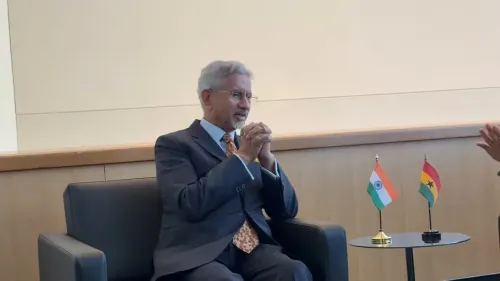
When Ghana's Foreign Minister tells the world that the United Nations should take lessons from India, that is not a throwaway compliment — it is a geopolitical signal worth unpacking. Union Parliamentary Affairs Minister Kiren Rijiju amplified the remark on Friday, October 16, 2026, sharing praise from Ghana's Foreign Affairs Minister Samuel Okudzeto Ablakwa, who credited India's G20 Presidency of 2023 for one of the most consequential expansions in global governance in decades.
The moment that changed the G20's map
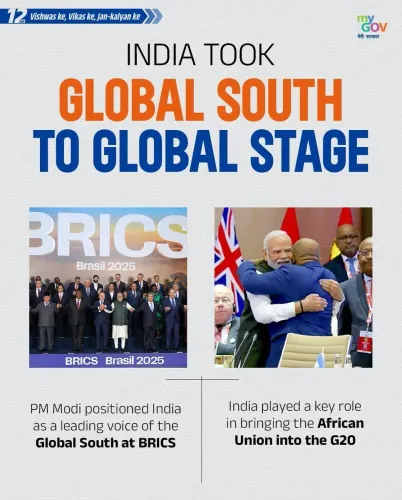
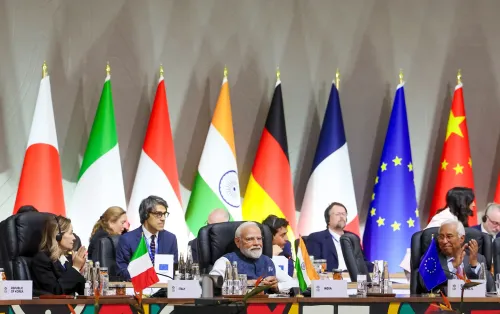
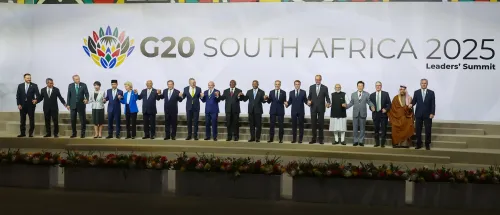
At the New Delhi G20 Summit in September 2023, India secured permanent membership for the African Union in the G20 — a body that had, until then, grouped 20 of the world's largest economies but left an entire continent of 55 nations without a permanent seat at the table. The move fulfilled a long-standing demand from African leaders and arrived under India's presidency, giving New Delhi clear diplomatic ownership of the outcome.
Minister Ablakwa's framing went further than gratitude. By invoking the United Nations — an institution whose Security Council structure has remained frozen since 1945 — he drew a pointed contrast: a major multilateral forum managed to expand and include Africa; the world's premier body has not. 'UN should learn from India,' as quoted by Rijiju, is a pressure point, not just a pleasantry.
India's Global South playbook — and why Africa keeps citing it
The AU's G20 inclusion did not happen in isolation. It built on India's Voice of the Global South Summit in 2022, a forum New Delhi convened to aggregate developing-world priorities ahead of its G20 year. India-Africa summits had laid earlier groundwork, positioning New Delhi as an interlocutor that listens before it leads.
The pattern is deliberate. India has consistently linked G20 institutional reform to calls for UN Security Council expansion — a reform that would benefit both India (a long-declared aspirant for a permanent seat) and African states (which hold no permanent seat at all, despite representing roughly 28 percent of UN member states). Ghana's Foreign Minister naming India in this context is, in effect, African diplomatic support for that broader reform argument.
What the 'learn from India' framing means for UN reform momentum
Rijiju's decision to amplify the remark — tagging Minister Ablakwa directly — signals that New Delhi wants this endorsement on the record and in circulation. With the next G20 cycle underway and the UN General Assembly a perennial forum for Security Council reform debates, India and African nations appear to be coordinating a shared narrative: multilateral institutions can change, the G20 proved it, and the UN is next in line.
For a government that has made 'Vishwa Bandhu' — India as a trusted global friend — a foreign policy watchword, a Ghanaian minister's public endorsement is exactly the kind of third-party validation that travels further than any self-authored statement.
The G20 expanded because one presidency chose to push. The question now is whether that precedent becomes the template the Global South uses to finally move the Security Council.
Point of View
Not a routine retweet — it plants a third-party African voice at the centre of India's UN reform argument at a moment when Security Council restructuring is back on the multilateral agenda. By framing the AU's G20 inclusion as a replicable model rather than a one-off achievement, India is building a normative case: if the G20 could be reformed in one presidency cycle, the UN Security Council's permanence is a political choice, not an institutional necessity. For the BJP government, which has staked significant foreign policy capital on 'Voice of the Global South' branding, a Ghanaian minister's unsolicited endorsement is the most credible kind of validation — it cannot be dismissed as self-promotion. Watch for this framing to surface at the UN General Assembly and in joint India-AU statements through 2027.
NationPress
16 Oct 2026
Frequently Asked Questions
Why did Ghana's Foreign Minister say 'UN should learn from India'?
Ghana's Foreign Minister Samuel Okudzeto Ablakwa praised India for securing the African Union's permanent membership in the G20 at the 2023 New Delhi Summit, arguing the UN should adopt a similarly inclusive approach to reform its own institutions, particularly the Security Council.
When did the African Union become a permanent G20 member?
The African Union became a permanent member of the G20 at the New Delhi Summit in September 2023, during India's G20 Presidency, giving all 55 African states a formal collective voice in the world's premier economic forum.
What is India's position on UN Security Council reform?
India has long advocated for expansion of the UN Security Council's permanent membership, arguing that the current structure does not reflect the contemporary world. India is itself a declared aspirant for a permanent seat and has aligned this goal with African states who also seek permanent representation.
What is the African Union's role in the G20 now?
Since September 2023, the African Union participates as a permanent member of the G20, representing the collective voice of its 55 member states in discussions on global economic policy, climate, and governance — a status previously held only by the European Union among regional blocs.
What is India's Voice of the Global South Summit?
The Voice of the Global South Summit was a forum convened by India in 2022 to bring together developing nations and aggregate their priorities ahead of India's G20 Presidency year. It has been a key plank of India's diplomatic positioning as a champion of developing-world interests in multilateral forums.