Dr. Jitendra Singh: India a Key Voice for Global South
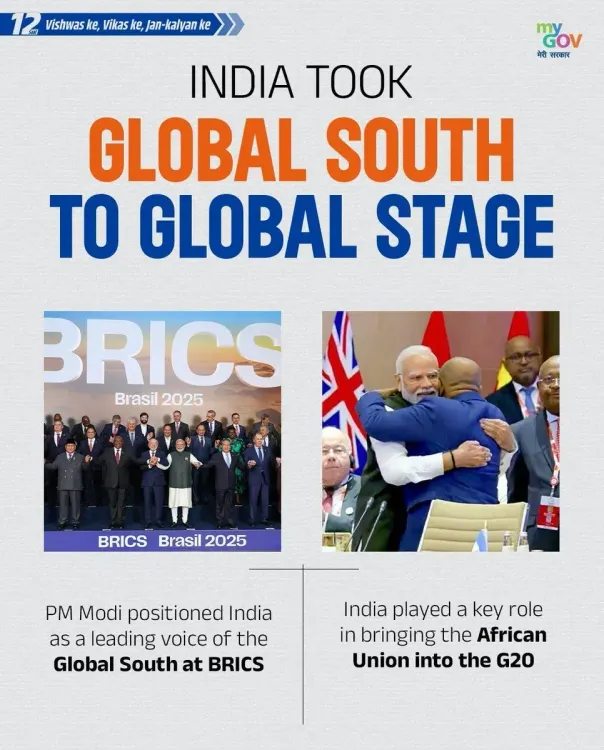
Synopsis
Union Minister Dr. Jitendra Singh has declared India a key voice for the Global South in BRICS and G20, pointing to inclusive dialogue and balanced international decision-making as hallmarks of twelve years of India-first diplomacy.
Key Takeaways
Jitendra Singh posted on 19 June 2026 that India has emerged as a key voice for the Global South in BRICS and the G20 .
The post was tagged #12YearsOfIndiaFirst , linking diplomatic achievements to a decade-plus of the current government.
India's 2023 G20 presidency under the theme Vasudhaiva Kutumbakam was the first to formally place Global South priorities on the G20 agenda.
The 2023 BRICS Johannesburg Declaration backed expansion of the bloc and reform of multilateral institutions for better developing-country representation.
India-led coalitions such as the International Solar Alliance and the Global Biofuel Alliance reinforce New Delhi's South-South cooperation strategy.
India's demand for a permanent UN Security Council seat, reiterated since 2015 , remains a central plank of its multilateral reform agenda.
Union Science and Technology Minister Dr. Jitendra Singh on Friday, 19 June 2026 highlighted India's growing diplomatic stature, asserting that the country has emerged as a key voice for the Global South in major international forums including BRICS and the G20. The minister made the remarks in a post on X under the hashtag #12YearsOfIndiaFirst, framing India's multilateral engagement as a push for inclusive dialogue and greater balance in global decision-making.
Context
Dr. Jitendra Singh's post underscores a foreign-policy posture that has defined Indian diplomacy over the past decade. Describing India's role, he wrote that the country's presence in global forums 'reflects a broader push for inclusive dialogue, stronger cooperation among developing nations, and greater balance in international decision-making.' The hashtag #12YearsOfIndiaFirst situates the statement within a broader political narrative marking twelve years of the current government's governance philosophy.
The assertion comes at a moment when the architecture of multilateral institutions is under sustained scrutiny from the developing world, and India has repeatedly positioned itself as a bridge between the established powers and the wider Global South.
Policy Backdrop
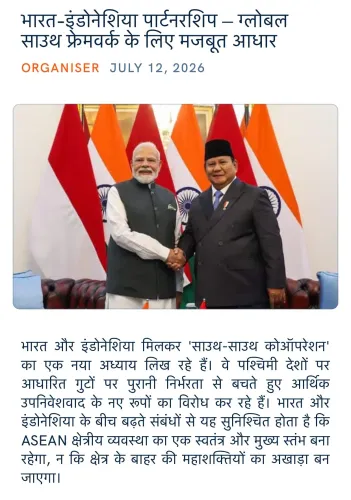
India's 2023 G20 presidency — held under the theme Vasudhaiva Kutumbakam (One Earth, One Family, One Future) — marked a watershed moment by placing Global South priorities on the official G20 agenda for the first time. The Voice of the Global South Summit, convened in January 2023 in New Delhi, brought together over 100 developing nations and produced a consolidated set of demands on climate finance, food security, and debt relief that India carried into the G20 leaders' meeting.
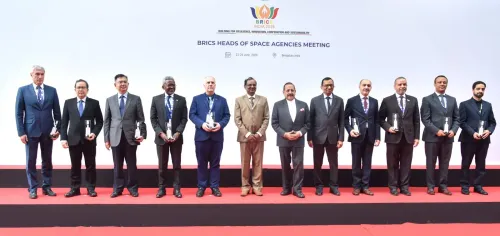
On the BRICS front, the 2023 Johannesburg Declaration endorsed the bloc's expansion to include new members from Africa, the Middle East, and Latin America, while also calling for reform of multilateral institutions to improve developing-country representation. India's long-standing demand for a permanent seat on the UN Security Council, reiterated at successive General Assembly sessions since 2015, forms an integral pillar of the same reform narrative.
Parallel coalitions such as the International Solar Alliance and the Global Biofuel Alliance — both India-led — have reinforced New Delhi's strategy of building developing-country groupings around shared economic and energy interests, giving diplomatic weight to its multilateral advocacy.
Stakeholders and Impact
The primary beneficiaries of India's Global South advocacy are the scores of developing and least-developed nations that have historically found their priorities marginalised in forums dominated by G7 economies. For these countries, India's seat at the high table in both BRICS and the G20 offers a channel to amplify demands on climate finance, technology transfer, and equitable trade rules.
Domestically, the framing also carries political resonance: projecting India as a champion of the developing world reinforces the government's narrative of an assertive, self-reliant foreign policy that punches above its weight. The #12YearsOfIndiaFirst hashtag signals that this diplomatic record will be a key plank in the ruling party's political communication.
What's Next
Attention will now turn to India's interventions at forthcoming BRICS and G20 summits, where New Delhi is expected to push for concrete follow-through on commitments made during its own G20 presidency. The continuation of the Voice of the Global South process — and whether India can sustain momentum for multilateral governance reform — will be the real test of the diplomatic influence Dr. Jitendra Singh's post celebrates.
As the international order faces pressure from multiple directions, India's ability to hold together a diverse coalition of developing nations while maintaining strategic autonomy will define the next chapter of its Global South leadership.
Point of View
The ruling establishment is keen to lock in credit for India's elevated multilateral standing. The framing of 'inclusive dialogue' and 'balance in international decision-making' also serves a domestic audience, positioning India's strategic autonomy as a principled, not merely transactional, posture. Whether this narrative translates into measurable institutional reforms — at the UN, the IMF, or the WTO — remains the harder question that the post sidesteps.
NationPress
19 Sept 2026
Frequently Asked Questions
What did Dr. Jitendra Singh say about India and the Global South?
Dr. Jitendra Singh stated on 19 June 2026 that India has emerged as a key voice for the Global South in international forums such as BRICS and the G20 , reflecting a push for inclusive dialogue and greater balance in global decision-making.
What is the #12YearsOfIndiaFirst hashtag about?
The #12YearsOfIndiaFirst hashtag marks twelve years of the current Indian government's governance philosophy, used to highlight achievements across policy areas including foreign policy and diplomacy.
How has India championed the Global South in the G20?
During its 2023 G20 presidency , India convened the Voice of the Global South Summit in January 2023 , bringing over 100 developing nations together and placing their priorities — on climate finance, food security, and debt relief — on the official G20 agenda for the first time.
What is India's role in BRICS?
India is a founding member of BRICS and participated in the 2023 Johannesburg Summit where the bloc endorsed expansion to new members and called for reform of multilateral institutions to better represent developing countries.
What other Global South initiatives has India led?
India has led the International Solar Alliance and the Global Biofuel Alliance , both aimed at building developing-country coalitions around shared energy and economic interests, complementing its diplomatic advocacy inside BRICS and the G20.