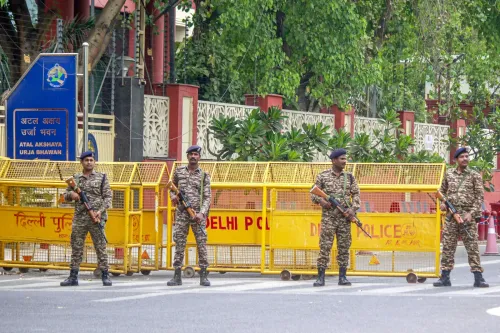
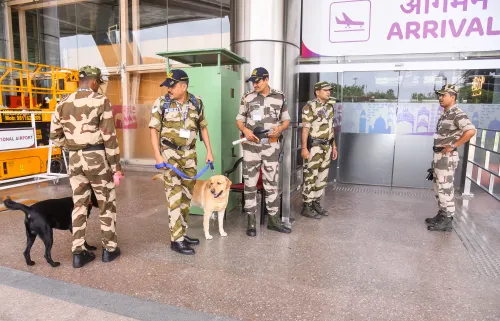
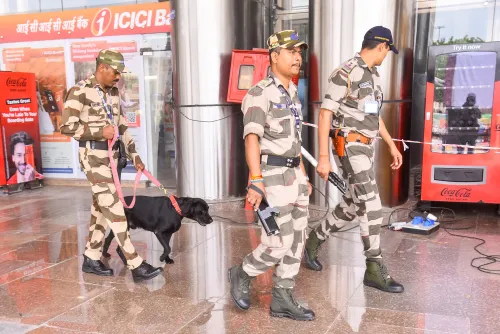
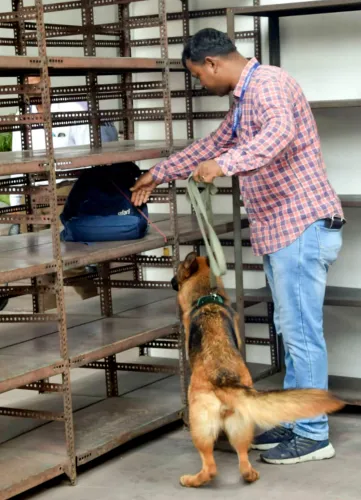
Hoax bomb threat emails: Ghaziabad man identified, no explosives found

Synopsis
Within 24 hours of hoax bomb threat emails targeting NIA, ISRO, DRDO, NPCIL and an Air India New York flight, Delhi Police traced and examined Nishant Tyagi, 36, at his Ghaziabad home. No explosives were found, but the case raises fresh questions about the ease with which hoax threats can paralyse multiple high-security institutions simultaneously.
Key Takeaways
Delhi Police identified Nishant Tyagi , 36 , of Ghaziabad , in connection with hoax bomb threat emails sent on 29 June 2026 .
Emails claimed bombs were planted at NIA , ISRO , NPCIL , DRDO , Ministry of Civil Aviation , and an Air India New Delhi–New York flight.
Investigators traced the suspect through two Gmail accounts and linked mobile number within 24 hours .
No explosives or suspicious material were recovered; all threats confirmed as hoax.
The suspect reportedly has a medical history dating to 2008 ; motive is still under investigation.
Further legal action will follow based on findings; investigation is ongoing.
Delhi Police have identified a 36-year-old Ghaziabad resident in connection with a series of hoax bomb threat emails sent on 29 June 2026 to multiple high-security government institutions and an international Air India flight. No explosives or suspicious material were recovered, and all threats have been confirmed as false, officials said.
Targets of the Threat Emails
The threatening emails, received on 29 June 2026, claimed that bombs had been planted at the headquarters of the National Investigation Agency (NIA), Indian Space Research Organisation (ISRO), Nuclear Power Corporation of India Limited (NPCIL), Defence Research and Development Organisation (DRDO), and the Ministry of Civil Aviation (MoCA). An Air India flight operating from New Delhi to New York was also named in the threats. All concerned agencies immediately initiated security checks and standard verification procedures, following which officials confirmed none of the threats was genuine.
How the Suspect Was Traced
A swift technical investigation zeroed in on two Gmail accounts suspected to have been used to send the emails. By analysing the email trail and associated digital evidence, investigators identified the mobile number linked to those accounts. Technical surveillance subsequently led police to Sanyog Nagar in Govind Nagar, Ghaziabad, Uttar Pradesh, on 30 June 2026 — just one day after the emails were received.
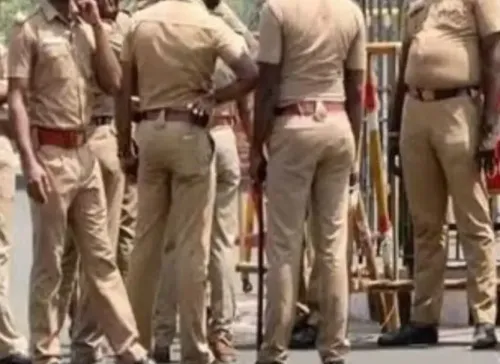
A team from the Chanakyapuri Sub-Division of Delhi Police, led by Sub-Inspector Subhash under the supervision of ACP Arshdeep Singh Panwar, reached the location and examined the suspect at his residence.
Profile of the Identified Suspect
The suspect was identified as Nishant Tyagi, 36, a resident of Sanyog Nagar, Bank Colony, Ghaziabad. During the enquiry, police found that he had pursued his education through open schooling and had enrolled for a bachelor's degree in 2010 but did not complete the course. Preliminary investigation also revealed that he has reportedly been undergoing treatment for a long-standing illness since 2008. Family members informed investigators about his medical history, and police said the matter is being verified as part of the ongoing enquiry.
Investigation Status and Next Steps
Officials confirmed that no explosives or suspicious material were recovered during the search at the suspect's residence. The investigation is continuing to determine the motive behind the emails, examine all relevant digital evidence, and establish the full circumstances under which the threats were issued. Police said further legal action will be taken in accordance with the law based on the findings of the enquiry. Notably, this incident is part of a broader pattern of hoax bomb threat emails targeting sensitive Indian institutions that has drawn increasing concern from security agencies in recent months.
Point of View
ISRO, DRDO, NPCIL, and a transatlantic Air India flight. The cost of verification across those agencies, in manpower and disruption, almost certainly dwarfs the effort required to send the emails. India has no dedicated hoax-threat deterrence law with teeth; cases like this typically meander through general IPC provisions. Until the legal and procedural response imposes a credible cost on copycat behaviour, the asymmetry between threat and disruption will keep inviting repeat incidents.
NationPress
2 Oct 2026
Frequently Asked Questions
Who is the suspect identified in the hoax bomb threat email case?
The suspect is Nishant Tyagi , a 36-year-old resident of Sanyog Nagar, Bank Colony, Ghaziabad, Uttar Pradesh . He was identified and examined by a Delhi Police team at his residence on 30 June 2026 .
Which organisations were targeted in the hoax bomb threat emails?
The emails, sent on 29 June 2026 , claimed bombs had been planted at the NIA , ISRO , NPCIL , DRDO , and the Ministry of Civil Aviation , as well as an Air India flight from New Delhi to New York. All threats were subsequently confirmed as hoaxes.
Were any explosives found at the locations mentioned in the threats?
No. Officials confirmed that no explosives or suspicious material were recovered either at the named locations or at the suspect's residence in Ghaziabad. All security checks returned clear.
How did Delhi Police trace the suspect so quickly?
Investigators focused on two Gmail accounts believed to have been used to send the emails. By analysing the email trail and associated digital evidence, they identified the mobile number linked to the accounts and used technical surveillance to locate the suspect in Ghaziabad within 24 hours .
What is the current status of the investigation?
The investigation is ongoing. Police are working to establish the motive, examine all digital evidence, and determine the full circumstances of the threats. The suspect's reported medical history since 2008 is also being verified. Further legal action will be taken based on the findings.