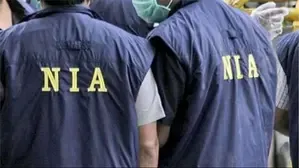
NIA's 7,500-page chargesheet exposes 'Operation Heavenly Hind' terror plot
Synopsis
India's NIA has filed a 7,500-page chargesheet revealing 'Operation Heavenly Hind' — a homegrown terror conspiracy that planned coordinated blasts across Delhi, J&K, and UP, a Hamas-style drone assault, and ultimately the overthrow of the Indian government. One suicide attack near the Red Fort was executed before the Faridabad module was dismantled. The scale of the plot, and the profile of those involved, marks it as one of the most ambitious domestic terror conspiracies uncovered in recent years.
Key Takeaways
The NIA filed a 7,500-page chargesheet exposing the Faridabad module's terror conspiracy codenamed 'Operation Heavenly Hind' .
The module procured thousands of kilograms of ammonium nitrate to carry out blasts in Delhi and surrounding areas.
Bomber Umar Un Nabi , the module's chief architect, carried out a suicide attack near the Red Fort before the network was busted.
The group raised ₹26 lakh through internal funding; members included reportedly highly educated individuals and doctors.
The ultimate goal was to revive Ansar Ghazwat-ul-Hind (linked to Al-Qaeda), trigger mass recruitment in J&K , and overthrow the Indian government.
11 persons have been arrested; NIA investigations are ongoing.
The National Investigation Agency (NIA) has filed a 7,500-page chargesheet detailing a wide-ranging terror conspiracy codenamed 'Operation Heavenly Hind', orchestrated by the Faridabad module — a homegrown network that had procured thousands of kilograms of ammonium nitrate to carry out coordinated blasts across Delhi and neighbouring areas. Security agencies dismantled the network before it could execute the bulk of its plan, though one suicide attack near the Red Fort was carried out before the module was neutralised.
The Attack That Got Through
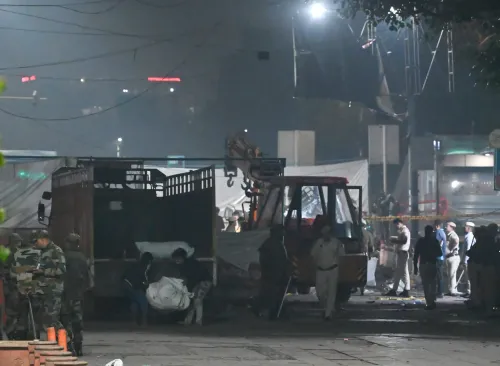
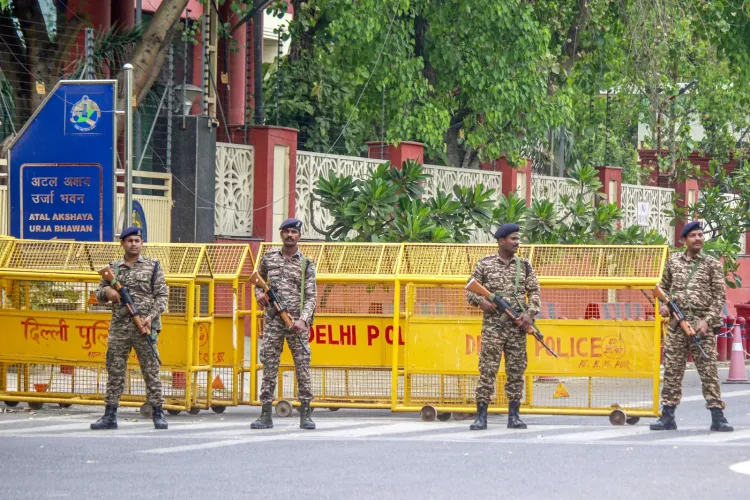
Despite the module's broader plans being foiled, bomber Umar Un Nabi — identified as the chief architect of the Faridabad network — carried out a suicide blast near the Red Fort. According to the chargesheet, Nabi executed the attack in haste after learning that agencies had already moved against the module. The blast is the only operation the group managed to complete before its infrastructure was dismantled.
Scope and Scale of the Conspiracy
The NIA's chargesheet lays out an extensive multi-phase plan. The initial objective was to carry out blasts across multiple states — including Delhi, Jammu and Kashmir, and Uttar Pradesh — and use the attacks as propaganda to trigger a mass recruitment drive in J&K. The ultimate goal, according to the chargesheet, was to overthrow the democratically elected Indian government and impose Sharia law.
The module had adopted the name Jaish-e-Mohammad as a recruitment tactic in its early stages, but officials clarified this was largely opportunistic branding. Had the plan succeeded, the group intended to operate under the banner of Ansar Ghazwat-ul-Hind, an Al-Qaeda-linked outfit. Mastermind Nabi reportedly even proposed a Hamas-style attack involving drones and rocket strikes, signalling the ambition and reach of the conspiracy.
Funding, Procurement, and Support Network
The module raised ₹26 lakh through internal funding channels, according to the NIA. Several members were reportedly highly educated — some were doctors — which allegedly allowed them to raise funds with little scrutiny. Ammonium nitrate was procured in smaller quantities over several years to avoid detection, while equipment including MMO anodes, electrical circuits, and switches was sourced from both offline and online channels.
The NIA named Bilal Naseer Malla, Mohammad Soyab, and Yasir Ahmad Dar as part of an overground worker network that allegedly shielded the module's core members. These individuals were also reportedly involved in attempts to destroy evidence after the module was busted.
Pakistan-Based Handlers and the J&K Revival Plan
According to the chargesheet, module members had made multiple failed attempts to travel abroad and connect with foreign handlers. After those efforts collapsed, they resolved to act domestically. Pakistan-based handlers had reportedly been attempting to establish a homegrown network in J&K for some time without success. The Faridabad module's plan was designed to fill that gap — demonstrating to potential recruits in the valley that attacks could be mounted from within India itself.
Arrests and Ongoing Investigation
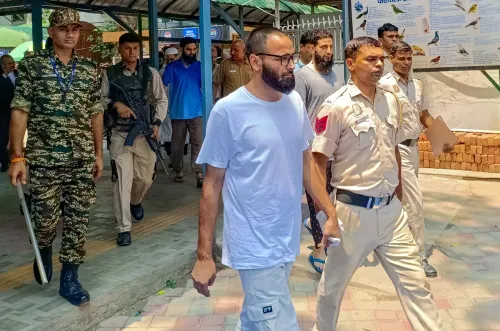
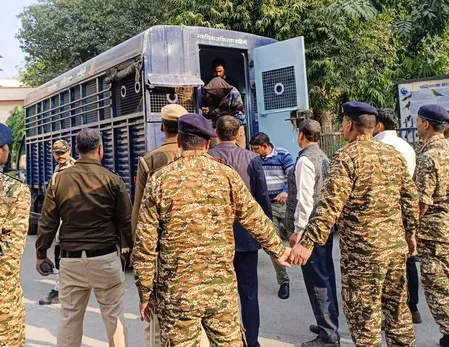
11 persons have been arrested in connection with the case so far. The NIA has confirmed that investigations are continuing, suggesting the agency believes the network may have additional links yet to be fully mapped. The scale of the chargesheet — at 7,500 pages — points to the depth of the conspiracy and the breadth of evidence gathered over the course of the probe.
Point of View
Raised funds without triggering scrutiny, and procured explosives incrementally over years. The Hamas-style drone-and-rocket suggestion attributed to Nabi signals aspirational escalation beyond conventional IED attacks. The more uncomfortable question is whether the one attack that did get through — the Red Fort suicide blast — represents an intelligence gap or an acceptable operational trade-off. A 7,500-page chargesheet is a prosecutorial achievement; it is also a document that may reveal, in court, how close the module came to executing far worse.
NationPress
27 Sept 2026
Frequently Asked Questions
What is 'Operation Heavenly Hind'?
'Operation Heavenly Hind' was the codename given by the Faridabad module to a multi-phase terror conspiracy that planned coordinated blasts across Delhi, Jammu and Kashmir, and Uttar Pradesh. The ultimate objective, according to the NIA chargesheet, was to revive the Al-Qaeda-linked Ansar Ghazwat-ul-Hind, trigger mass recruitment in J&K, and eventually overthrow the Indian government.
Who was Umar Un Nabi and what role did he play?
Umar Un Nabi was the chief architect of the Faridabad module and the individual who carried out the suicide blast near the Red Fort. According to the NIA, he executed the attack in haste after learning that agencies had already moved against the network he had built.
How did the Faridabad module fund its operations?
The module raised ₹26 lakh through internal funding channels, according to the NIA. Several members were reportedly highly educated — some were doctors — which allegedly allowed them to solicit funds with minimal scrutiny from authorities.
What is Ansar Ghazwat-ul-Hind and why is it significant?
Ansar Ghazwat-ul-Hind is an Al-Qaeda-linked militant outfit that has sought to establish a foothold in Jammu and Kashmir. The Faridabad module's long-term plan was to revive this group by using domestic blasts as propaganda to recruit fighters in the valley, according to the NIA chargesheet.
How many people have been arrested in connection with the case?
11 persons have been arrested so far. The NIA has confirmed that investigations are still ongoing, indicating the agency believes additional links within the network may remain to be fully established.