Giriraj Singh hails PM Modi's reception in Indonesia, Australia
Synopsis
Union Textiles Minister Giriraj Singh on 10 July 2026 hailed the warm reception given to PM Modi in Indonesia and Australia, saying it reflects India's growing global stature and is a source of pride for every Indian.
Key Takeaways
Giriraj Singh , Union Textiles Minister and senior BJP leader, posted on 10 July 2026 praising PM Modi's reception in Indonesia and Australia .
Singh said the welcome from both the Indian diaspora and host-country citizens reflects India's rising global honour, respect, and credibility.
India-Indonesia ties are anchored in the Act East Policy and were deepened during Indonesia's G20 Presidency in 2022 .
India-Australia relations have grown into a Comprehensive Strategic Partnership , with PM Modi's 2014 Australia visit being the first by an Indian PM in 28 years.
Follow-up outcomes from the visits may surface at the India-Australia Annual Summit or during the Monsoon Session of Parliament.
Union Textiles Minister Giriraj Singh on Friday, 10 July 2026, took to X to celebrate the warm reception accorded to Prime Minister Narendra Modi during his visits to Indonesia and Australia, calling it a matter of immense pride for every Indian.
In his post, Singh wrote: 'Aadaraniya Pradhanmantri Shri Narendra Modi ji ko Indonesia aur Australia mein mila apaar sneh aur sammaan har Bharatiya ke liye garv ka vishay hai' — 'The immense affection and respect received by respected Prime Minister Narendra Modi in Indonesia and Australia is a matter of pride for every Indian.' He further noted that the heartfelt welcome extended by both the Indian diaspora and the citizens of these countries reflects India's steadily growing stature, respect, and credibility in the world.
Context
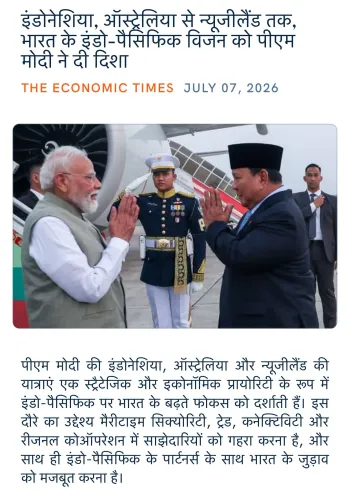
Prime Minister Modi's visits to Indonesia and Australia form part of India's active diplomatic engagement across the Indo-Pacific region. Both nations are critical partners — Indonesia as a pivotal ASEAN member and Australia as a strategic ally in the Quad framework. Singh's post underscores the government's messaging that such high-level travel translates into measurable goodwill on the ground, among both host-country citizens and the Indian diaspora.
The reception of Indian leaders abroad has increasingly become a political talking point domestically, with ruling-party leaders citing diaspora enthusiasm as evidence of India's rising global profile. Singh's framing — that the welcome 'shows India's honour, respect, and trust in the world is continuously growing' — follows this well-established communication pattern.
Policy Backdrop
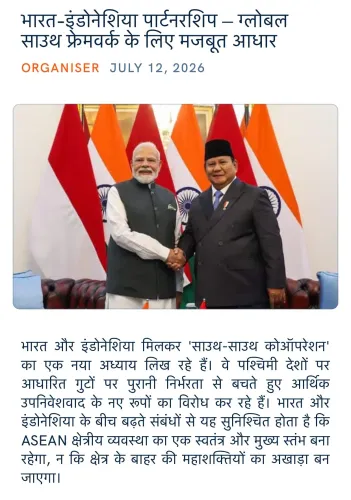
India's engagement with Indonesia deepened significantly through the Act East Policy, which successive governments have pursued since 2014. Indonesia hosted the G20 Presidency in 2022, a period during which New Delhi and Jakarta coordinated closely ahead of India's own G20 presidency the following year, cementing multilateral ties.
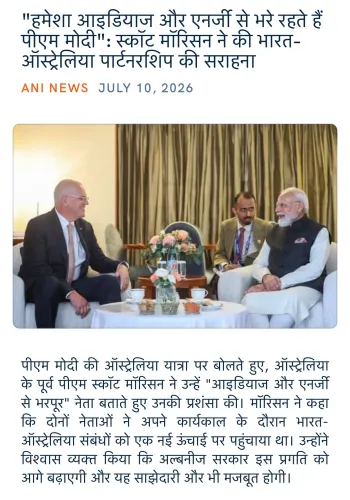
India's relationship with Australia has similarly expanded across trade, education, defence, and people-to-people links. Modi's 2014 visit to Australia was the first by an Indian Prime Minister in 28 years and is credited with relaunching comprehensive bilateral engagement. Since then, the two countries have elevated their relationship to a Comprehensive Strategic Partnership, with annual summits institutionalising high-level dialogue.
Stakeholders and Impact
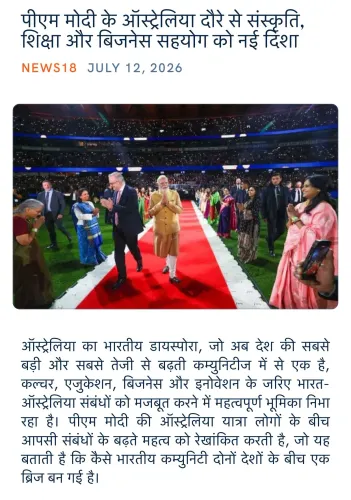
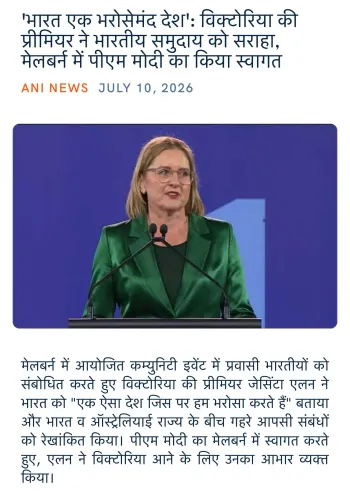
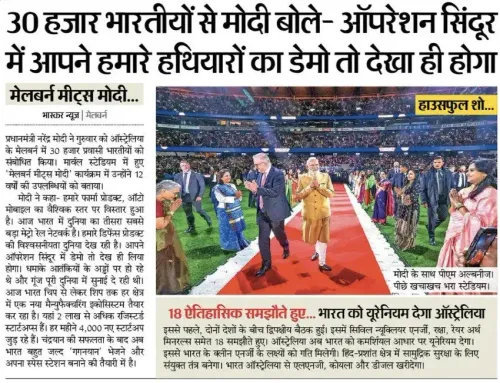
The Indian diaspora in both Indonesia and Australia plays a growing role in people-to-people diplomacy. Australia, in particular, hosts one of the fastest-growing Indian communities globally, making diaspora outreach a significant component of bilateral engagement. Their visible participation in welcoming the Prime Minister reinforces the soft-power dimension of such visits.
For domestic audiences, posts like Singh's serve to build a narrative of India's ascendant global standing — a theme central to the ruling BJP's political messaging. Business communities, students, and professionals with ties to these countries are among those most directly affected by the diplomatic warmth such visits generate, as improved bilateral relations can ease trade, mobility, and investment flows.
What's Next
Concrete outcomes of PM Modi's visits to Indonesia and Australia are expected to emerge through follow-up mechanisms including the India-Australia Annual Summit and ASEAN-India ministerial meetings. Any agreements signed during the visits may also come under parliamentary scrutiny during the ongoing Monsoon Session.
The broader diplomatic momentum signals that New Delhi will continue to prioritise its Indo-Pacific partnerships as a cornerstone of foreign policy, with diaspora engagement remaining a key instrument of that strategy.
Point of View
The messaging reinforces a central BJP narrative ahead of any political cycle. The choice to highlight both Indonesia and Australia is strategically significant — together they represent India's ASEAN and Quad flanks in the Indo-Pacific, signalling that New Delhi views these relationships as complementary pillars of its foreign policy architecture. Whether the visits yield tangible deliverables will be the harder test that parliamentary scrutiny and trade data will eventually provide.
NationPress
9 Oct 2026
Frequently Asked Questions
Why did Giriraj Singh post about PM Modi's visit to Indonesia and Australia?
Giriraj Singh posted on 10 July 2026 to praise the warm reception PM Modi received in Indonesia and Australia, calling it a source of pride for every Indian and a sign of India's growing global stature.
What is India's relationship with Indonesia?
India and Indonesia are key partners under India's Act East Policy, with ties spanning defence, trade, and connectivity. The two countries coordinated closely during Indonesia's G20 Presidency in 2022.
How have India-Australia relations developed under PM Modi?
India and Australia have elevated their ties to a Comprehensive Strategic Partnership. PM Modi's 2014 Australia visit — the first by an Indian PM in 28 years — relaunched comprehensive bilateral engagement covering trade, education, defence, and people-to-people links.
What role does the Indian diaspora play in PM Modi's overseas visits?
The Indian diaspora in countries like Australia and Indonesia participates actively in welcoming PM Modi, serving as a bridge for people-to-people diplomacy and reinforcing the soft-power dimension of bilateral ties.
What outcomes are expected from PM Modi's Indonesia and Australia visits in 2026?
Follow-up outcomes may emerge through the India-Australia Annual Summit and ASEAN-India ministerial meetings, with any new agreements potentially subject to parliamentary questions during the Monsoon Session.