Giriraj Singh Reviews Handloom 4.0 App at IIT Delhi CoE
Synopsis
Union Textiles Minister Giriraj Singh visited IIT Delhi's Centre of Excellence for Handloom Technology on 3 August 2026, reviewing innovation-based products and the Handloom 4.0 mobile app — a data-driven tool aimed at boosting productivity, quality, and sustainability across India's handloom sector.
Key Takeaways
Giriraj Singh visited the Centre of Excellence for Handloom Technology (CoE-HT) at IIT Delhi on 3 August 2026 .
The minister reviewed innovation-based products developed specifically for the handloom sector at the CoE-HT.
The Handloom 4.0 mobile app uses data-driven monitoring to track productivity, quality, efficiency, and sustainable production.
The CoE-HT is a specialised unit at IIT Delhi mandated to build technology solutions for the handloom industry.
The initiative connects to the National Handloom Development Programme (2015) , which included technological upgradation components for weavers.
Adoption of the Handloom 4.0 app at the cluster and weaver level remains the critical next step to watch.
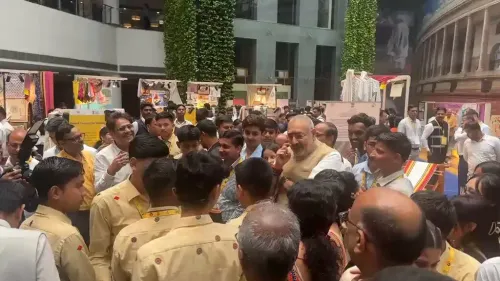
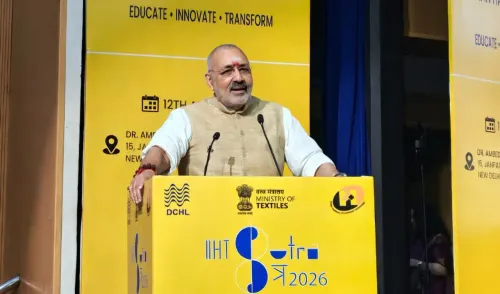
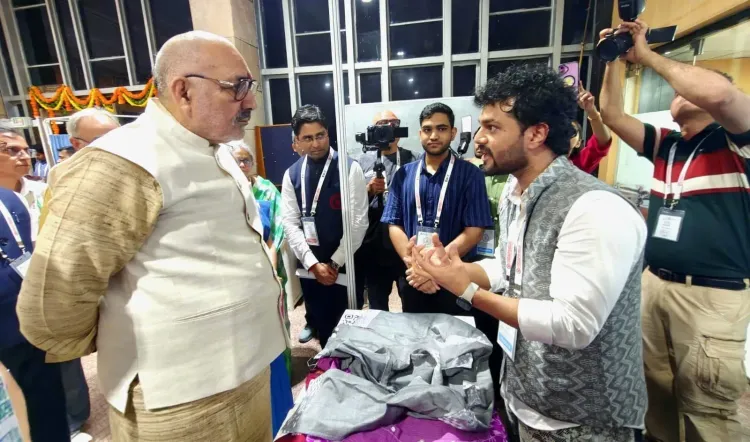
A minister walking the floors of one of India's premier technical institutes to examine looms, sensors, and a data dashboard — that is the image Union Textiles Minister Giriraj Singh put before the country on Monday, 3 August 2026, when he visited the Centre of Excellence for Handloom Technology (CoE-HT) at IIT Delhi to review innovation-driven products developed for the handloom sector.
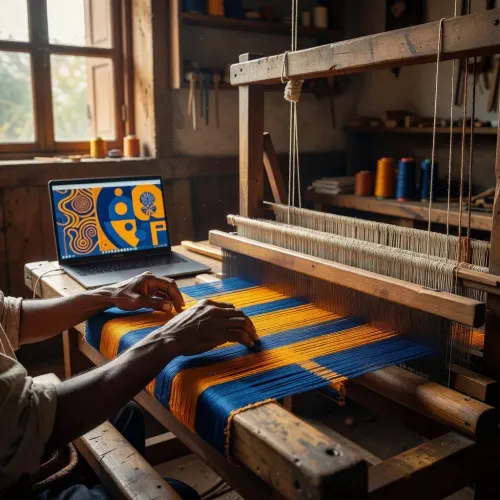
At the heart of the visit was the Handloom 4.0 mobile application — a data-driven monitoring tool designed to track and improve productivity, quality, efficiency, and sustainable production across handloom clusters. Singh studied the app's working mechanism firsthand, signalling the government's intent to bring real-time digital oversight to a sector that has long operated on inherited craft knowledge alone.
What CoE-HT at IIT Delhi is building
The Centre of Excellence for Handloom Technology sits inside IIT Delhi, one of India's foremost public technical universities, and is specifically mandated to develop technology solutions for the handloom industry. The CoE-HT's work spans everything from materials innovation to process engineering — essentially asking: what happens when institutional research-grade engineering turns its attention to a weaver's loom?
The products Singh reviewed represent that intersection — innovation anchored in the practical realities of weaver livelihoods rather than pure laboratory abstraction. The minister's post, originally in Hindi, noted that the visit involved 'नवाचार आधारित उत्पादों का अवलोकन' ('an observation of innovation-based products') developed for the handloom sector.
Handloom 4.0 and the data-monitoring leap
The Handloom 4.0 app is the centrepiece of this digital push. By feeding real-time production data into a monitoring framework, it aims to give weavers, cluster managers, and policymakers a common dashboard — replacing guesswork with metrics on output rates, quality defects, machine utilisation, and sustainability indicators.
The logic is straightforward: you cannot improve what you cannot measure. India's handloom sector employs millions of weavers, yet granular productivity data at the cluster level has historically been scarce. An app that closes that gap could reshape how government schemes are targeted and how weavers themselves optimise their work cycles.
Where this fits in India's textile modernisation push
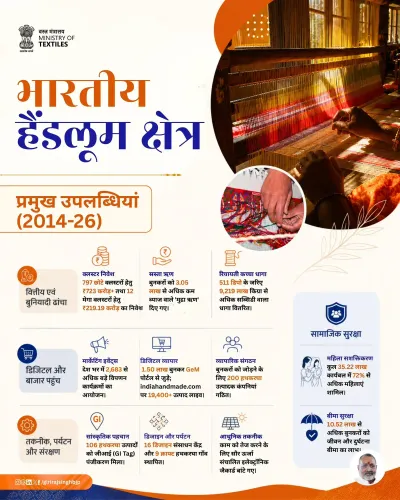
This visit connects to a longer policy thread. The National Handloom Development Programme, launched in 2015, included explicit components for technological upgradation and support infrastructure for weavers. What has evolved since is the ambition — from basic equipment subsidies to integrated digital monitoring layered on top of craft production.
The broader pattern is visible across other MSME and craft clusters too: government-backed research institutions developing sector-specific tools, with ministers providing political momentum through high-profile reviews. The handloom sector, with its deep cultural weight and its millions of weaver households, is now firmly inside that modernisation frame.
The real test will come not in a minister's visit to a lab, but in whether the Handloom 4.0 app reaches the loom shed — and whether a weaver in Varanasi, Pochampally, or Sualkuchi finds it useful enough to keep open.
Point of View
Equipment grants — toward outcome-based digital monitoring, which is a meaningful evolution in how the government engages with the sector. The political logic is also clear: the handloom sector carries enormous symbolic and electoral weight, and modernising it through institutional research rather than just welfare transfers gives the BJP a development narrative that is harder to contest. The real policy test, however, is last-mile adoption — whether the app penetrates actual weaver clusters or remains a showcase tool for ministerial visits.
NationPress
18 Sept 2026
Frequently Asked Questions
What is the Handloom 4.0 mobile app?
The Handloom 4.0 mobile app is a data-driven monitoring application developed at IIT Delhi's Centre of Excellence for Handloom Technology. It is designed to track and improve productivity, quality, efficiency, and sustainable production in the handloom sector.
What is the Centre of Excellence for Handloom Technology at IIT Delhi?
The Centre of Excellence for Handloom Technology (CoE-HT) is a specialised unit at IIT Delhi focused on developing technology and innovation-based solutions for India's handloom industry, covering areas from materials to process engineering.
Why did Giriraj Singh visit IIT Delhi in August 2026?
Union Textiles Minister Giriraj Singh visited IIT Delhi's CoE-HT on 3 August 2026 to review innovation-based products developed for the handloom sector and to understand the working mechanism of the Handloom 4.0 mobile app.
How does the Handloom 4.0 app help weavers?
The app provides a real-time data monitoring framework that can help weavers, cluster managers, and policymakers track output rates, quality, efficiency, and sustainability — replacing guesswork with measurable metrics.
What is the National Handloom Development Programme?
The National Handloom Development Programme, launched in 2015, is a central government scheme that includes components for technological upgradation and support infrastructure for handloom weavers across India.