Giriraj Singh backs CXO Blueprint 2030 for Indian textiles
Synopsis
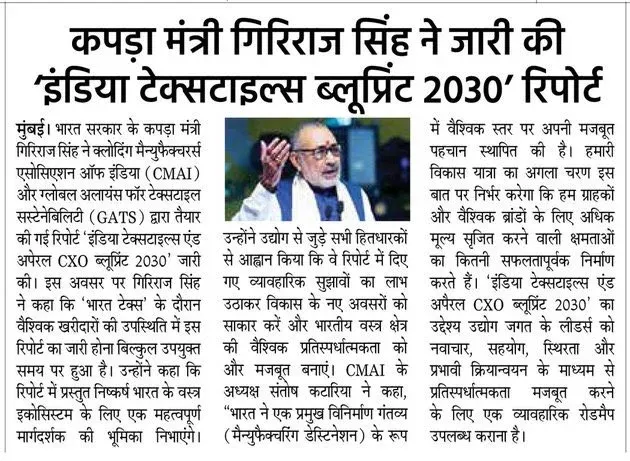
Union Textiles Minister Giriraj Singh on 18 July 2026 endorsed the 'India Textiles and Apparel CXO Blueprint 2030' by CMAI and GATS, calling it a strategic guide built on industry inputs to drive innovation, sustainability and global competitiveness in India's textile sector.
Key Takeaways
Union Textiles Minister Giriraj Singh publicly backed the 'India Textiles and Apparel CXO Blueprint 2030' on 18 July 2026 .
The blueprint was jointly prepared by CMAI (Clothing Manufacturers Association of India) and GATS (Global Apparel Textiles Sustainability) based on industry stakeholder inputs.
The government's PLI scheme for textiles carries an outlay of Rs 10,683 crore ; PM MITRA parks aim to build seven integrated textile facilities.
The National Technical Textiles Mission (launched 2020 ) allocated Rs 1,480 crore to position India as a global leader in technical textiles.
The blueprint is linked to the Viksit Bharat 2047 vision and is expected to feature at BharatTex 2026 .
The endorsement signals government openness to industry-authored strategy documents feeding into formal textiles policymaking.
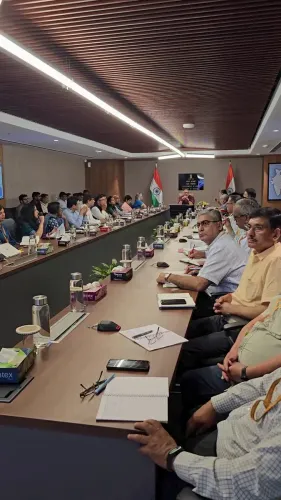
Union Textiles Minister Giriraj Singh on Saturday, 18 July 2026 endorsed the 'India Textiles and Apparel CXO Blueprint 2030', a joint industry document prepared by the Clothing Manufacturers Association of India (CMAI) and Global Apparel Textiles Sustainability (GATS), calling it a guide for innovation and global competitiveness in the Indian textile sector.
Context
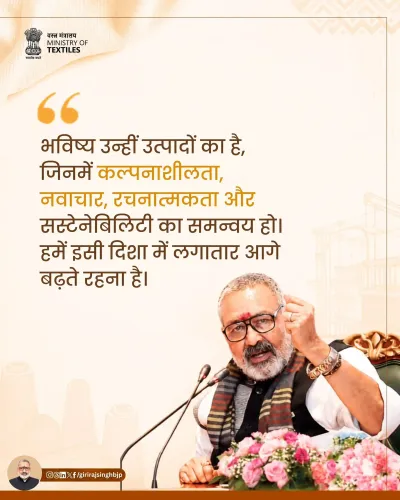
Posting on X, Giriraj Singh said the Blueprint 2030 — 'नई सोच, नवाचार और वैश्विक प्रतिस्पर्धा' ('new thinking, innovation and global competitiveness') — would guide the Indian textile industry forward. He noted that the report is grounded in suggestions from industry stakeholders and will help formulate strategy aligned with 'changing global requirements.' The post was tagged with #BharatTex2026, #IndianTextiles, and #ViksitBharat2047.
The minister described the blueprint as a tool to 'better utilise new opportunities,' signalling the government's intent to treat the document as an input into ongoing textiles policy rather than a standalone industry exercise.
Policy Backdrop
The endorsement comes against a backdrop of significant central government investment in the textiles sector. The Production Linked Incentive (PLI) scheme for textiles, notified in 2021 with an outlay of Rs 10,683 crore, targets man-made fibre and technical textiles manufacturing. In the same year, the government approved PM MITRA (Mega Integrated Textile Region and Apparel) parks to develop seven integrated textile facilities with plug-and-play infrastructure.
The National Technical Textiles Mission, launched in 2020 with a Rs 1,480 crore outlay, further anchors India's ambition to lead in high-value textile segments. The CXO Blueprint 2030 is being positioned within this broader policy architecture and the long-term Viksit Bharat 2047 vision, which targets developed-nation status by the centenary of Indian independence.
Stakeholders and Impact
CMAI, one of India's largest apparel trade bodies, represents thousands of garment and clothing manufacturers. Its co-authorship of the blueprint alongside GATS signals that the document reflects CXO-level consensus on sustainability metrics and export strategy — requirements increasingly demanded by EU and US buyers.
The emphasis on sustainability mirrors similar roadmap exercises undertaken in the automobiles and electronics sectors, reflecting a broader post-2020 China+1 supply-chain realignment that has opened new sourcing opportunities for Indian manufacturers. Apparel exporters and textile manufacturers stand to be the primary beneficiaries if the blueprint's recommendations translate into regulatory or incentive measures.
What's Next
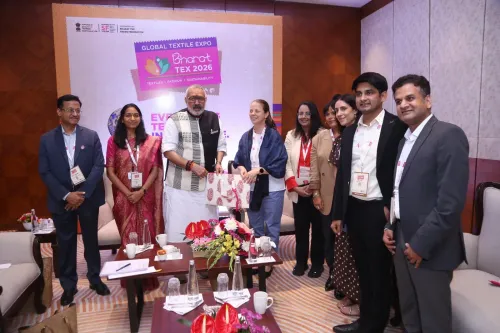
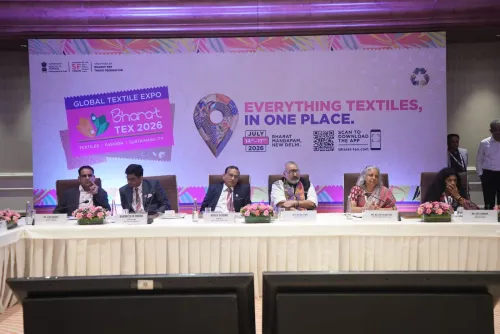
The hashtag #BharatTex2026 in the minister's post points to the upcoming BharatTex 2026 trade event as a likely platform where the blueprint's recommendations could receive further government attention or formal policy response. Observers will watch whether specific incentives or regulatory changes are announced in line with the Blueprint 2030 framework.
With India's textile and apparel sector targeting higher export competitiveness, the minister's public backing of an industry-authored roadmap suggests the government is open to private-sector-led strategy documents feeding directly into policymaking — a model that could shape how the sector engages with Viksit Bharat 2047 manufacturing targets.
Point of View
Lending it political weight beyond a routine trade-body report. The emphasis on sustainability and global competitiveness also reflects pressure from EU and US buyers for greener supply chains, suggesting the blueprint may pre-empt regulatory demands rather than merely respond to them. Whether the document produces concrete incentives or remains aspirational will be the real test of its policy relevance.
NationPress
18 Jul 2026
Frequently Asked Questions
What is the India Textiles and Apparel CXO Blueprint 2030?
The 'India Textiles and Apparel CXO Blueprint 2030' is a strategic industry document jointly prepared by the Clothing Manufacturers Association of India (CMAI) and Global Apparel Textiles Sustainability (GATS), based on inputs from textile sector stakeholders, to guide innovation, sustainability and global competitiveness in Indian textiles through 2030.
What did Giriraj Singh say about the CXO Blueprint 2030?
Union Textiles Minister Giriraj Singh said the blueprint would provide guidance to the Indian textile industry on new thinking, innovation and global competitiveness, and would help formulate strategy aligned with changing global requirements and better utilise new opportunities.
What is CMAI and why does it matter for Indian textiles?
CMAI, the Clothing Manufacturers Association of India, is one of India's largest trade bodies representing garment and apparel manufacturers. Its co-authorship of the Blueprint 2030 gives the document significant industry credibility and ensures it reflects ground-level CXO consensus.
What is BharatTex 2026?
BharatTex 2026 is a major Indian textile trade event referenced in Giriraj Singh's post, expected to serve as a platform for further government and industry engagement on the Blueprint 2030 recommendations and broader textiles policy.
How does the CXO Blueprint 2030 connect to Viksit Bharat 2047?
The blueprint is positioned within the Government of India's Viksit Bharat 2047 vision, which targets developed-nation status by the centenary of independence. Linking the textile sector roadmap to this broader goal places it within long-term manufacturing and employment targets.