Giriraj Singh: Border Villages Are India's First Villages
Synopsis
Union Textiles Minister Giriraj Singh declared border villages India's 'first villages, not last villages,' positioning rural youth as the driving force of the Viksit Bharat 2047 vision. His post invokes the Vibrant Villages Programme and Youth4ViksitBharat campaign as pillars of frontier-area transformation.
Key Takeaways
Giriraj Singh posted on 27 July 2026 calling border villages India's 'first villages,' not its last.
He identified rural youth as the primary agents of the Viksit Bharat 2047 transformation.
The Vibrant Villages Programme , launched in Union Budget 2022-23 , funds infrastructure in border villages to stem outmigration.
The Viksit Bharat Sankalp Yatra (2023) extended central scheme coverage to remote villages through mobile outreach.
The 'first village' framing is both a development signal and a soft-power assertion of state presence in strategically sensitive frontier zones.
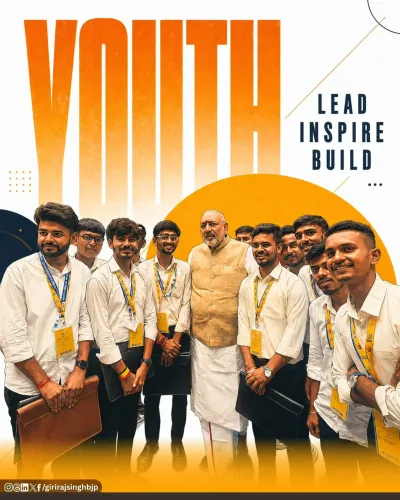
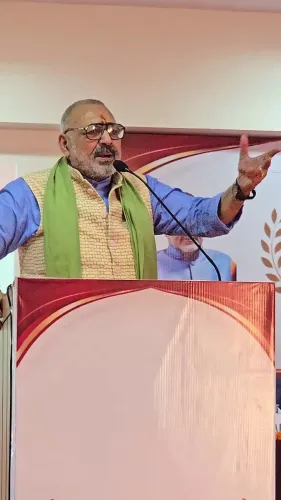
Union Textiles Minister Giriraj Singh on Monday, 27 July 2026, called border villages the 'first villages' of India rather than its last, framing rural youth as the primary drivers of the government's Viksit Bharat 2047 vision. The minister posted his remarks on X under the hashtags #ViksitBharat2047 and #Youth4ViksitBharat, amplifying a campaign that positions young Indians as central to the country's developmental transformation by its centenary of independence.
Context
Singh wrote, in translation: 'विकसित भारत की मजबूत नींव हमारे विकसित गांव हैं' ('The strong foundation of a developed India is our developed villages'), adding that the mindset shift — treating border villages as 'first villages, not last villages' — has given development a new direction. He noted that basic facilities now reaching those areas are not merely changing lives but also strengthening trust in the nation and citizens' self-confidence.
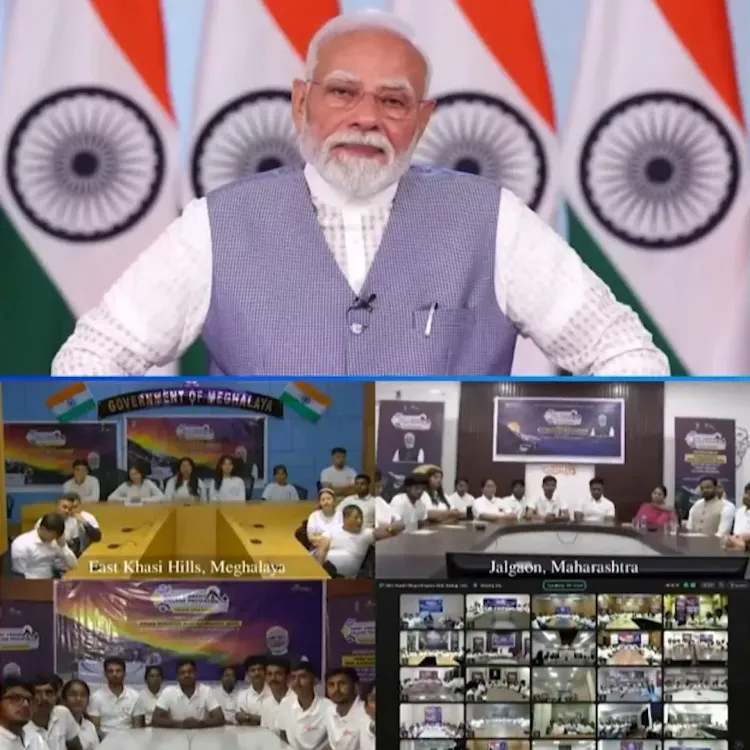
The post carries a video attachment, suggesting Singh may be sharing on-ground visuals or a campaign clip tied to the Youth4ViksitBharat outreach. The remarks are consistent with the BJP-led government's long-standing effort to reframe remote frontier areas as strategic national assets rather than neglected peripheries.
Policy Backdrop
The ideological anchor for Singh's statement is the Vibrant Villages Programme, launched in the Union Budget 2022-23, which directed infrastructure investment — roads, housing, clean water, connectivity — to border villages in states such as Arunachal Pradesh, Himachal Pradesh, Uttarakhand, Sikkim, and Ladakh. The programme explicitly sought to reverse outmigration from frontier areas by making them liveable and economically viable.
Complementing it, the Viksit Bharat Sankalp Yatra, rolled out in 2023, sent mobile outreach vans to villages across India to saturate coverage of central government schemes and register eligible beneficiaries on the spot. Together, these initiatives form the operational backbone of the broader Viksit Bharat 2047 vision — the government's stated goal of making India a fully developed nation by the centenary of its independence.
Stakeholders and Impact
Rural youth in border districts are the explicit target audience of Singh's message. Unemployment and lack of opportunity have historically driven young people away from frontier villages, weakening both local economies and, by extension, the state's social presence in strategically sensitive zones. Government programmes that bring connectivity, digital access, and livelihood support to these areas are designed to reverse that trend.
Border village residents — many of them from tribal and hill communities in states bordering China, Nepal, Bhutan, Myanmar, and Pakistan — stand to benefit most directly from the infrastructure push. The 'first village' framing is also a soft-power signal: it positions the Indian state as attentive to its most remote citizens, countering narratives of neglect that have historically been exploited in sensitive border regions.
What's Next
Attention will now focus on the pace of infrastructure rollout in border districts under the Vibrant Villages Programme and how effectively youth outreach under the Youth4ViksitBharat campaign translates into measurable enrolment in skilling, entrepreneurship, and welfare schemes. With 2047 as the long-horizon target, the government's ability to sustain momentum — and demonstrate visible change in the country's most remote corners — will be a key test of whether the 'first village' vision moves from rhetoric to reality.
Point of View
The BJP is signalling that frontier development is a matter of national pride and security, not just welfare. The invocation of youth as the primary stakeholders is equally strategic — it ties the 2047 vision to a demographic that will be politically active for the next two decades. The post sits within a consistent BJP communications arc that links infrastructure delivery to civilisational ambition, making village-level schemes part of a larger story of national self-reliance. Whether the rhetoric is matched by measurable outcomes in border districts will determine how durable this framing proves to be.
NationPress
25 Oct 2026
Frequently Asked Questions
What did Giriraj Singh say about border villages?
Giriraj Singh said border villages should be seen as India's 'first villages, not last villages,' arguing that basic facilities reaching these areas are strengthening citizens' trust in the nation and their own self-confidence.
What is the Viksit Bharat 2047 vision?
Viksit Bharat 2047 is the Indian government's stated goal of making India a fully developed nation by 2047, the centenary of its independence, with rural infrastructure and youth engagement as key pillars.
What is the Vibrant Villages Programme?
The Vibrant Villages Programme was launched in the Union Budget 2022-23 to provide roads, housing, clean water, and connectivity to border villages in states such as Arunachal Pradesh, Uttarakhand, and Ladakh, aiming to reverse outmigration.
What is Youth4ViksitBharat?
Youth4ViksitBharat is a government campaign to involve young Indians in achieving the Viksit Bharat 2047 development goals, positioning them as primary agents of rural and national transformation.
Why does the government call border villages 'first villages'?
The 'first village' framing is intended to reposition frontier areas as strategic national assets rather than neglected outposts, countering narratives of state neglect and reinforcing India's presence in sensitive border regions.