Giriraj Singh Deposits Old Clothes in 'Textiles for Tomorrow' Drive
Synopsis
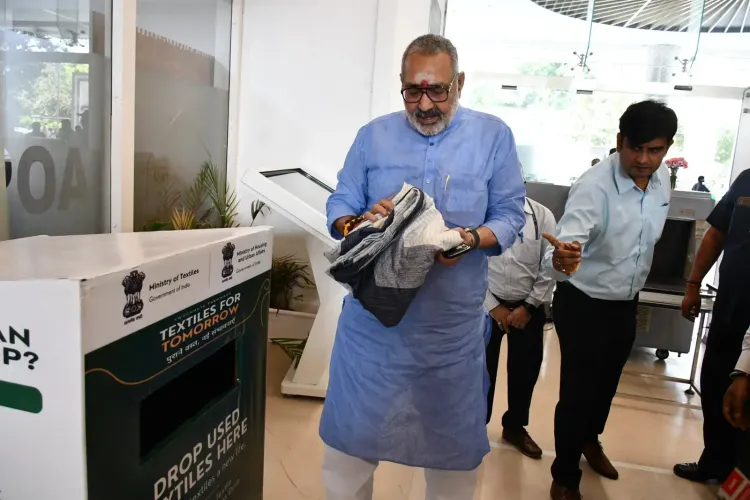
Union Textiles Minister Giriraj Singh personally deposited used garments in a drop box on 14 October 2026, spotlighting 'Textiles for Tomorrow' — a joint drive by the Textiles and Housing ministries to recycle old clothes, reduce landfill waste, and embed circular-economy habits in urban India.
Key Takeaways
Giriraj Singh deposited old clothes in a textile drop box on 14 October 2026 under the 'Textiles for Tomorrow' campaign.
The initiative is a joint effort by the Ministry of Textiles and the Ministry of Housing and Urban Affairs .
Drop boxes are placed in urban areas to collect used garments for recycling , diverting them from landfills.
The campaign aligns with the Swachh Bharat Mission , launched in 2014 , extended to scientific urban waste management.
The initiative supports India's broader circular economy goals by recovering raw fibres and cutting production costs of virgin textile inputs.
The minister called for positive changes in everyday habits as essential to meeting environmental responsibilities.
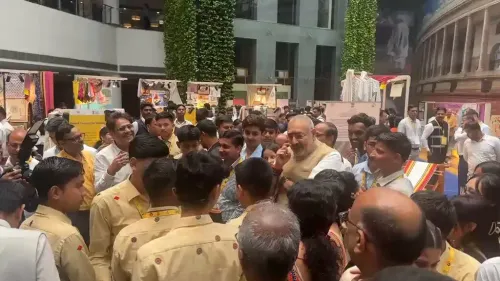
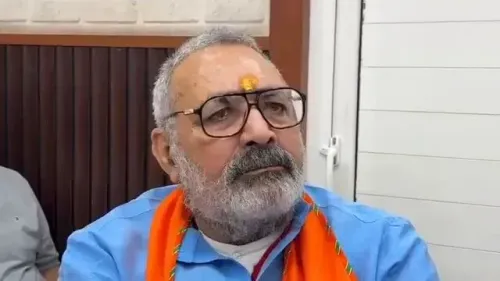
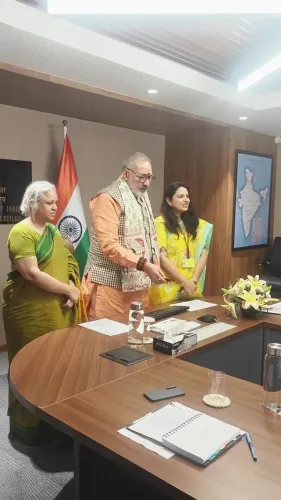
Old clothes sitting in wardrobes are now a policy target. On Wednesday, 14 October 2026, Union Textiles Minister Giriraj Singh personally deposited used garments into a designated drop box under the 'Textiles for Tomorrow' campaign — a joint drive by the Ministry of Textiles and the Ministry of Housing and Urban Affairs aimed at recycling used clothing and reducing textile waste.
Posting photographs of the act on X, the minister wrote: 'Purane vastron ki recycling ko badhawa dene aur unhe naya jeevan dene ki disha mein vastra mantralaya evam aawasan aur shahari karya mantralaya ki yeh sanyukt pahal' — ('This joint initiative of the Ministry of Textiles and the Ministry of Housing and Urban Affairs to promote the recycling of old clothes and give them a new life') — and called it 'a meaningful effort towards better resource use and environmental protection.'
'Textiles for Tomorrow': What the drop-box campaign sets out to do
The campaign deploys textile drop boxes in urban areas, giving households a structured channel to dispose of old garments instead of sending them to landfills. The inter-ministerial pairing is deliberate: the Ministry of Housing and Urban Affairs controls urban infrastructure and the Swachh Bharat Mission's city-level machinery, while the Ministry of Textiles links the collected material to the recycling supply chain.
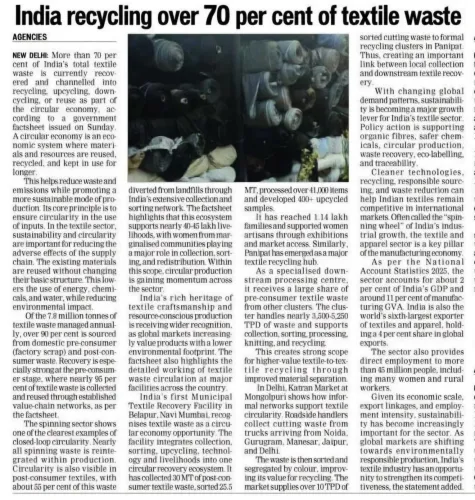
India generates enormous volumes of post-consumer textile waste annually, much of it mixed with municipal solid waste rather than recycled. Channelling that material back into the production loop conserves raw fibres — cotton, polyester, wool — and cuts the energy and water costs of producing virgin inputs. The initiative sits squarely within the circular-economy push that policymakers have been threading through manufacturing policy over the past several years.
Swachh Bharat roots and the circular-economy arc
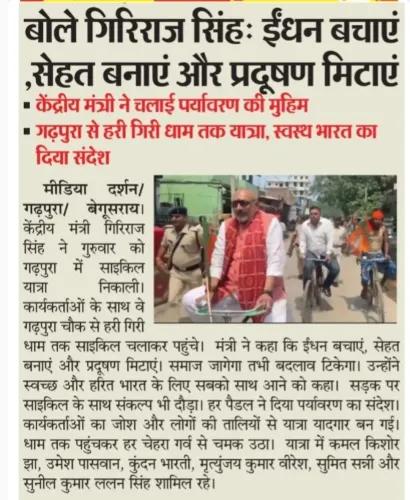
The campaign traces its lineage to the Swachh Bharat Mission, launched in 2014, which progressively expanded from basic sanitation to scientific urban waste management. Embedding a textile-specific collection stream into that framework is a logical next step — turning a cleanliness programme into a resource-recovery engine.
Singh's own act of depositing clothes carries a behavioural nudge at its core. 'Our responsibility towards cleanliness and the environment will be fulfilled only when we bring positive changes in our everyday habits,' he wrote — a line that doubles as the campaign's entire theory of change. Policy works when citizens move.
Watch for the rollout of additional drop-box infrastructure across more cities, and any follow-up guidelines on textile waste segregation or recycling volume targets that the two ministries may issue.
Point of View
Stitching together the urban infrastructure network of the Housing Ministry with the supply-chain reach of the Textiles Ministry to close the loop on post-consumer waste. For the BJP government, it also serves a dual optic: advancing environmental credibility ahead of international climate commitments while reinforcing the Swachh Bharat brand domestically. A minister personally performing the act of depositing old clothes is a calculated behavioural signal — the administration framing sustainability not as a burden but as a daily citizen habit. The real test will be whether drop-box density, recycling tie-ups, and measurable waste-diversion targets follow the photo opportunity.
NationPress
14 Oct 2026
Frequently Asked Questions
What is the 'Textiles for Tomorrow' campaign?
'Textiles for Tomorrow' is a joint initiative of India's Ministry of Textiles and Ministry of Housing and Urban Affairs that places drop boxes in urban areas for citizens to deposit old clothes, which are then recycled to reduce landfill waste and conserve raw materials.
How does the textile drop box work?
Citizens can deposit used or unwanted garments in designated drop boxes installed in urban areas. The collected clothes are then channelled into the textile recycling supply chain rather than being discarded as general waste.
Why are two ministries running this campaign together?
The Ministry of Housing and Urban Affairs controls the city-level infrastructure and Swachh Bharat Mission network needed to deploy and manage collection points, while the Ministry of Textiles connects the collected material to recyclers and the broader textile supply chain.
How does this relate to Swachh Bharat Mission?
Swachh Bharat Mission, launched in 2014, has progressively expanded from basic sanitation to scientific urban waste management. The textile drop-box programme builds on that framework by creating a specific stream for garment waste recovery within urban areas.
What is India's circular economy approach in textiles?
India has been pursuing circular economy policies in the textile sector to minimise landfill contributions and recover raw fibres such as cotton and polyester from used garments, reducing the energy and water costs associated with producing virgin textile inputs.